
Sumba Woven Fabric Market Overview for Traders
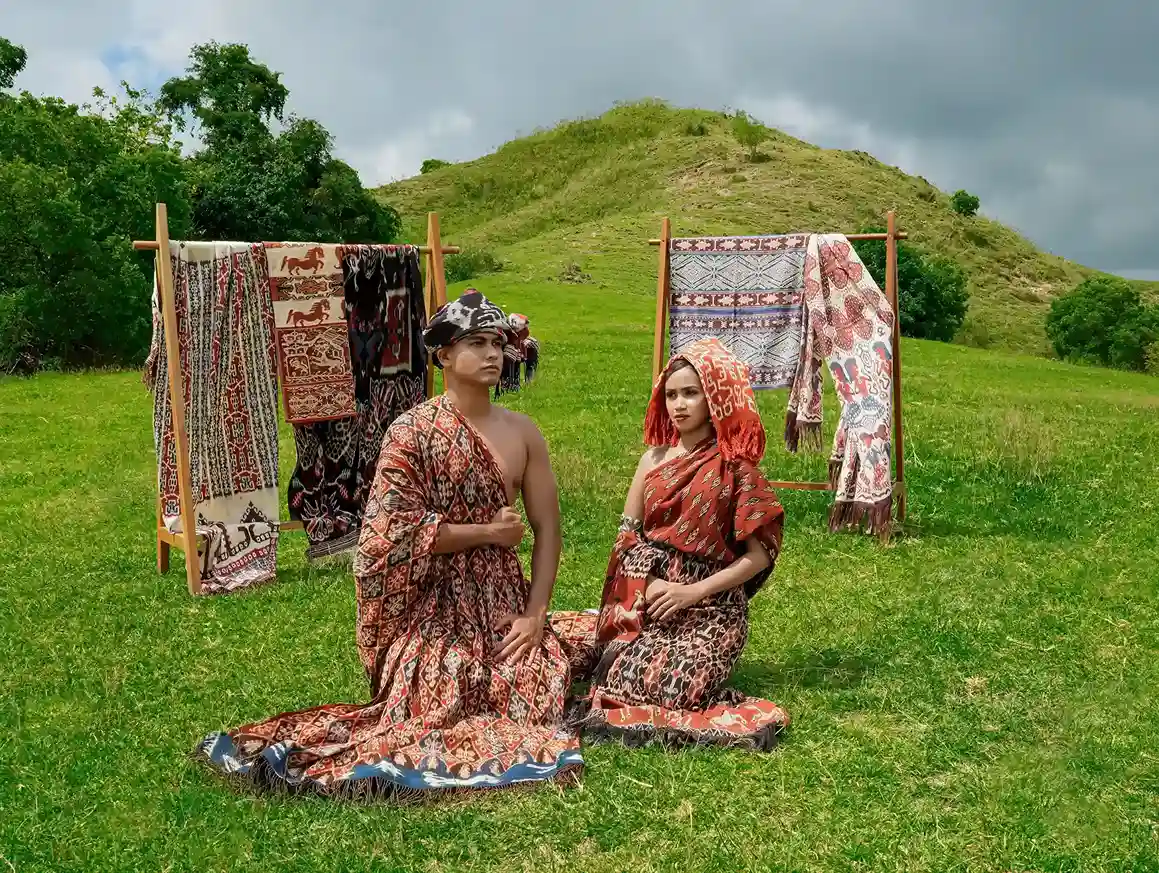
Sumba woven fabric sells into four distinct buyer segments — home retail, hospitality projects, fashion production, and collectors — and each one buys a different SKU set at a different rhythm, which is why traders who run a single undifferentiated catalogue usually underperform those who split their range by segment. Understanding who buys what is the first commercial decision, ahead of pricing or volume.
This overview maps the trade for importers, distributors, and multi-channel resellers considering a Sumba range, and sets out where the competitive pressure actually comes from.
Who buys Sumba woven fabric?
Sumba’s signature product is the hinggi, a large rectangular warp-ikat cloth woven in mirrored halves and carrying figurative motifs — horses, deer, roosters, and the andung or skull-tree motif of East Sumba. That figurative, large-format character is what separates Sumba from most other Indonesian weaving regions commercially, and it is why the island’s cloth reaches interior and collector buyers more readily than purely geometric traditions do.
| Segment | Buying rhythm | What decides the purchase |
|---|---|---|
| Home and gift retail | Frequent, smaller volumes | Price ladder, display appeal, repeat availability |
| Hospitality and interior projects | Infrequent, large blocks | Dimensions, lot consistency, delivery date certainty |
| Fashion and accessory production | Seasonal, by the metre | Panel width, palette, cutting yield |
| Collectors and galleries | Occasional, single pieces | Provenance, age, motif significance, condition |
| Corporate and institutional gifting | Campaign-driven | Unit consistency, packaging, lead time |
A trader does not need all five. Choosing two adjacent segments — typically home retail plus project supply — gives enough volume to justify a container while keeping the SKU count manageable.
Which SKUs move in each segment?
Because the loom width on a backstrap loom is narrow, the entire product architecture in Sumba textiles is built from rectangles: panels, runners, and joined pieces rather than wide continuous cloth. Every commercially successful SKU works with that constraint rather than against it.
- Home retail: table runners, placemats, cushion covers, small throws. Fast-moving, freight-efficient, and the entry rung of any price ladder.
- Project supply: large hinggi for wall mounting, framed panels, matched sets by room type. Higher unit value, long lead times, strict dimensional tolerance.
- Fashion: yardage and panel cuts sold by the metre, ordered by palette and width rather than by design name.
- Collector: single significant pieces, priced on motif, age, dye composition, and condition rather than on size.
- Gifting: small consistent items in repeatable formats, where uniformity matters more than individuality.
Traders assembling a first container typically anchor on runners and cushion formats for cash flow, then add a small number of statement pieces. Our sumba woven fabric wholesale range is organised along exactly these SKU groups.
How does Sumba compete against other Indonesian weaving regions?
Indonesia has many weaving traditions, and they are not interchangeable. Flores produces ikat from Ende and Sikka with distinct regional palettes; Timor, Savu, and Rote each have recognisable geometric vocabularies; Bali contributes endek and the rare double-ikat gringsing of Tenganan; Sulawesi adds the Toraja tradition. A buyer choosing between them is choosing a visual language, not just a price.
Sumba’s competitive position rests on three things: scale, figuration, and recognisability. The large hinggi format fills architectural wall planes that smaller regional cloths cannot. The figurative motifs read instantly to buyers who do not know the tradition, which shortens the retail sale. And Sumba is the Indonesian ikat name most familiar to interior and collector markets outside the country, which lowers the cost of explaining the product. Against that, Sumba pieces generally carry higher unit values than simpler geometric cloth, so an assortment that pairs Sumba statement pieces with broader ethnic textile wholesale lines usually trades better than a single-origin catalogue.
Where does competitive pressure come from?
The pressure is not mainly from other weaving regions. It comes from printed imitation — digitally printed cloth reproducing ikat motifs at a fraction of the cost, sold into the same retail channels with similar photography.
The structural defence is straightforward and worth building into your sales material. In genuine ikat the pattern is dyed into the yarn before weaving, so it appears with equal strength on the reverse face; printed cloth shows a pale or blank back. Motif edges in real ikat are softly feathered where dye bled into tied yarn, while printed edges are mechanically sharp. Traders who put a reverse-face photograph into their catalogue and train retail staff on that single check convert the imitation problem into a differentiator. Traders who compete on price against printed goods lose, because the cost structures are not comparable.
How should a trader position a Sumba range?
Position on origin and construction, not on decorative style, because decorative style is the one thing an imitation can copy. That means every line in the catalogue should carry the region associated with the design, the dye type behind the principal colours, and a lot identifier.
Build a three-tier price ladder so a retailer can open the category without committing to a statement piece, and keep the statement tier genuinely scarce rather than discounting it into the middle. Hold lot integrity through your warehouse so project clients can still buy matched sets months after arrival. And write the origin story once, properly, then reuse it across catalogue, labels, and staff training — in this trade the explanation is part of the product, and the trader who supplies it well is the one the retailer reorders from.
Frequently asked questions
Which buyer segment should a new trader target first?
Home and gift retail is usually the practical entry point because the SKUs are freight-efficient, the volumes are manageable, and sell-through data arrives quickly. Project and hospitality supply carries higher unit values but demands long lead times and strict dimensional tolerance, so most traders add it once a first assortment has proven itself in retail channels.
What makes Sumba cloth different from other Indonesian ikat?
Scale and figuration. The Sumba hinggi is a large rectangular warp-ikat cloth woven in mirrored halves and carries figurative motifs such as horses, deer, and the East Sumba skull-tree design. Most other regional traditions favour smaller formats and geometric vocabularies, which makes Sumba pieces better suited to architectural walls and easier for unfamiliar retail buyers to read.
How do I answer a customer who found a cheaper ikat online?
Show the reverse face. Genuine ikat is dyed in the yarn before weaving, so the pattern appears with equal strength on both sides, while printed imitation is faint or blank on the back. Motif edges also differ: real ikat is softly feathered where dye bled into the tied yarn, printed cloth is mechanically sharp. That comparison usually settles the conversation.
Should a trader stock a single origin or mix regions?
A mixed assortment generally trades better. Sumba statement pieces anchor the display and carry the highest unit values, while broader ethnic textile lines fill the entry and mid rungs of the price ladder. Keeping lot identifiers and origin details per line lets you mix regions without losing the traceability that project and collector buyers now expect.
Discuss your Sumba range
Tell us which segments you sell into and your target container size, and we will propose an SKU split with origin and lot information attached to every line. Contact us on WhatsApp at https://wa.me/6281139414563 or email [email protected].
Related
Keep reading
Trade and Export
Textile Bulk Purchase Strategies for 2027 Buyers
A textile bulk purchase of handwoven Sumba cloth works best as a rolling order calendar spread across the year, not…
Trade and Export
Sumba Ikat Export Checklist 2027: Shipping & Docs
Exporting Sumba ikat from Indonesia requires three separate document sets, and a shipment stalls whenever one of them is treated…
Trade and Export
Handwoven Textile Wholesale Trends in 2027
The defining shift in handwoven textile wholesale going into 2027 is that buyers now ask where a piece was made…