
Collecting Sumba cloth rewards knowledge.
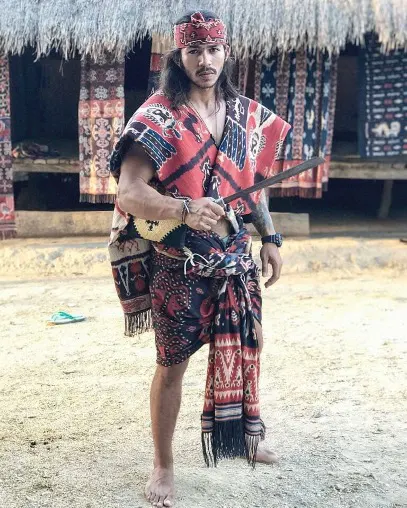
The handwoven textile of Sumba island, made in distinct forms for men and women and patterned with motifs tied to clan, status and ceremony. The difference between a decorative modern piece and a significant ceremonial one is legible in the dye, the motif vocabulary, the weave and the finishing — and none of it requires specialist equipment to read.
- Cloth forms
- 4
- Motif registers
- 5
- Classic natural dyes
- 2
How do you read the motifs?
Motifs on Sumbanese cloth are not decorative filler. They were historically regulated, and certain images belonged to noble lineages rather than to anyone who wished to weave them. That social dimension is precisely why motif literacy matters when assessing a piece.
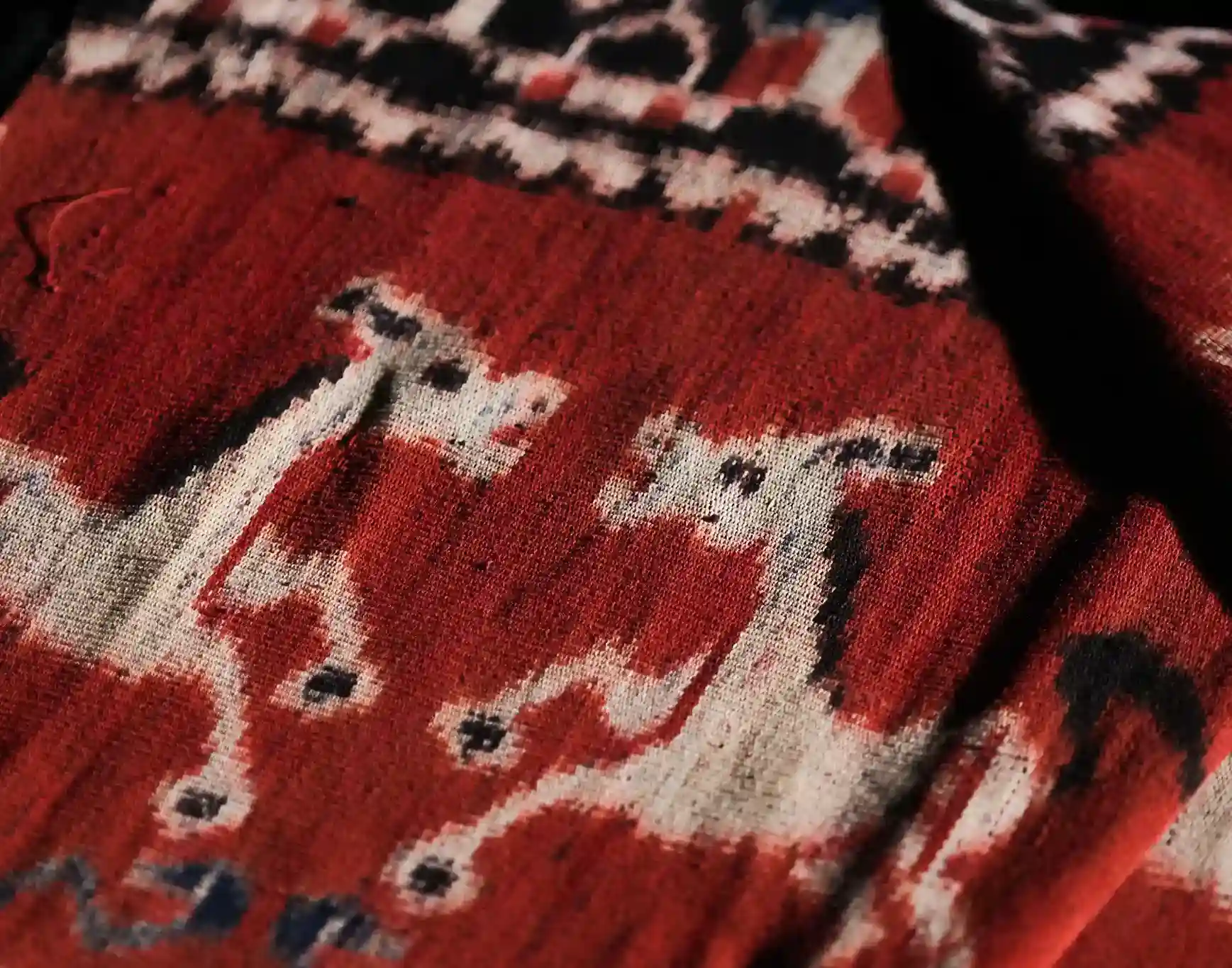
- Horses: prestige, status and ceremonial exchange — one of the most recognisable Sumba motifs.
- Skull tree imagery: historical ancestral and ritual reference, associated with older ceremonial cloth.
- Mamuli forms: the ear-ornament shape used as an ancestral and lineage symbol.
- Roosters, deer and birds: recurring animal registers arranged in bands across the cloth.
- Human figures and ancestral registers: usually placed in the dominant central bands.
Motif meaning varies between districts, so a symbol read one way in East Sumba may carry different weight elsewhere. We record what is known about a piece and clearly separate that from interpretation, rather than presenting a tidy story that cannot be supported.
What are the main types of Sumbanese cloth?
Four forms
Sumba weaving divides most clearly by gender of the wearer, and that division determines both the shape of the cloth and the technique used to pattern it. Knowing which form you are looking at is the first step in evaluating any piece.
Hinggi
Man’s cloth, worn as a pair over shoulder and hip
Large rectangle, mirrored composition, fringed ends
Lau
Woman’s cloth, sewn into a tube skirt
Cylindrical construction, narrower panel width
Warp ikat cloth
Both; the dominant patterning method
Feathered motif edges, pattern legible on both faces
Supplementary weft work
Often on women’s cloth, raised patterning
Pattern sits proud of the ground weave
What we document, as found
An older cloth used ceremonially will show its history, and a piece described as flawless usually deserves more scrutiny than one described with its faults listed. A collector who discovers an undisclosed repair after purchase will never buy again.
-
01
Fibre loss
Thinning and holes, with location noted.
-
02
Old repairs
Restitching and replaced fringes.
-
03
Staining
Watermarks and uneven fading from light exposure.
-
04
Single or pair
Whether the piece is a single cloth or the surviving half of a pair.
-
05
Dye and district
Dye family and, where known, district of origin.
We do not assign ages or attributions we cannot substantiate. Where a piece is older, we say it is older and describe its characteristics; where a firm date or provenance chain cannot be evidenced, we say that too.
Natural dyes and why they matter to value
The classic Sumba palette comes from morinda root, which yields the deep reds, and indigo, which yields blues through to near-black, with overdyeing producing the darker tones. Natural dyeing is slow work: repeated immersion over long periods builds the depth collectors look for, and that time investment is one of the clearest differences between a serious piece and a quick commercial one.
Chemically dyed cloth is not automatically inferior for decorative use, and it often performs better under laundering and sunlight. For collecting, however, dye type is a material fact that affects value, so we state it plainly for every piece rather than leaving buyers to guess from photographs.
Displaying traditional cloth safely
Light is the main threat to a collected textile, and the damage it causes is cumulative and permanent.
-
01
Keep it out of direct sun
And avoid strong spotlights aimed at the cloth.
-
02
Rotate displayed pieces
So exposure is shared across the collection.
-
03
Support the full top edge
With a sleeve and rod rather than hanging from points.
-
04
Keep it dry and ventilated
Stable humidity matters more than low humidity.
-
05
Roll rather than fold
For storage, with acid-free interleaving where possible.
Frequently asked questions
Four questions
Next step
Tell us collection or display, and what interests you.
We send available pieces with condition notes and photographs of both faces — not a catalogue, because each cloth is individual.