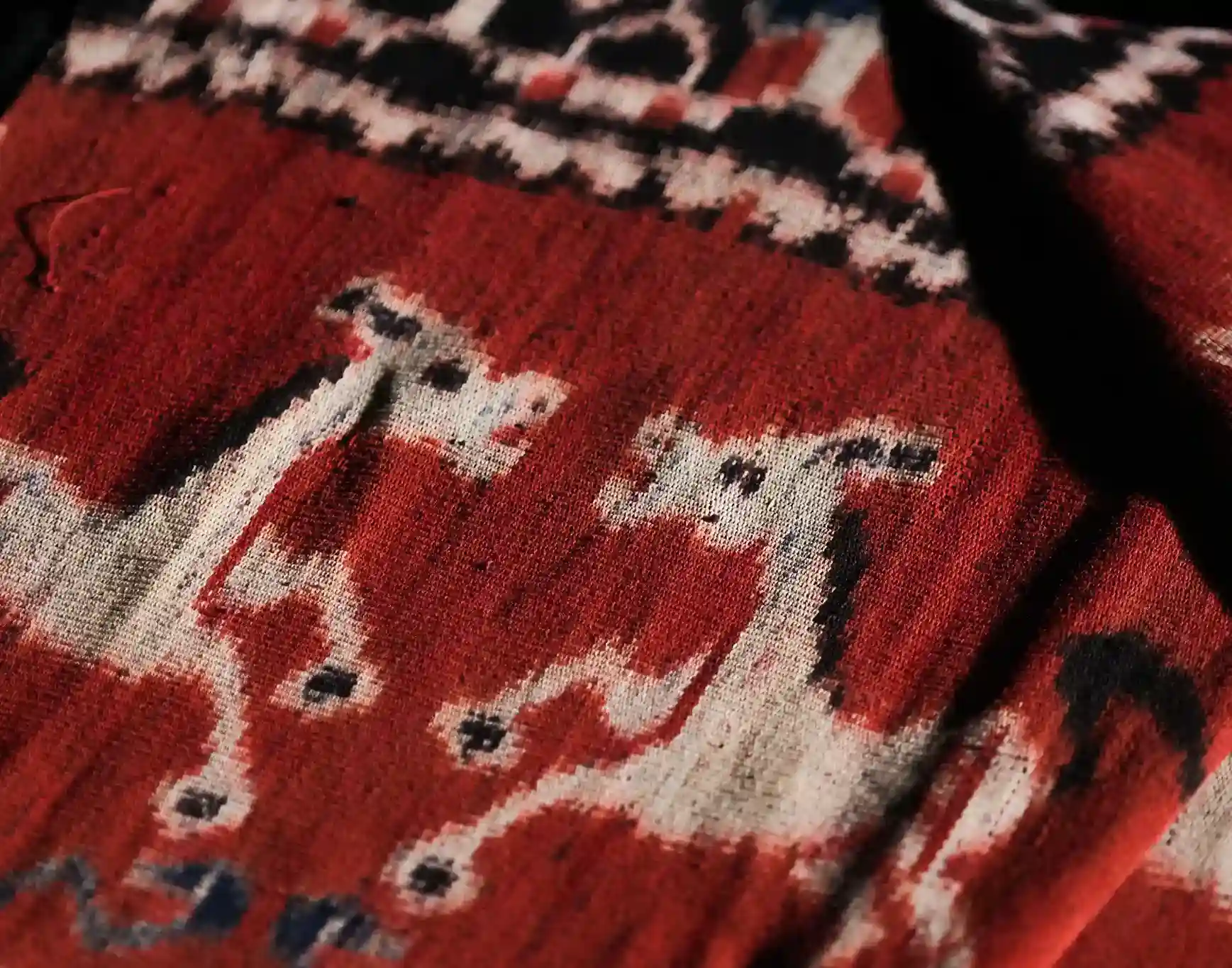
A Sumba ikat wall hanging is a handwoven cotton panel from Sumba island in eastern Indonesia whose pattern is created by binding and dyeing the warp threads before weaving begins, and SumbaTextile Studio sells these panels online directly to homeowners, interior designers, galleries, and trade buyers worldwide.
This page explains what we stock, how each piece is checked, which sizes suit which walls, and how an order moves from enquiry to delivery. Every panel we list is woven by hand, not printed, and is sold with a written note of where it was woven and which dye family was used.
What makes a Sumba ikat wall hanging different from printed wall art?
In true ikat, the design lives inside the yarn itself: bundles of warp thread are tied with fibre, dipped in dye, untied, and re-tied for each colour before the weaver ever sits at the loom. That sequence produces the soft feathered edge along every motif, and it also means the pattern reads on both faces of the cloth. A printed imitation carries ink on one surface only, so the reverse looks pale and blurred. When you hold a genuine panel to the light, the motif is legible from behind. This is the single fastest test any buyer can run, and it is the test we run on every piece before listing.
Which pieces work best on a wall?
Not every Sumba textile was made to hang flat. The large rectangular men’s cloth, the hinggi, was woven as a mirrored pair and reads as a complete composition when hung vertically, which is why it dominates our wall-hanging selection. The women’s tube skirt, the lau, was sewn into a cylinder and usually needs opening or framing before display.
| Piece | Typical size range | Best wall use |
|---|---|---|
| Hinggi panel (single) | Around 110-130 cm wide, 230-270 cm long | Full-height feature wall, stairwell, double-height lobby |
| Half hinggi / cut panel | Around 110-130 cm wide, 110-140 cm long | Above a bed, sofa, or console table |
| Lau (women’s cloth) | Around 60-90 cm wide when opened | Framed vertical piece, narrow wall, corridor |
| Small motif panel | Around 40-70 cm across | Grouped gallery wall, guest room, office |
If your project needs matched pairs or a repeated motif across several rooms, tell us at enquiry stage. Handwoven stock is finite, and pairs are easier to reserve early than to reconstruct later.
How do we check that a panel is genuinely handwoven?
Every incoming panel is inspected against a fixed checklist before it is photographed or offered, because the fastest way to lose a trade buyer is to send a machine-made piece described as village work.
- Reverse-face reading: the motif must be clearly legible from the back of the cloth.
- Selvedge and fringe: hand-finished edges show slight variation, and warp ends are knotted or twisted by hand rather than cut and heat-sealed.
- Weft density: minor rhythm changes across the cloth indicate a human beat rather than a mechanised one.
- Dye behaviour: naturally dyed panels using morinda root and indigo show depth variation between dye baths, and the tone shifts subtly under daylight and lamplight.
- Origin note: we record the village or district the panel came from, and that note travels with the piece.
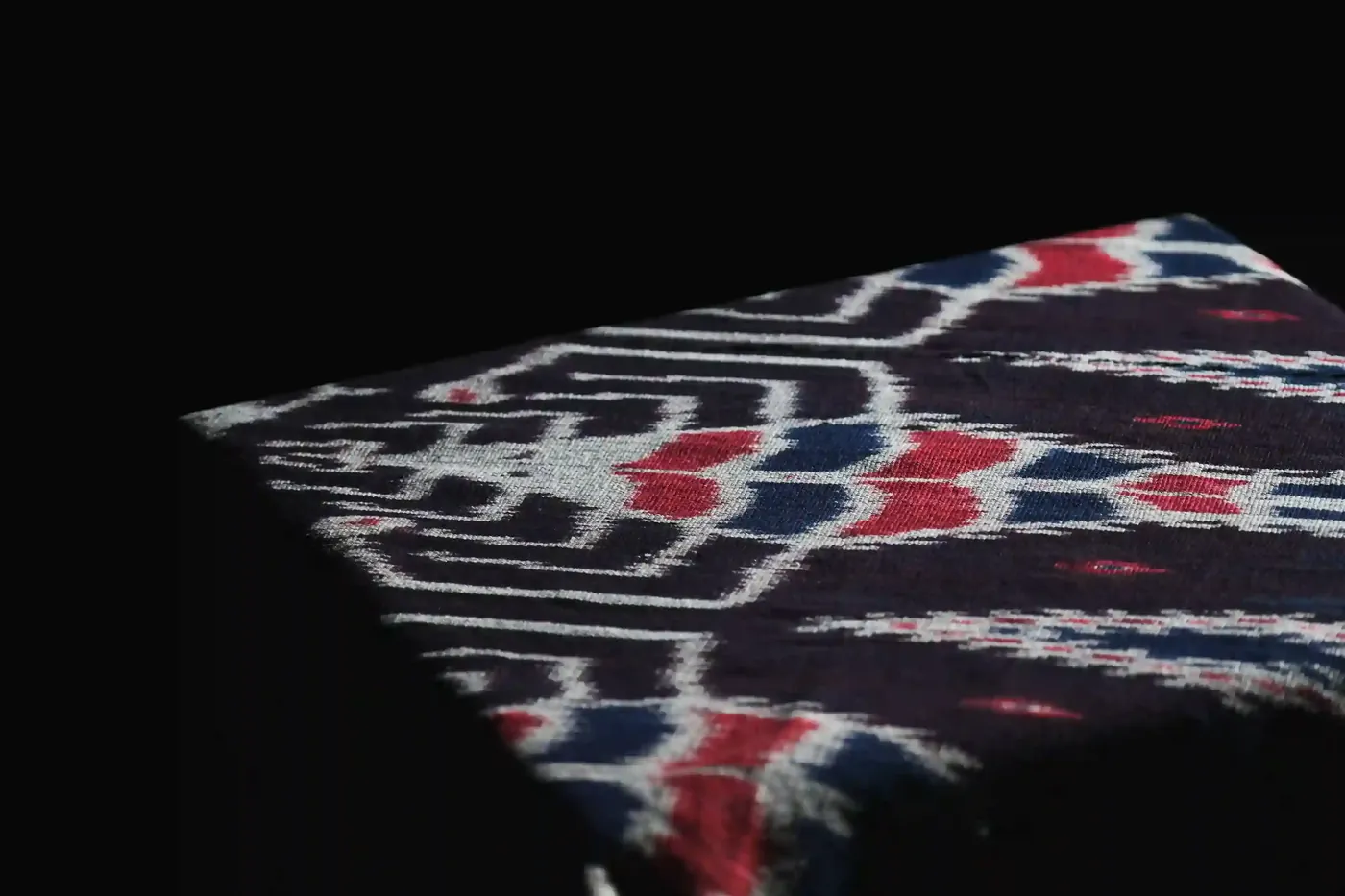
Buyers who want to go deeper into motif meaning and construction can read our background material on authentic Sumba ikat textiles before choosing a panel.
Choosing size, orientation, and mounting
The most common sizing mistake is buying a panel that matches the furniture below it rather than the wall around it. A reliable rule is to let the hanging occupy roughly two-thirds of the width of the furniture beneath it, and to leave 20 cm of clear wall on each side so the ikat border is not crushed.
For mounting, we recommend a hidden sleeve sewn along the top edge with a timber or metal rod, since this spreads the weight of the cloth evenly and prevents the puckering that clips and pegs cause over time. Panels shipped for hospitality projects can be prepared with the sleeve already sewn on request. Direct, all-day sunlight will fade any natural dye, so a wall that receives indirect light will hold colour far longer.
How does ordering work?
Ordering is a conversation, not a checkout gamble, because each panel is unique and stock changes as pieces are sold.
- Send your brief: wall dimensions, colour direction, quantity, and destination country.
- We reply with available panels, full-piece photographs front and back, measurements, and dye information.
- You reserve the panels you want, and we hold them while terms are agreed in writing.
- Payment terms, packing method, and delivery route are confirmed before anything ships.
- We pack, document, and dispatch, then send tracking details.
Designers working on several rooms at once often prefer to move straight to our premium Sumba ikat cloth for luxury interiors selection, while collectors focused on older and ceremonial pieces usually start with Sumbanese traditional cloth.
Packing and international delivery
Textiles fail in transit for two reasons: moisture and hard creasing. We roll every panel around an acid-free core rather than folding it, wrap it in breathable material, and enclose the roll in a rigid tube or carton. Because we ship from Indonesia, expect customs handling in the destination country, and import duties and taxes are the responsibility of the receiving party. We prepare the commercial documents for the shipment and supply extra paperwork if your customs broker asks for it.
Who buys Sumba ikat wall hangings from us
Our buyers cluster into four groups: homeowners furnishing one statement wall, interior designers specifying textile art for villas and hotels, boutique retailers reselling single pieces, and institutional buyers acquiring heritage cloth for display. Tell us which group you belong to and the reply you receive will be shaped accordingly.
Frequently asked questions
Are the wall hangings new or antique?
We offer both, and each listing states which it is. Newly woven panels are made by living weavers using traditional binding and dyeing methods, and they are the practical choice for interiors because condition is consistent. Older ceremonial pieces carry age, patina, and occasional repairs, and they are priced and documented separately. If your project needs several matching panels, newly woven stock is the realistic route.
Can I see the actual panel before I pay?
Yes. Every reserved panel is photographed individually front and back, in daylight, with a measuring tape visible in at least one frame. You receive images of the exact piece being held for you, not a catalogue stand-in. On request we also record a short video showing the cloth moving in natural light, which reveals dye depth far better than a still photograph does.
How should I clean a Sumba ikat wall hanging?
Do not machine wash it. Dust the surface with a soft brush or a vacuum on low suction through a screen, and air the panel occasionally in shade to discourage humidity damage. Natural dyes such as morinda and indigo will bleed if soaked, so any deeper cleaning belongs with a textile conservator rather than a laundry service. Rotating a panel yearly also evens out light exposure.
Do you ship a single panel, or only bulk orders?
Single panels are welcome. Many first orders are one piece for one wall, and a good number of trade relationships started exactly that way. Bulk buyers, resellers, and project purchasers are handled through a separate wholesale track with tiered structures, so mention your intended volume at enquiry and we will route your request to the right channel from the start.
Order your Sumba ikat wall hanging
Send us your wall dimensions, colour direction, and delivery country, and we will reply with the panels currently available that match your brief. Message us on WhatsApp at https://wa.me/6281139414563 or email [email protected], and include photographs of the space if you have them.