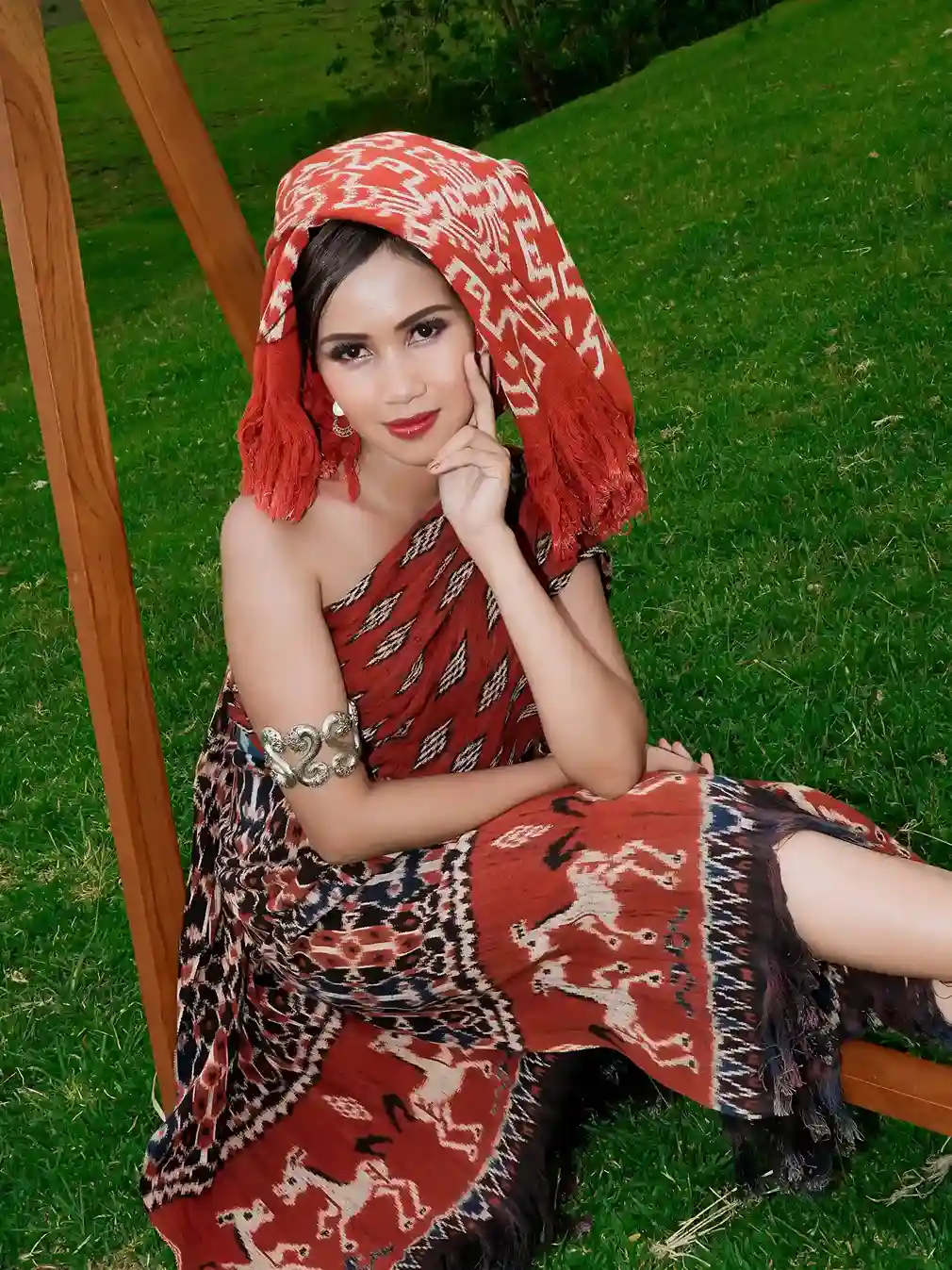
Sumba ikat fabric for fashion is handwoven warp-ikat cotton cloth supplied in designer-ready cuts for apparel, bags, footwear trims, and accessories, sold by the piece or by warp length rather than off a bolt, with panel width limited to roughly 45 to 70 centimetres by the backstrap loom on which it is made.
That width limit is the single most important fact for anyone planning to buy ikat fabric for a collection. It is not a supply shortage or a grading issue; it is the geometry of the loom. Designers who build their pattern pieces around a narrow panel get clean, efficient garments. Designers who send a marker laid out for 140-centimetre mill goods discover the problem at cutting stage, which is the expensive place to discover it.
What can be cut from a narrow handwoven panel?
A panel between 45 and 70 centimetres wide will comfortably yield most bodice fronts, sleeves, yokes, panels, and virtually every accessory component, while full-width skirt pieces and wide one-piece backs need either a seam or a different fabric. Working with the constraint tends to produce better design than fighting it.
| Product | Fits a narrow panel | Design note |
|---|---|---|
| Jackets and kimono forms | Yes | Panel seams read as intentional structure |
| Shirts and blouses | Yes | Plan yoke and sleeve placement against the motif |
| Wide skirts and dresses | With seams | Use vertical joins or combine with a plain ground cloth |
| Tote and clutch bags | Yes | Ideal use of shorter offcuts |
| Scarves and stoles | Yes | Warp length sets the finished length |
| Trims, cuffs, and collars | Yes | Highest yield from remnant lengths |
How does pattern placement work in warp ikat?
In warp ikat the pattern is tied and dyed onto the lengthwise threads before weaving, so motifs repeat along the length of the cloth and are fixed in position across its width. A designer can slide a pattern piece up and down the panel but cannot move a motif sideways, which makes placement a length-planning exercise rather than a free composition.
The practical consequence is that pattern-matched garments consume more cloth than plain ones. Allow extra warp length for any style where motifs must align across a centre front, a pocket, or a paired sleeve. State the intended placement at the order stage and the warp can be planned around it, which is far cheaper than buying surplus cloth and cutting around mistakes. Yardage-based buyers usually order from the handwoven Sumba ikat fabric by the meter range.
What are the handling properties designers should test first?
Handspun cotton woven on a backstrap loom is denser and less uniform than mill cloth, and the ikat resist-dye process leaves the yarn slightly variable in tension along its length. Neither trait is a defect, but both change how the cloth behaves under a machine.
- Weight and drape: heavier and stiffer than commercial cotton shirting, closer to a firm suiting in body.
- Edge stability: cut edges fray readily, so overlock, bind, or French-seam every raw edge.
- Needle choice: a sharp rather than a ballpoint needle, with a slightly longer stitch length.
- Pressing: press with a cloth and moderate heat; natural dyes dislike prolonged high temperature.
- Interfacing: fusible interfacings behave unpredictably on uneven handweave, so sew-in options are safer.
- Colour transfer: always test a wash swatch before committing a full collection, particularly on deep indigo.
Should a collection use naturally dyed or synthetically dyed ikat?
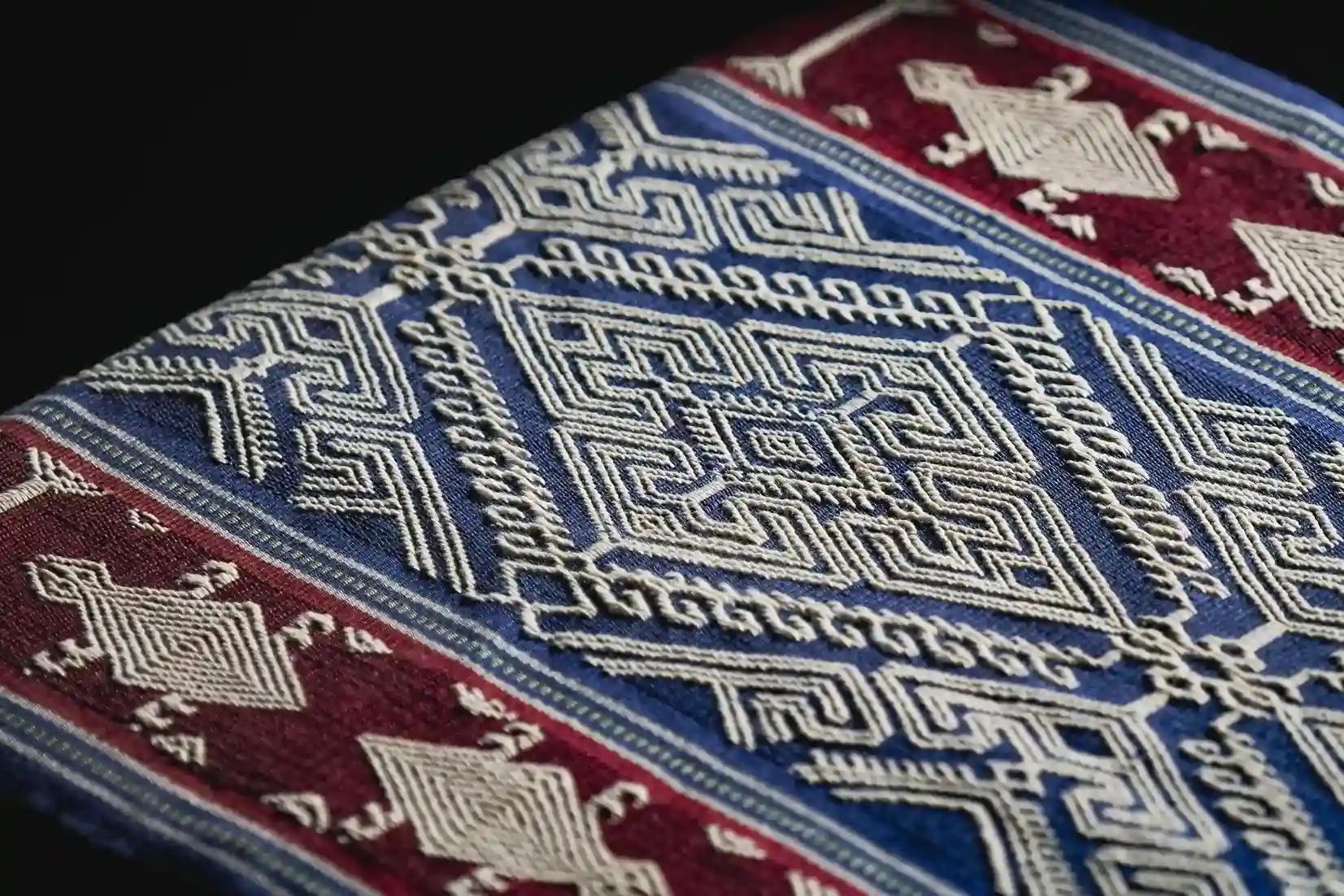
Natural dyeing in Sumba builds colour through repeated dipping cycles, with indigo giving blues to near-black and Morinda citrifolia root giving the characteristic reds, so a naturally dyed piece carries visible depth and slight unevenness that a synthetic bath does not reproduce. It also carries variation between lots.
For a small-run designer collection where each garment is sold as a distinct piece, natural dye is usually the right answer and the variation becomes part of the value. For a repeat commercial line that needs the same colourway across two seasons, synthetic-dyed cloth is the honest choice, and the marketing should say so plainly rather than implying otherwise. Both are available, and the specification sheet always states which was used. Boutique labels building small curated ranges often work from the Sumba handwoven textile for boutique collections selection.
How do designers order sampling before a production run?
Almost every collection failure we see comes from skipping the swatch stage, because handwoven cloth cannot be judged reliably from a photograph. A physical swatch shows weight, hand, and true colour under the buyer’s own lighting.
The workable sequence is a small swatch set first, then a single garment length for a prototype, then the production order with warp length booked to the confirmed placement plan. Between prototype and production, lock down three things in writing: the panel width, the total warp length per garment including pattern-matching allowance, and the dye method. Designers exploring across Indonesian ikat traditions may also want the wider Indonesian ikat fabric selection.
What about care instructions for the finished garment?
Naturally dyed handwoven cotton should be washed cold by hand or on a delicate cycle, without chlorine bleach, and dried flat in shade rather than in direct sun, which is the same guidance textile conservators give for keeping natural dyes stable. Passing that instruction to the end customer is part of selling the product properly.
Labels should state hand-wash cold, no bleach, dry in shade, warm iron with a pressing cloth, and dry-clean only if the maker has tested it. Deep indigo may release a small amount of colour in early washes; a first separate wash prevents complaints. Accessories with fused linings or leather trims should be spot-cleaned rather than immersed.
Frequently Asked Questions
How wide is the fabric and can I get wider cloth?
A single handwoven panel is generally 45 to 70 centimetres wide because that is what a backstrap loom produces. Wider cloth exists only as two panels joined at a centre seam. If your design genuinely needs a seamless wide piece, ikat from this tradition is the wrong material for that component, though it works well as a panel, yoke, or feature section within the garment.
Can I order a specific colourway for a collection?
Colour direction can be specified, and the dye method determines how precisely it can be matched. Synthetic dyeing allows close repeatability across lots. Natural indigo and Morinda red are built up through repeated dipping, so they are quoted against a reference piece with an agreed tolerance rather than an exact code. We confirm which method a quotation covers before production starts.
Does the fabric shrink or bleed?
Handspun cotton can shrink on first wash, and deep natural dyes may release some colour early on. Always wash a test swatch under your intended care instructions before cutting a collection, and consider pre-washing yardage if the finished garment will be laundered rather than dry-cleaned. Record the shrinkage percentage you measure and build it into your pattern allowances.
What quantity do I need for a small collection?
Calculate warp length per garment first, then add an allowance for pattern matching, which is the cost most designers underestimate. A jacket using placed motifs consumes noticeably more than an unmatched one. Send us your style list and target unit count and we will convert it into required warp length and panel count before you commit to an order.
Request swatches for your collection
Send your style list, target unit count, and the colour direction you are working towards, and we will send swatches with weight, width, and dye method stated on each. Contact us on WhatsApp at https://wa.me/6281139414563 or email [email protected]. Sketches or a technical pack help us advise on placement before you order warp length.