
Commissioned before the loom is dressed.
Cloth made to your specification by weavers in the weaving centres of East Sumba. Because ikat is tied and dyed into the warp before weaving begins, a commission is planned rather than picked — which is why the specification conversation happens first and matters most.
- Things you direct
- 4
- Stages to delivery
- 5
- Warp, set before weaving
- 1
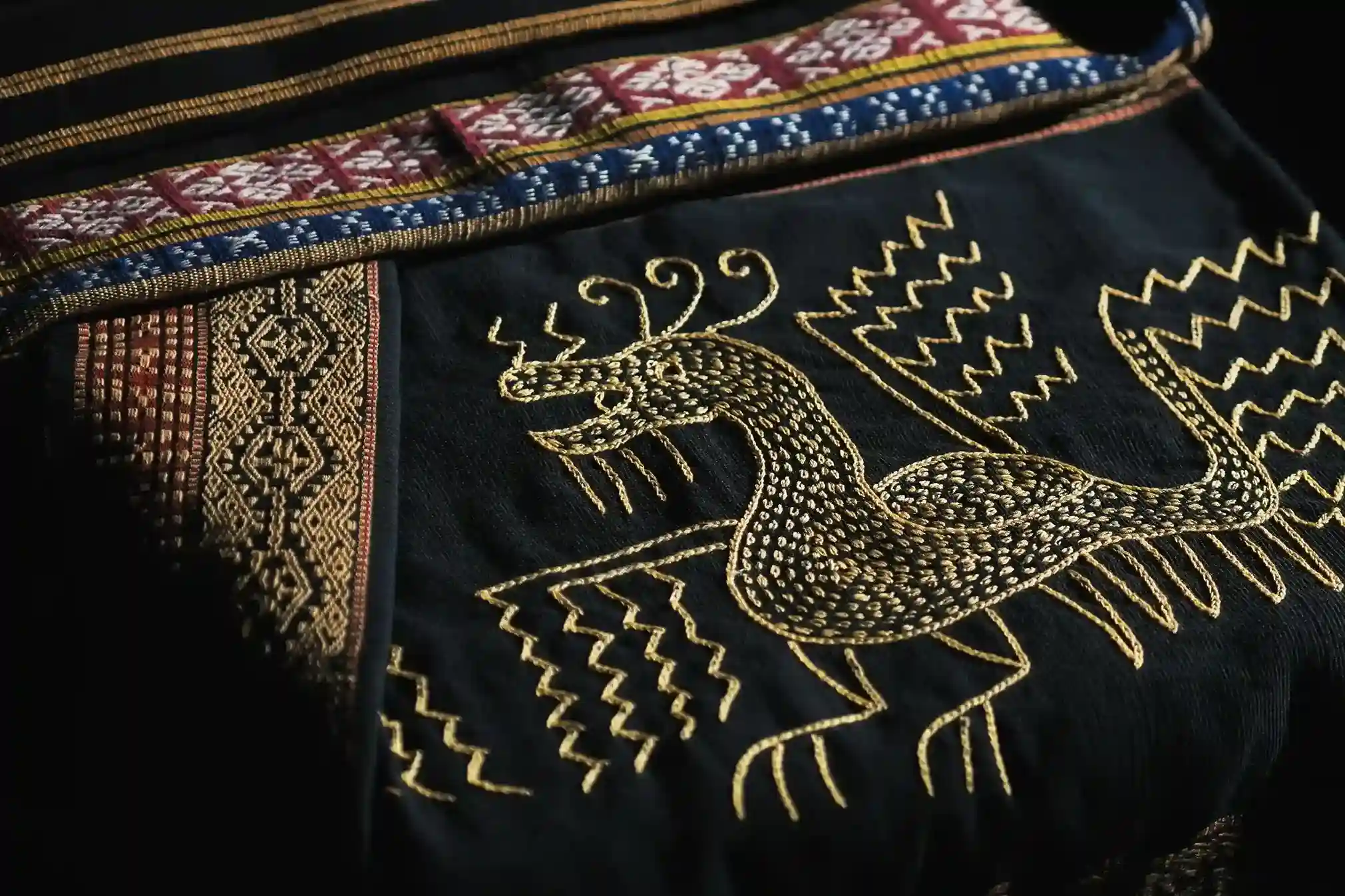
Why a commission is planned, not picked
In ikat the pattern is bound onto the warp threads and dyed before a single weft pass is made. Every decision about motif, scale and colour is therefore taken before the loom is dressed — and cannot be changed afterwards without starting again.
- Yarn is locally sourced cotton, hand-spun, then dyed with plant and mineral dyes found on the island.
- Depth of colour is a function of time: repeated dipping and drying cycles over weeks, not a single bath.
- Late changes to length are the most expensive kind, because warp length is fixed before weaving starts.
What you direct, and how far it goes
Four decisions
Some of this is open and some of it is not, and we would rather say which is which before a commission starts than explain it afterwards.
Motif family
Selection and layout are directed; scale, colour and border treatment are adapted
Certain traditional motifs carry specific cultural meaning and are not free graphic material. We say clearly which elements are better selected than redesigned
Colour direction
Natural dye works within indigo blues, morinda reds and undyed cream; synthetic covers a broader palette
A pastel natural-dye cloth is asking for something the tradition cannot produce. We state which method a quotation covers
Dimensions
Width up to a single loom panel, or wider as two panels joined at a centre seam. Length is flexible if set early
A two-metre feature panel is achievable; a two-metre seamless panel is not
Collaboration
Consultation at several stages, with progress photographs at agreed milestones
Problems surface while the loom is still running rather than after dispatch
Where we will push back
Motifs on Sumbanese cloth were historically regulated, and certain images belonged to noble lineages rather than to anyone who wished to weave them. A commission is the point at which that matters most, because it is where new cloth is actually made.
-
01
Ancestral and lineage imagery
Selected rather than redesigned. We will say which motifs sit in this category for the district your piece comes from.
-
02
Scale and border
Openly adaptable. This is usually where a scheme gets what it needs without touching meaning.
-
03
Contemporary motif work
Entirely possible, and the honest route when a brief wants a graphic rather than a tradition.
-
04
What we record
The district, the dye method and the motif family, in writing — so the story you tell downstream is accurate.
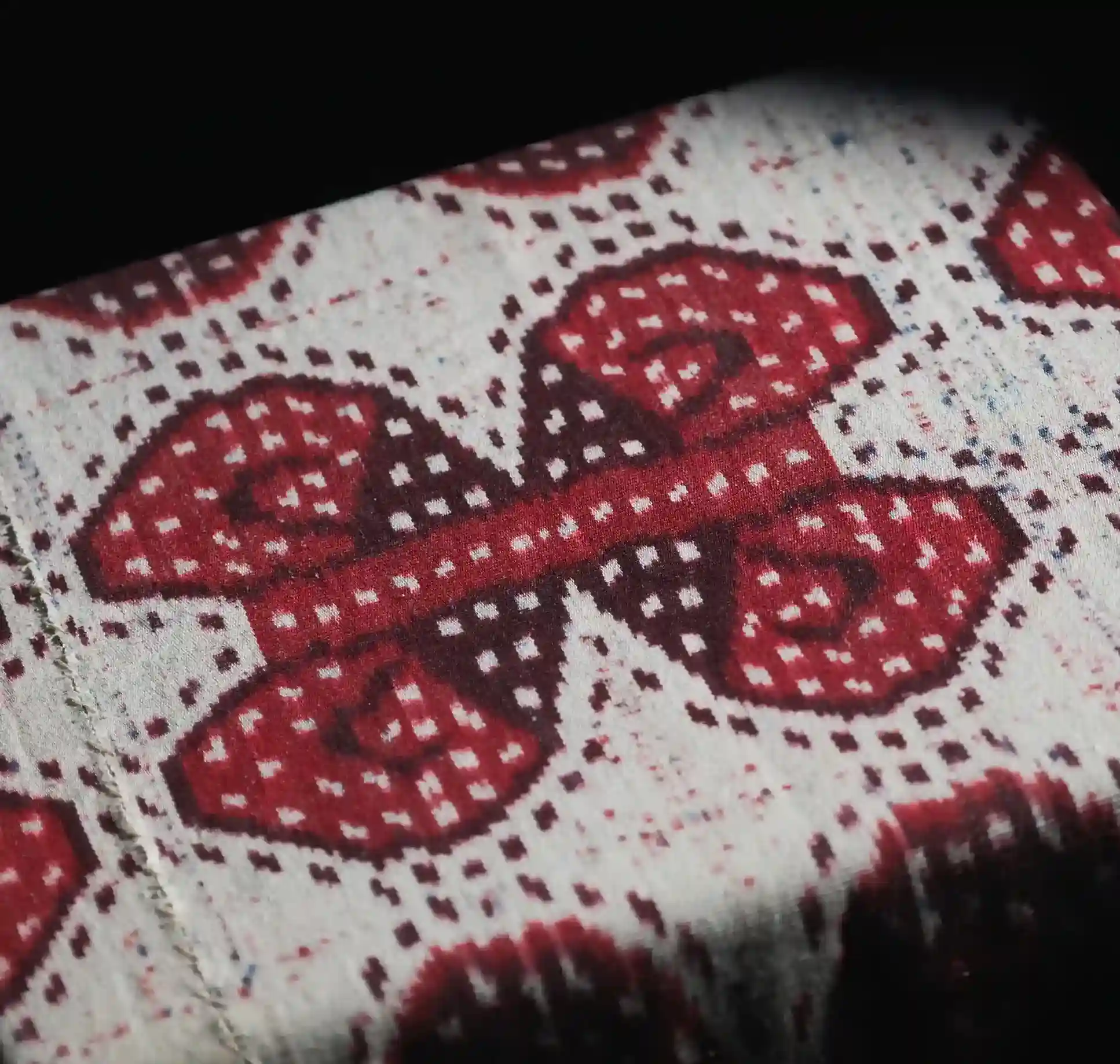
Quality checks before it reaches you
Every commissioned piece is checked against the confirmed specification before dispatch: measured dimensions, dye method, motif layout and finishing at the selvedge and fringe. Where a piece falls outside the agreed tolerance it is replaced or re-priced by agreement, not shipped and argued about later.
The variance you should plan for is colour depth between dye lots and small dimensional differences across pieces woven by different hands. Both are named in the confirmation rather than discovered on arrival.
How a commission runs
The specification conversation is the longest part on your side and the shortest part of the timeline. Everything after it is craft time.
-
01
Brief
Motif direction, colour range, dimensions and the date you need it in place.
-
02
Consultation
Several stages, working through what is directed and what is selected.
-
03
Specification frozen
Written, with the tolerance range agreed against a reference piece.
-
04
Production
Tying, dyeing, drying, weaving — with progress photographs at milestones.
-
05
Inspection and dispatch
Checked piece by piece against the specification, then packed and shipped.
Frequently asked questions
Four questions
Next step
Tell us the motif direction, the colour and the date.
We will come back with what is achievable, what is better selected than redesigned, and a realistic production window — before anything is committed.