
A dossier, not a certificate.
Curated groups of handwoven Sumba textiles for exhibition, gallery display or institutional acquisition, where each piece arrives with a written description of technique, dye family, condition and known handling history rather than a sales adjective.
- Acquisition categories
- 5
- Documented facts per piece
- 6
- Common display guidance
- 50 lux
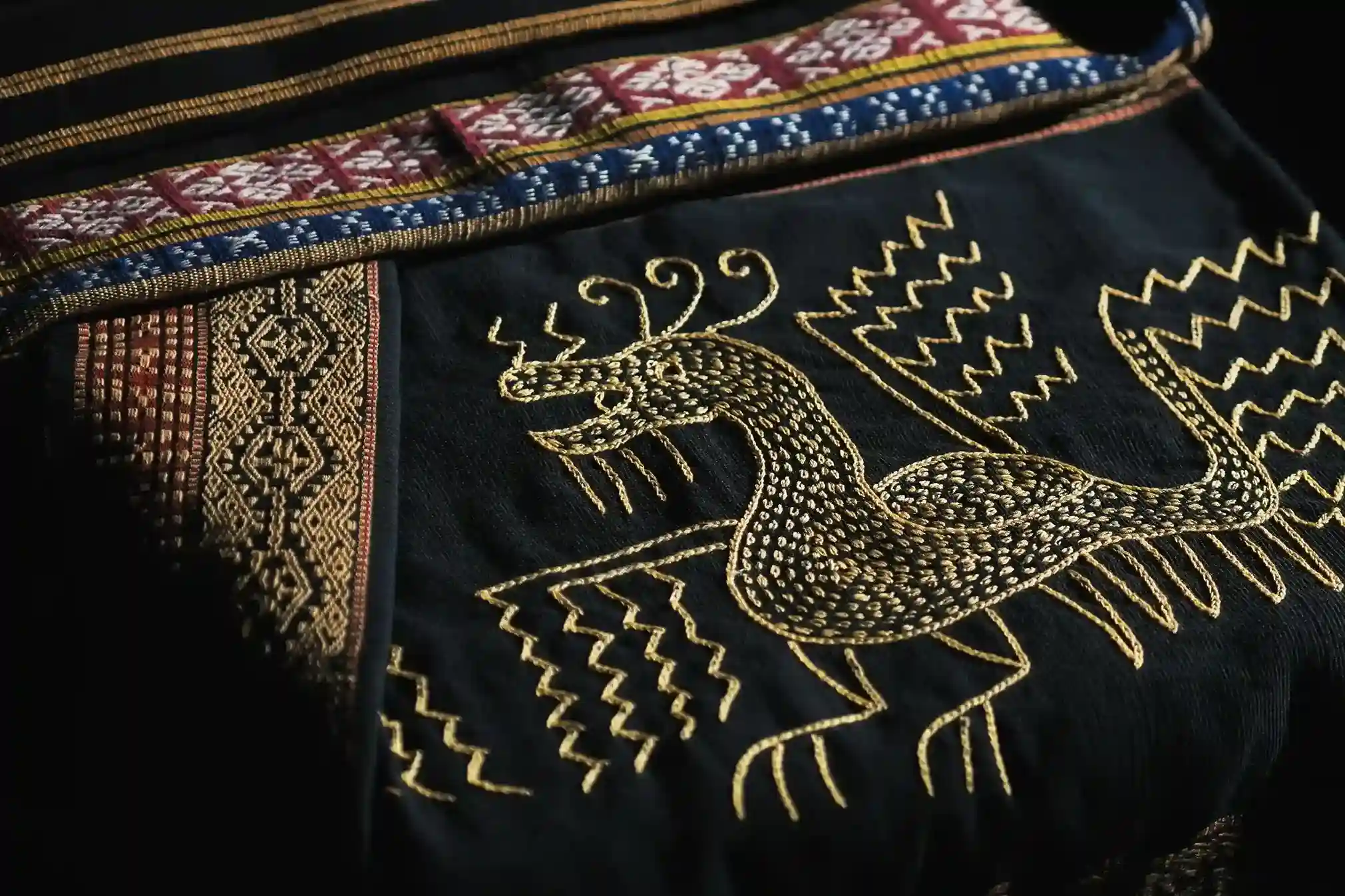
What does “heritage” mean when applied to Sumba cloth?
Two distinct things, and conflating them is the most common error in the trade. Technical heritage means cloth made by the traditional process — hand-tied warp ikat, plant dyes, backstrap loom — regardless of when it was made. Age means pieces genuinely in circulation or in family keeping for decades.
- A newly woven natural-dye hinggi can be technically heritage and chronologically new.
- We state which of the two applies to every piece, in writing.
- An exhibition label that overstates age is far more damaging to an institution than one that is modest and accurate.
Which pieces suit exhibition and which suit acquisition?
Five categories
Traditional-process contemporary
Recently woven using hand-tying, natural dye and hand-spun or fine cotton
Technique, dye family, weaving region, weaver community where known
Process exhibitions, teaching collections, long-term display
Older circulated cloth
Pieces with visible age, wear patterns and dye maturation
Condition report, description of wear, handling history as far as known
Comparative display, textile study collections
Elaborate pictorial hinggi
Large warp ikat panels with dense figurative motif fields
Motif inventory, panel construction notes, seam and finish description
Anchor works in a gallery hang
Women’s tubular and beaded work
Lau formats, supplementary-warp decoration, shell or bead embellishment
Construction notes, embellishment condition, stability assessment
Costume and adornment exhibitions
Study fragments
Partial cloth, damaged sections, technique samples
Technique breakdown, structural notes
Handling collections and conservation training
What documentation travels with each piece
Every item is released with a dossier rather than a certificate, and the distinction matters. There is no single recognised authority issuing authenticity certificates for Sumba textiles, so a document claiming to be one is a marketing object, not an evidentiary one. What we supply instead is a set of facts a curator can check independently.
-
01
Technique
Warp ikat, supplementary warp or plain weave, and how the panels are constructed and joined.
-
02
Dye family
Natural, mixed or synthetic, with the visual and structural reasoning for that classification stated.
-
03
Fibre
Handspun or mill-spun cotton, and where the yarn character is visible in the weave.
-
04
Measurement
Dimensions, panel widths, seam positions and finish treatment at the ends.
-
05
Condition
Losses, staining, previous repairs, weak areas and any evidence of prior mounting.
-
06
History
Handling history to the extent it is genuinely known, with unknown segments recorded as unknown.
Institutions requiring an independent opinion are encouraged to commission one. We supply high-resolution imaging and will hold a piece while an external specialist reviews it.
Display, storage and handling
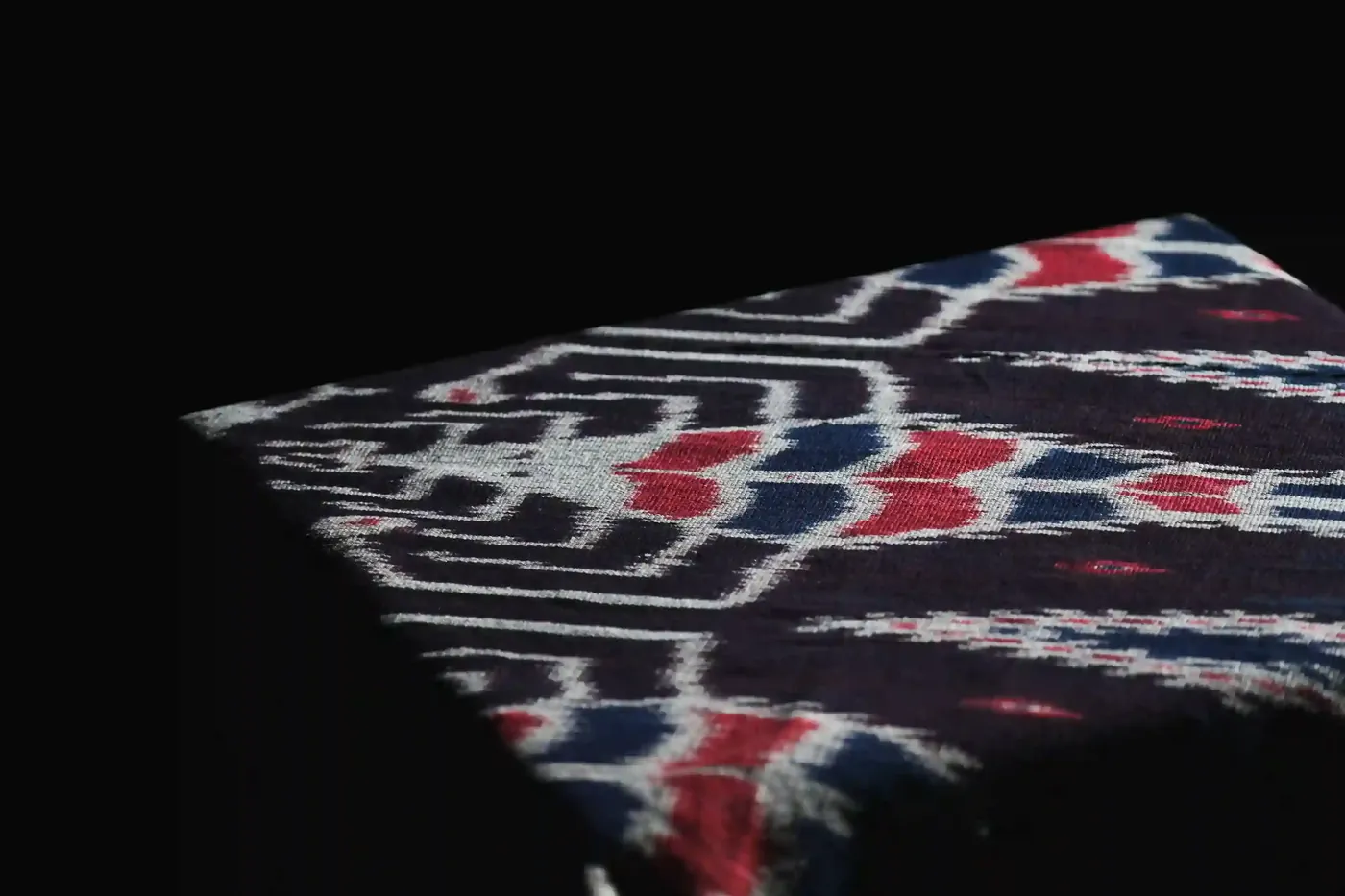
Textiles are among the most light-sensitive materials in any collection, and plant dyes are more fugitive than most. Standard conservation guidance keeps display illumination low — commonly cited around 50 lux — limits cumulative exposure, filters ultraviolet entirely, and holds relative humidity stable rather than merely low, because fluctuation does more damage than any single set point.
Those are general practices, not a specification for a particular object. Your own conservator should set the actual figures for your building and case design.
Practical notes specific to Sumba cloth
Five things that apply to this material in particular rather than to textiles in general.
-
01
Support the full weight
When moving a large hinggi. The centre seam is the usual failure point.
-
02
Roll, do not fold
For storage where the piece permits it, with acid-free interleaving.
-
03
Hang from a full sleeve
Or a padded support — never from clips at a few points.
-
04
Tray beaded pieces separately
Embellishment abrades neighbouring cloth.
-
05
Isolate new acquisitions
Before they join a stored collection, as a standard pest precaution.
Indonesia regulates the movement of designated cultural property, and many destination countries apply their own import controls to cultural objects. Institutions acquiring older textiles should verify the position with the relevant Indonesian authorities and their own legal counsel before shipment, rather than relying on a seller’s assurance — including ours.
Frequently asked questions
Four questions
Institutional projects
Send the brief and we will return a shortlist.
Theme, number of works, display constraints and the date the pieces must be on site. You get a shortlist with imaging, condition notes and a realistic assembly timeline. Pieces can be reserved while a committee reviews them.