
Traceability is the only checkable claim.
Handwoven textile bought from the weaving households that made it, with the weaving area, technique and dye method recorded for each piece instead of disappearing into an anonymous wholesale pile.
- Production stages
- 6
- Quality markers
- 5
- Named ikat villages
- 3
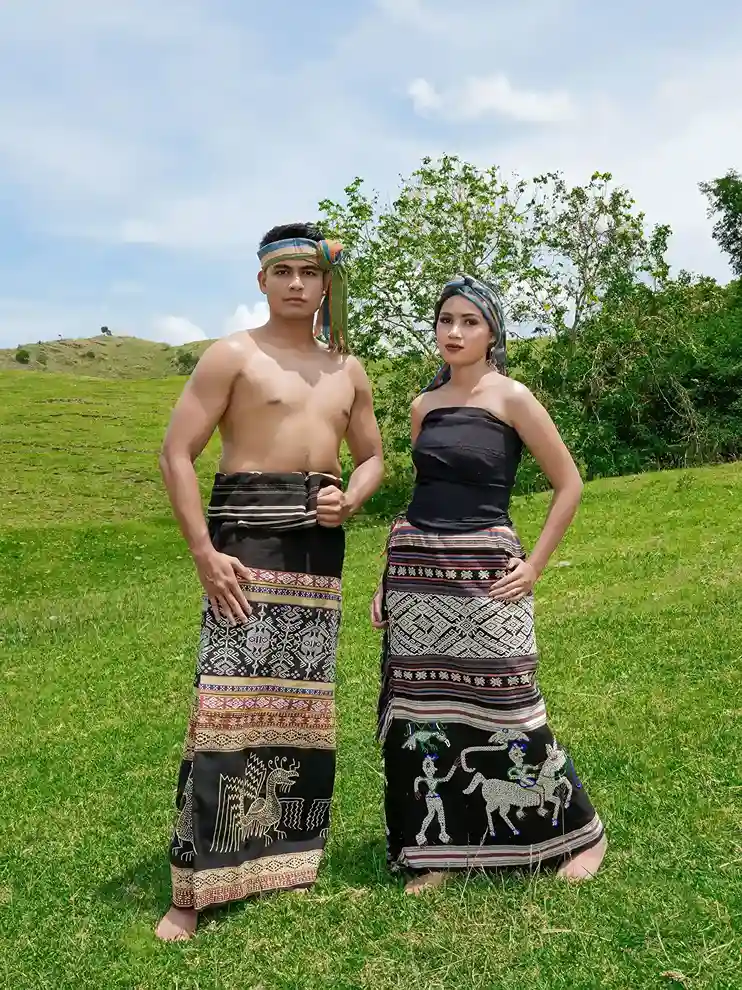
Where is this cloth actually made?
Sumba sits in East Nusa Tenggara, in eastern Indonesia, and its weaving is not evenly spread across the island. The pictorial warp ikat most buyers recognise is concentrated in East Sumba, in and around the district centred on Waingapu.
- Long-established ikat villages include Kaliuda, Rende and Prailiu.
- West Sumba’s tradition leans toward different structures — supplementary-warp patterning and bead or shell embellishment rather than large-scale pictorial ikat.
- A cloth from an East Sumba ikat village and one from a West Sumba household are different objects with different production logic, so the weaving area is part of every description.
What happens between raw yarn and finished cloth
Six stages
These stages run in sequence, not in parallel. That is the single most important thing a buyer of artisanal cloth should internalise.
Yarn preparation
Cotton is spun or sourced, then treated so the fibre will accept dye
Days to weeks, depending on whether the yarn is handspun
Tying the resist
Warp threads are stretched on a frame and bound tightly where colour must not reach
The slowest stage; complex pictorial fields take weeks or months
Dyeing
Repeated immersions — traditionally indigo for blue and morinda root for red
Natural dye builds colour over many cycles, spread across months
Untying and re-tying
Bindings removed or added between colours to build the motif
Interleaved with dyeing; sequential, not parallel
Weaving
The dressed warp is woven, usually on a backstrap loom
Weeks; faster than tying and dyeing but demanding of alignment
Finishing
Ends knotted or twisted, panels joined where the format requires
Days
A naturally dyed pictorial hinggi is a project measured in months to well over a year, and no amount of ordering pressure compresses a dye cycle. Buyers who need speed are better served by pieces already woven and in stock — and we say so rather than accepting a deadline that would only be met by substituting synthetic dye without telling anyone.
How to judge quality in artisanal cloth
Handmade does not automatically mean good, and the useful markers are technical rather than aesthetic. These are the same criteria we apply before buying a piece.
-
01
Pattern alignment
In a well-made ikat the motifs across a panel stay in register down the length of the cloth.
-
02
Tying precision
Crisp resist boundaries with the characteristic soft feathering, rather than smeared, bleeding edges.
-
03
Dye depth
Natural indigo built through repeated immersions reads deep and slightly variable, not thin and flat.
-
04
Weave density
An even beat, with no loose bands where tension slackened.
-
05
Seam and finish
Panels joined straight, ends secured properly rather than raw and fraying.
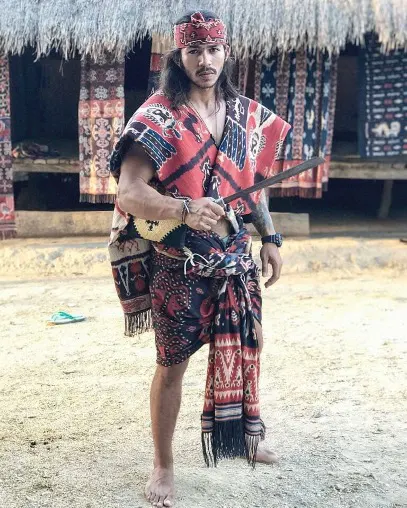
What “direct from weaving villages” means in practice
The buying relationship is with the people who made the cloth, and we are willing to describe the arrangement rather than gesture at it. Pieces are bought at a price agreed with the maker before the cloth changes hands, not driven down after it has been carried to a buyer. Commissioned work is scheduled around the real duration of tying and dyeing, not around a sales calendar.
Where a maker is willing to be named, we name them; where they prefer not to be, we record the area rather than inventing an attribution. We hold no certification for any of this, and we would be sceptical of anyone in this category who claimed one — what we offer instead is a description specific enough to be checked.
Can buyers visit the weaving areas?
Yes, and serious trade buyers often should — though it needs planning rather than improvisation.
-
01
Fly in
Sumba is reached by air through Waingapu in the east or Tambolaka in the west.
-
02
Plan the road journey
The weaving villages are a road journey from those points.
-
03
Arrange in advance
Weaving is household work rather than a workshop performance. Turning up unannounced expecting a demonstration is both intrusive and unproductive.
-
04
Come in the dry season
The more practical window for road travel, and for dye work, which depends on drying.
We can help structure a visit around households genuinely willing to receive buyers.
Frequently asked questions
Four questions
Next step
Tell us what you are looking for and we will tell you what exists.
Including whether it exists at all in the time you have. A description specific enough to be checked is what you get instead of a certificate.