
Three techniques. Sumba is warp.
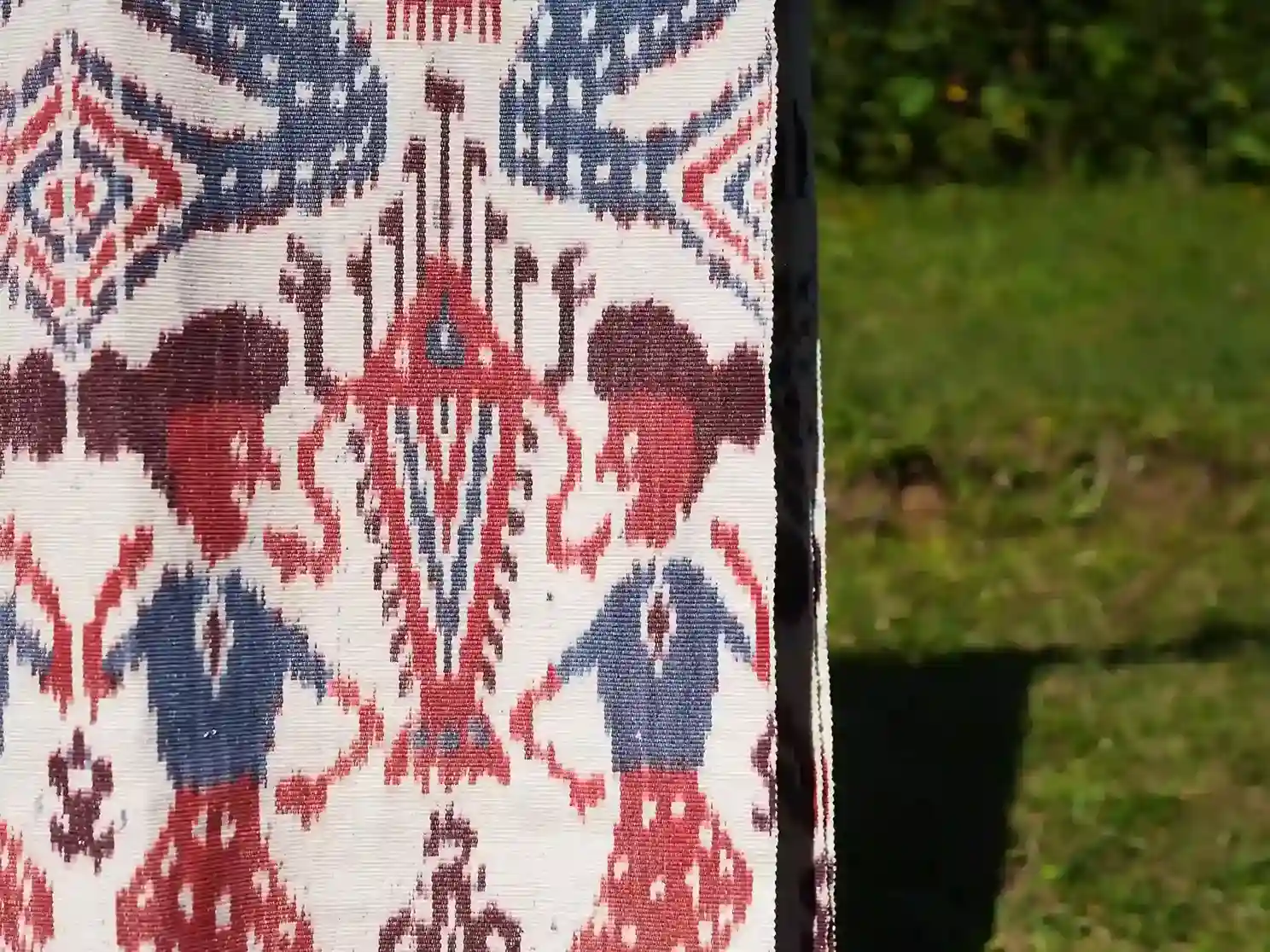
Ikat is cloth whose pattern is dyed into the yarn before weaving rather than printed onto finished fabric. This selection is drawn specifically from Sumba, where the tradition takes the form of hand-tied warp ikat — one technique, a coherent palette, and a supply chain short enough to describe honestly.
- Ikat techniques
- 3
- Island sourced
- 1
- Facts stated per listing
- 5
Why choose Sumba warp ikat for a design project?
Three practical reasons drive most buying decisions: the pattern scale is large, so a single piece reads as a composition rather than a repeat; the ground is cotton, which behaves predictably for makers who cut and sew; and the design carries meaning, so a project gets a story that survives being questioned — provided the story told is accurate rather than invented.
- Loom widths are narrow by industrial standards, and large cloths are often two panels joined at a centre seam.
- No two pieces match exactly, because the tying is done by hand for each warp.
- Naturally dyed cloth is slower to produce and less colour-stable in early washes than synthetic-dyed cloth.
- Pattern placement cannot be shifted after the fact — the design is fixed in the yarn before weaving begins.
Those trade-offs are worth stating before you order rather than after.
What kinds of ikat exist in Indonesia, and where does Sumba sit?
Three techniques
Ikat is not one technique but three, distinguished by which set of threads carries the resist-dyed pattern. Understanding the difference is the fastest way to buy the right cloth for a project instead of the right-looking cloth.
Warp ikat
Lengthwise threads are bound and dyed before the loom is dressed
Sumba, Flores, Timor, Sabu, parts of Sulawesi and Kalimantan
Bold lengthwise motifs, strong graphic fields, cotton ground
Weft ikat
Crosswise threads carry the pattern, applied as weaving progresses
Bali, South Sulawesi, Palembang and several Javanese centres
Softer, often silk or fine cotton, lighter drape
Double ikat
Both warp and weft are resist-dyed and aligned during weaving
Rare; the Indonesian example is geringsing from Tenganan in Bali
Extremely labour-intensive, ceremonial, seldom traded
Sumba belongs firmly to the warp ikat family, and is the island most associated with large pictorial designs — horses, deer, roosters, marine creatures and ancestral figures — worked across a full cloth rather than repeated as a small motif. Some Sumba patterns also carry the geometric legacy of Indian patola trade cloth.
How to tell woven ikat from print, from a photograph
The market carries a considerable volume of printed cloth sold under ikat vocabulary. These checks are simple enough to apply before you order.
-
01
Look at the reverse
Woven ikat shows the pattern clearly on both faces because the colour is in the yarn. A print has a pale ghosted back.
-
02
Look at the motif edges
Hand-tied resist produces a feathered, slightly irregular boundary. Crisp mechanical edges indicate print.
-
03
Look along the length
In a genuine piece, small registration shifts accumulate down the cloth. A print repeats identically forever.
-
04
Check selvedge and ends
Handwoven cloth shows a hand-finished edge and often a hand-knotted or twisted fringe.
We photograph the reverse of every piece as standard for this reason, and state the dye family in writing rather than leaving it to be inferred from the colours.
How the selection is organised
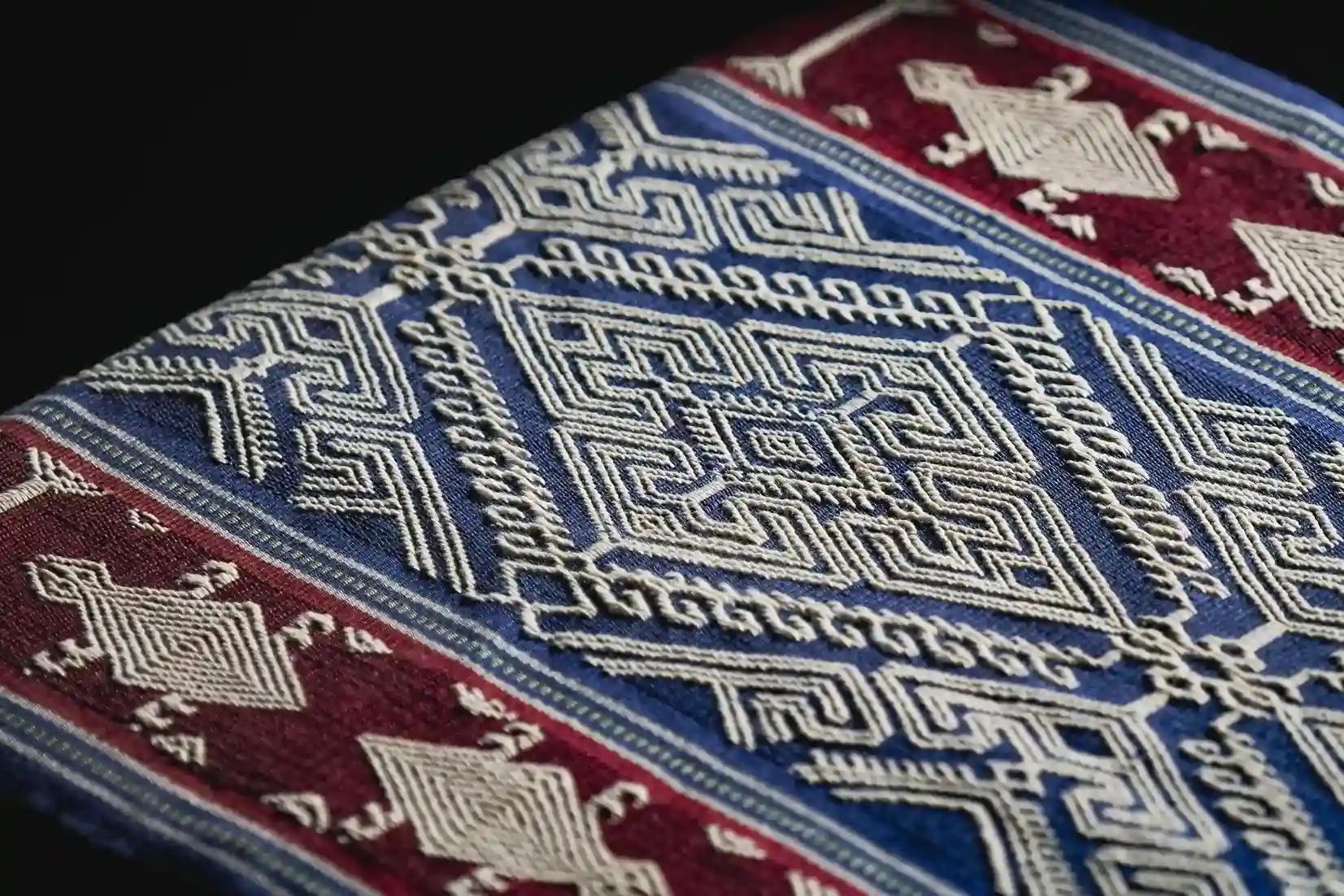
The catalogue is split by what the buyer intends to do with the cloth, because that determines the right piece far more reliably than colour preference does. Buyers needing continuous length for cutting work from the yardage range. Designers producing garments, bags and accessories start from the cuts prepared for that purpose. Buyers furnishing a room want finished formats.
Within each, every listing states the technique, the dye family, the fibre, the finished dimensions, and whether the piece is a single loom width or a joined panel. Those five facts answer almost every question a buyer would otherwise have to ask.
Frequently asked questions
Four questions
Next step
Send the use, the size and the dye you need.
Intended use, dimensions or length, whether natural dye is a requirement or simply preferred, palette direction and delivery window. We come back with photographs of specific available pieces rather than a catalogue to browse.