
Cultural narrative, woven into cloth.
Sumba ikat is more than decorative fabric. The patterns carry the island’s history, beliefs and social structures, which is why a piece is read rather than simply looked at — and why a buyer who understands the language buys differently.
- Things that make it ikat
- 3
- Classic natural dyes
- 2
- Motif registers
- 5
What makes a cloth genuinely ikat
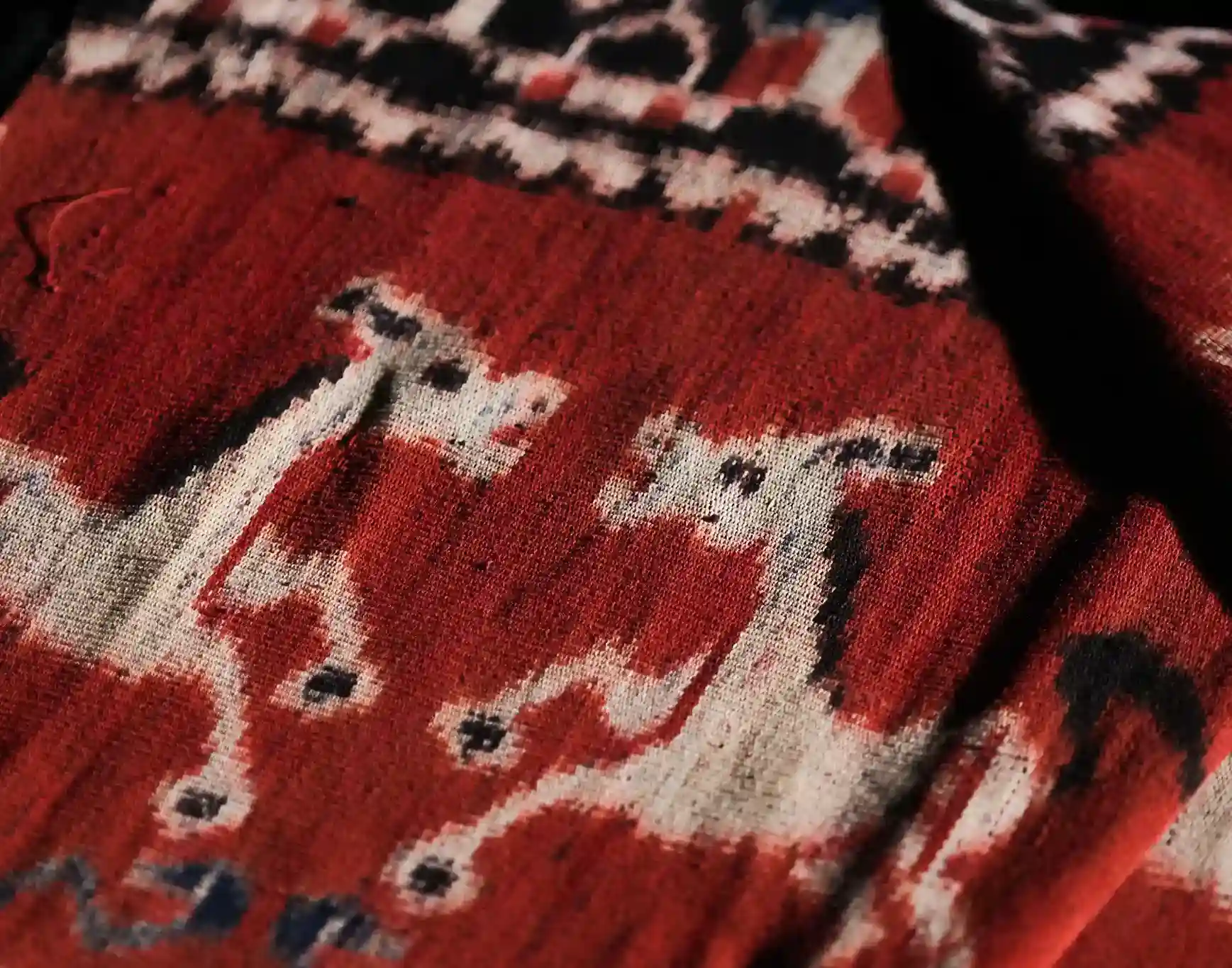
Ikat is a resist-dye technique, not a pattern style. Sections of yarn are bound tightly to resist dye penetration, dyed, untied and re-tied for each colour — and only then woven. The design exists in the thread before the cloth does.
- The motif reads on both faces of the cloth, because the colour is in the yarn rather than on its surface.
- Motif edges are softly feathered where tied yarns shifted on the loom. Machine-crisp boundaries mean print.
- Aligning the dyed threads during weaving is a skill honed over years; small registration shifts down the length are evidence of hand work, not a fault.
A single piece can take several months to complete, depending on complexity and size.
What the patterns mean
Five registers
Motifs were historically regulated, and certain images belonged to noble lineages rather than to anyone who wished to weave them. Meaning also varies by district, so what follows is the broad reading rather than a universal key.
Horse
Prestige, status, ceremonial exchange — the most recognisable Sumba motif
Dominant central bands of a hinggi
Human and ancestral figures
Homage to ancestors and lineage
Central registers, often paired
Mamuli
The ear-ornament form, used as an ancestral and lineage symbol
Repeated as a border or filler register
Deer, roosters, birds
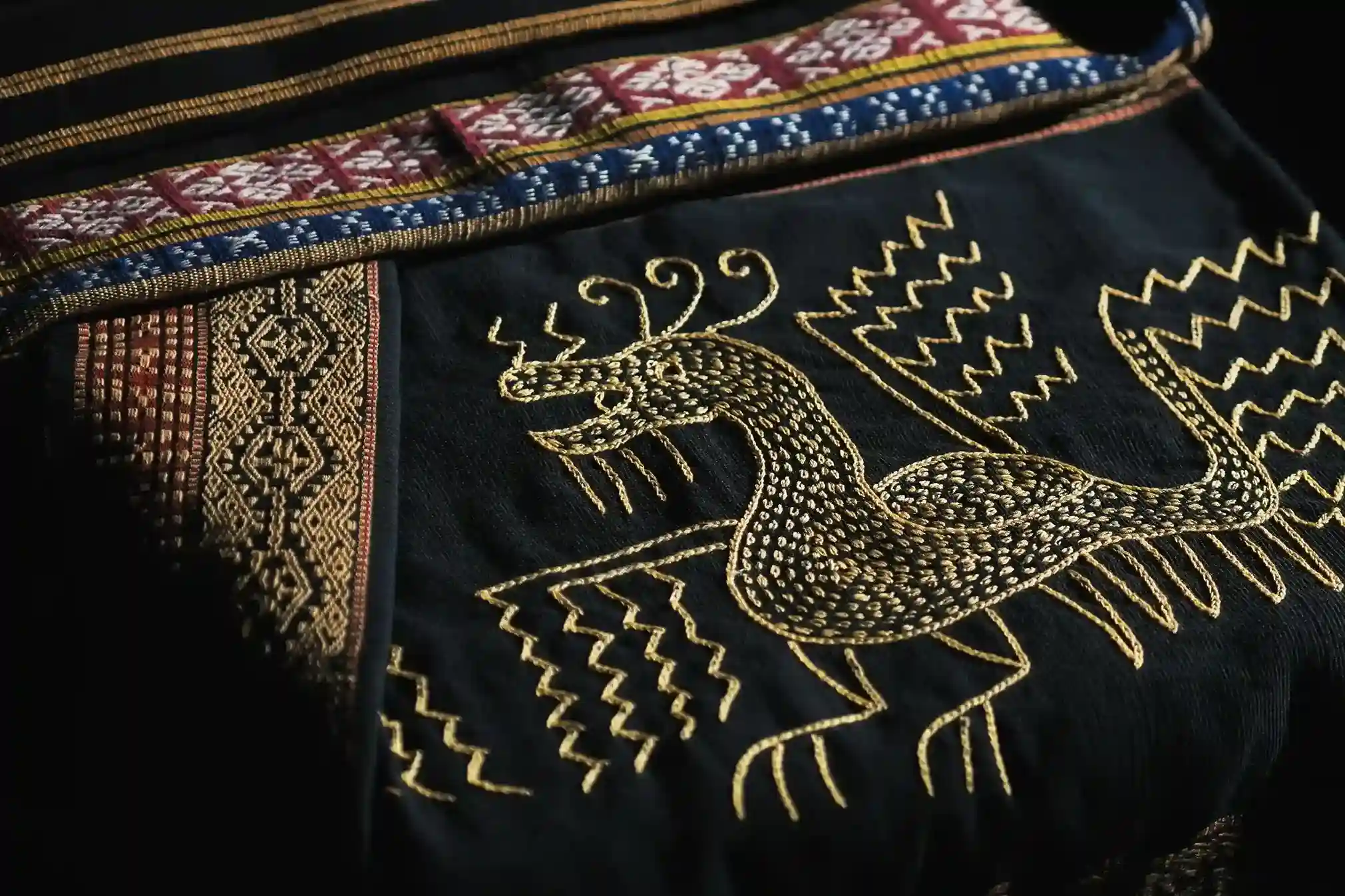
Recurring animal registers drawn from the island’s life
Arranged in bands across the cloth
Skull tree
Historical ancestral and ritual reference
Associated with older ceremonial cloth
We record what is known about a piece and keep it separate from interpretation, rather than presenting a tidy story that cannot be supported.
Where the colour comes from
The classic palette is built from two plants and the undyed cotton between them. Depth is a function of repeated immersion, not of concentration.
-
01
Indigo
Blues through to near-black. The leaves are fermented to produce a dye vat, a method used for centuries.
-
02
Morinda root
The rust and brick reds. Built up over many dye cycles spread across months.
-
03
Undyed cotton
The cream ground that makes the other two read as strongly as they do.
-
04
Overdyeing
The darker tones come from working one dye over another rather than from a single deeper bath.
The market problem this creates
Machine-made imitation is a real threat to the weavers, because a printed lookalike can be produced in a day and sold beside cloth that took months. Producers around Waingapu have responded by diversifying — working with designers on contemporary pieces while keeping traditional motifs intact — rather than by competing on price they cannot win.
The practical defence is an informed buyer. A customer who knows the motif reads on both faces, who checks the reverse and looks at the motif edges, cannot be sold a print as ikat. That is why this page exists.
Frequently asked questions
Four questions
Next step
Know what you are looking at, then look at what we have.
Every piece in the catalogue states its technique, dye family, fibre, measurements and weaving area — so what you just read is checkable against what you buy.