
A brief you can quote beats a brief you admire.
A bulk enquiry for Sumba ikat is answered properly only when it states category, quantity, destination and deadline. This is where that information becomes a costed, deliverable quotation instead of an open-ended conversation.
- Steps to a quotation
- 6
- Items a brief needs
- 6
- Day to a feasibility answer
- 1
Why do bulk textile enquiries stall?
Almost always for the same reason: the request describes a look rather than a specification. “Around a hundred ikat pieces, traditional style, as soon as possible” cannot be quoted, because in handwoven cloth those three variables pull against each other.
- Traditional natural-dye work is measured in months of sequential handwork. A hundred matched pieces of it does not exist in stock anywhere and cannot be conjured to a deadline.
- The same order stated as “a hundred cushion-scale panels, synthetic dye acceptable, two colourways, delivered to Singapore within twelve weeks” is answerable within a day — because every constraint is visible.
How the enquiry process works
Six steps
1. Brief
Category, indicative quantity, destination, deadline, dye preference
Check what is physically in stock against the brief
Feasibility answer, before anyone spends time on pricing
2. Availability
Confirmation of which options are worth pricing
Photograph and measure actual available lots, note batch depth
A shortlist of real pieces rather than catalogue images
3. Quotation
Final quantity per line and packing requirements
Price by lot with volume tiers, plus packing and freight estimate
A written quotation you can put in front of a buyer or finance
4. Confirmation
Acceptance and agreed payment arrangement
Reserve stock, schedule any commissioned production
Stock removed from general availability and held for you
5. Preparation
Labelling, care-card and documentation instructions
Check, photograph, pack by line item, prepare export papers
Cartons matching the packing list piece for piece
6. Dispatch
Freight instructions or nominated forwarder
Hand over with invoice, packing list and origin documents
Tracked shipment and a file ready for the reorder
Six items and a quotation follows quickly
Every unstated variable has to be resolved by an additional exchange before anything can be priced. These six remove all of them.
-
01
Category and format
Wall pieces, table textiles, cushion-scale panels, yardage, or a mix.
-
02
Quantity
Per design and total, so batch depth can be checked before pricing.
-
03
Dye requirement
Whether natural dye is mandatory, preferred, or irrelevant.
-
04
Destination
Country and delivery point, which drives packing and freight mode.
-
05
Delivery date
Stated as a real deadline rather than “as soon as possible”.
-
06
Presentation
Labelling, individual bagging, care cards, or plain trade packing.
What can and cannot be promised at volume
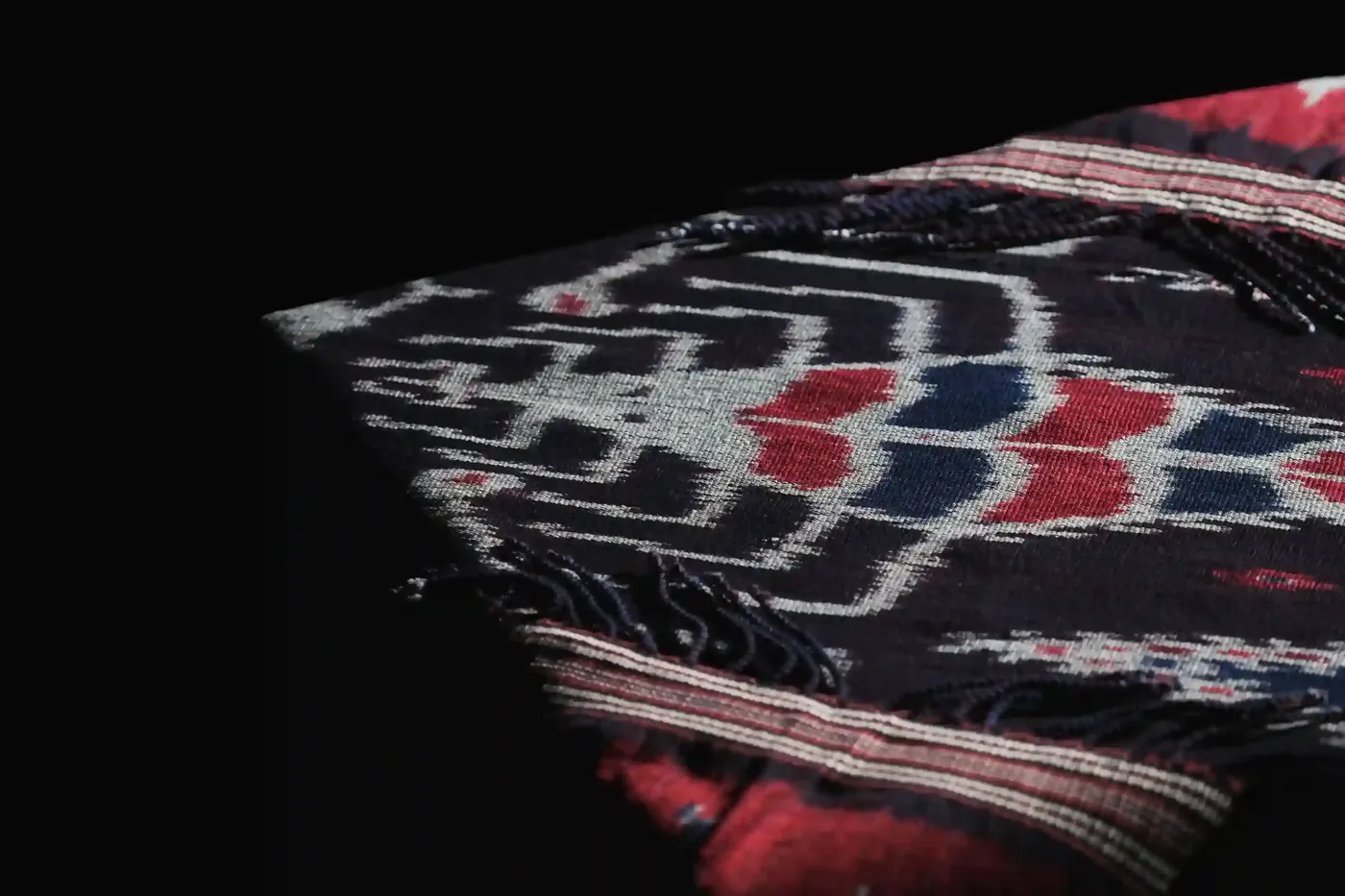
Being explicit about the limits saves everyone a wasted month. What scales well: plain handwoven ground cloth, simpler two-colour ikat, synthetic-dyed decorative panels, and small formats where modest design variation between pieces is acceptable and even desirable. What does not scale: large naturally dyed pictorial cloth in matched sets, exact reproduction of a specific piece across a large run, and any handwoven order compressed into a mill-style lead time.
Between those poles is the middle ground most bulk buyers end up choosing: a small number of anchor pieces from existing stock, a volume line in a category with genuine batch depth, and a written acceptance that pieces within a line will vary within a stated range.
Pricing, terms and what happens at the port
Pricing is quoted per lot rather than published as a fixed list, because tying complexity, dye method, yarn type, size and finishing all move the cost. A published price would either overcharge simple work or misrepresent complex work.
-
01
Volume tiers inside the quotation
So the effect of ordering more depth is visible before you decide.
-
02
Terms fixed at confirmation
Payment arrangement, currency, deposit and balance split — including what happens if a commissioned line runs late.
-
03
Packed by line item
So receiving staff can verify against the packing list without unfolding stock. Moisture protection as standard.
-
04
Standard documentation
Commercial invoice and packing list, plus a certificate of origin where your destination or broker requires one.
Tariff classification depends on whether goods ship as fabric or as finished furnishing articles, and your own broker should confirm the code applicable in your country.
Frequently asked questions
Four questions
Next step
Category, quantity, destination, deadline — and we can answer.
Feasibility first, costed quotation second. If what you are asking for cannot be made in the time you have, we would rather say so in a day than in a month.