
Direct Trade Models for Sumba Textiles in 2027

Direct trade in Sumba textiles means the buyer commits to a named weaving community over multiple order cycles, with prices, volumes, and timing agreed in advance, instead of purchasing whatever finished stock happens to be available on the open market. The distinguishing feature is not the absence of intermediaries — logistics and export handling still require them — but the presence of a forward commitment that lets weavers plan.
This piece sets out how direct trade arrangements are structured for 2027, what they ask of the buyer, and where they most often break down.
What does direct trade actually mean in a handwoven supply chain?
In Sumba, the production sequence starts long before weaving: yarn must be bought or spun, tied into resist bundles, and dyed through repeated baths with sun-drying between them. That front-loaded work is unpaid until a finished piece sells, which is the structural reason weavers historically sold into whatever market channel could pay immediately.
A direct trade model changes the timing of money rather than merely its amount. When a buyer commits volume in advance and funds materials at the start of the cycle, the weaver is no longer forced to sell a completed piece at whatever price is available that week. The cloth improves as a result, because rushed dyeing and simplified motifs are usually symptoms of cash pressure rather than of skill.
How does this compare with conventional sourcing?
The two models produce different goods, not just different ethics.
| Dimension | Open-market purchasing | Direct trade arrangement |
|---|---|---|
| Order timing | Buy what exists now | Commit before production starts |
| Origin knowledge | Often unknown below district level | Named community and weaver group |
| Repeatability | Uncertain, stock-dependent | Planned across cycles |
| Quality driver | Whatever the market accepted | Specification agreed in advance |
| Price behaviour | Fluctuates with available stock | Fixed for the agreed cycle |
| Risk holder | Producer carries unsold inventory | Risk shared through forward commitment |
Neither model is universally right. Open-market buying suits a trader testing a category with small capital. Direct trade suits a buyer who needs repeatability, traceable origin, and consistent standards — which is why our direct textile supplier arrangements are built around recurring cycles rather than one-off purchases.
How are direct trade agreements structured?
The workable agreements share a common skeleton, whatever the volume. Each element exists to remove a specific failure mode.
- Cycle length. A defined period — commonly a year — across which volume, palette direction, and design families are committed.
- Materials funding. A payment released at the start of the cycle so yarn and dye materials can be bought without borrowing.
- Agreed specification. Dimensions with tolerance, dye type, motif region, and a stated variation band, written before the first piece.
- Fixed pricing for the cycle. Removes the pressure to renegotiate mid-production and protects both sides from market swings.
- Named production group. The community or weaver group is identified, which is what makes origin claims verifiable downstream.
- Review point. A scheduled conversation at cycle end covering quality, timing, and volume for the next round.
Buyers who prefer to test the structure before committing a full cycle usually begin with a single defined block through a textile bulk purchase enquiry, then convert to a cycle agreement once the timing and standard are proven.
What does direct trade require from the buyer?
Direct trade is often presented as something the buyer grants. In practice the buyer takes on real obligations, and a buyer unwilling to take them on should stay with open-market purchasing rather than promise a commitment they will abandon.
The first obligation is planning discipline: committing volume in advance means forecasting demand rather than reacting to it. The second is patience with variation, because a fixed specification with an agreed band is only meaningful if the buyer actually accepts pieces inside that band instead of rejecting them on preference. The third is payment reliability — materials funding is only useful if it arrives on the agreed date, and a late release simply transfers the cash pressure back onto the weaver. The fourth is continuity: a single cycle abandoned halfway can leave a production group with materials bought against an order that no longer exists.
Where do direct trade models fail?
They fail most often through over-concentration. A weaving group that sells its entire output to one buyer is not more secure than before — it has simply exchanged many small risks for one large one. Sound arrangements leave the producer free to sell a share of output through other channels.
The second common failure is specification drift: a buyer who quietly tightens tolerance each cycle without renegotiating price is applying pressure that eventually shows up in shortcuts. The third is unverifiable storytelling. Marketing language about direct relationships that cannot be traced to a named group and a real payment structure damages the whole category, because buyers who discover the gap stop believing the claim from anyone. If a supplier describes a direct trade model, ask which group, which cycle, and how materials are funded. Concrete answers exist when the arrangement is real.
How should a buyer start in 2027?
Begin with a defined block rather than an open-ended promise. Agree the specification, run the block through your own quality check and your own customs route, and record how the actual timeline compared with the quoted one. Only then discuss a cycle.
When you do move to a cycle, size the first commitment at a level you could absorb even if your own retail demand softened, and write in a review point rather than an automatic rollover. A direct trade relationship that survives its first difficult season is worth far more than an ambitious agreement that collapses in month seven — and in a trade where every piece takes weeks on the loom, continuity is the thing both sides are actually buying.
Frequently asked questions
Does direct trade mean there are no intermediaries at all?
No. Export documentation, freight forwarding, quality inspection, and customs clearance still require specialists, and removing them would not help the weaver. What direct trade removes is the speculative middle layer that buys finished stock cheaply under cash pressure. The defining feature is a forward commitment to a named production group, not the absence of every intermediary in the chain.
Is direct trade more expensive for the buyer?
The unit price is usually higher than distressed open-market stock, but the comparison is misleading because the goods differ. A direct arrangement fixes specification, origin, and timing in advance, which reduces rejection rates, substitution, and the cost of unrepeatable inventory. Buyers who need repeat orders and verifiable provenance generally find the total cost lower over a full cycle.
How can a buyer verify that a direct trade claim is genuine?
Ask three specific questions: which community or weaver group, what the cycle length is, and how materials are funded at the start of production. A genuine arrangement produces concrete answers immediately. Vague references to working closely with artisans, without a named group or a payment structure, usually describe ordinary open-market buying with better marketing language.
What size of commitment does a first cycle need?
Small enough that you could absorb the volume if your own demand softened. Start with one defined production block, run it through your quality check and customs route, and compare the actual timeline against the quote. Convert to a cycle agreement only after that test, and include a review point at cycle end rather than an automatic rollover.
Open a direct trade conversation
Tell us the volume, design direction, and cycle length you are considering, and we will set out how a first production block would be specified and funded. Message us on WhatsApp at https://wa.me/6281139414563 or email [email protected].
Related
Keep reading
Trade and Export
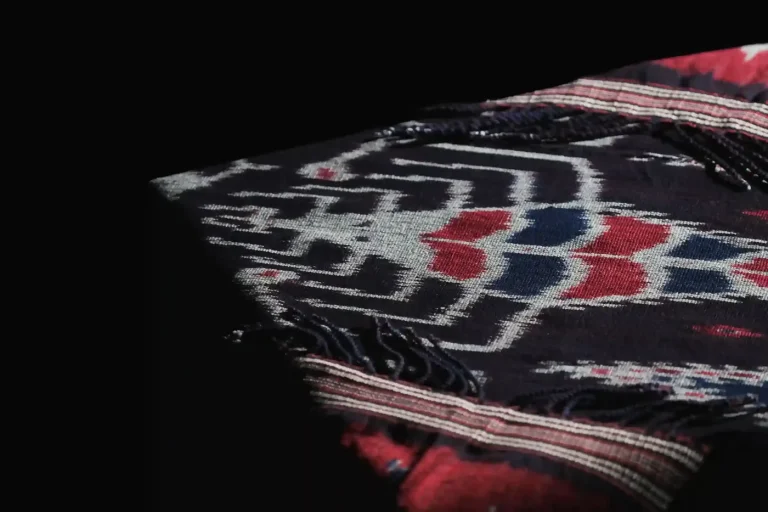
Textile Bulk Purchase Strategies for 2027 Buyers
A textile bulk purchase of handwoven Sumba cloth works best as a rolling order calendar spread across the year, not…
Trade and Export
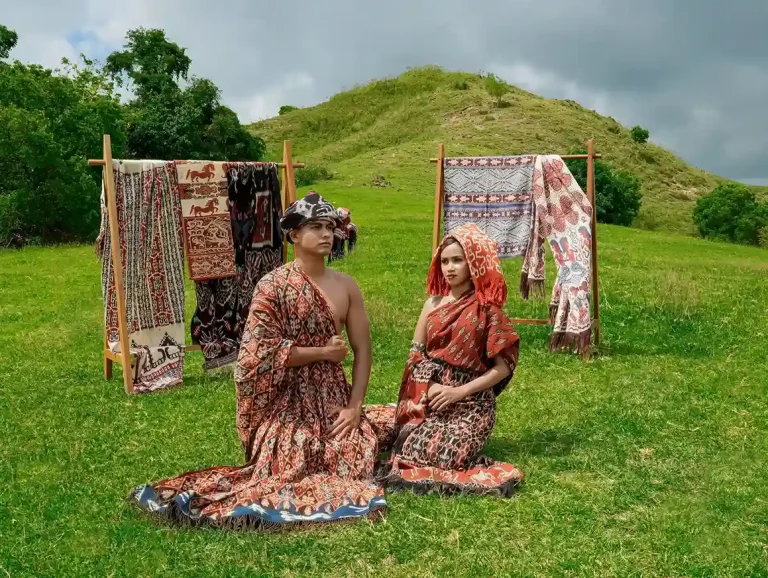
Sumba Woven Fabric Market Overview for Traders
Sumba woven fabric sells into four distinct buyer segments — home retail, hospitality projects, fashion production, and collectors — and…
Trade and Export
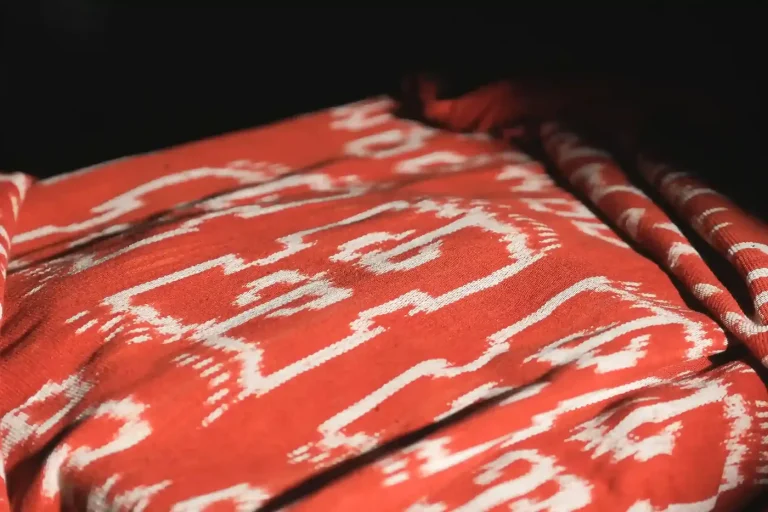
Sumba Ikat Export Checklist 2027: Shipping & Docs
Exporting Sumba ikat from Indonesia requires three separate document sets, and a shipment stalls whenever one of them is treated…