
Choosing a Verified Textile Supplier in Indonesia
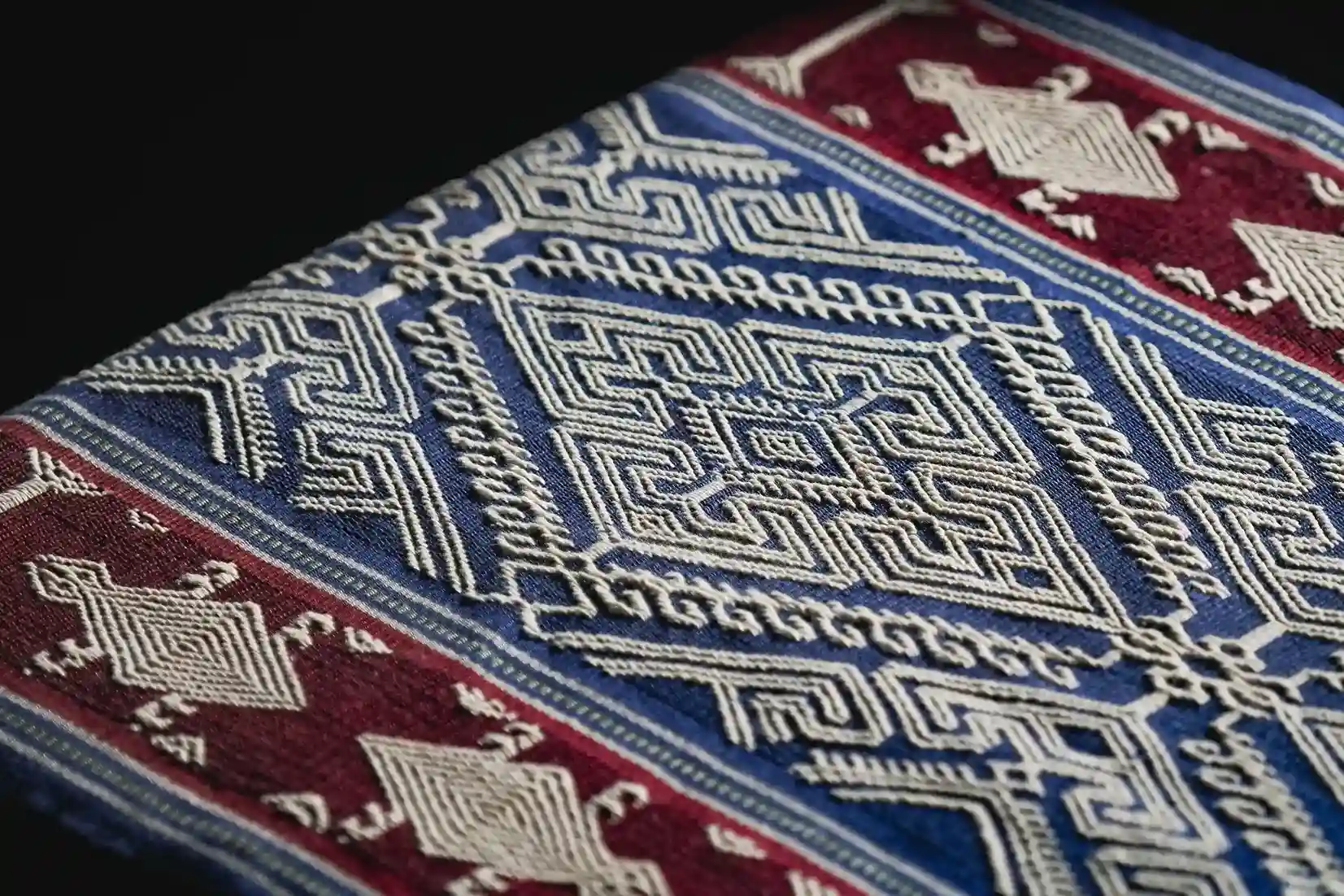
A verified textile supplier in Indonesia is one whose claims you can independently check — origin of the cloth, identity of the weaving community, dye and yarn composition, and the paperwork set that will accompany an export shipment. Verification is a process you run, not a badge a supplier displays, and it takes three or four deliberate steps before any deposit changes hands.
This guide is aimed at boutique buyers, interior specifiers, and trading companies sourcing handwoven cloth from Sumba island and the wider Indonesian archipelago. It sets out what to ask, what to inspect, and where sourcing relationships usually go wrong.
What does “verified” actually mean in Indonesian textile sourcing?
Indonesia has no single national register that certifies a company as an authentic handwoven textile producer, which means the word “verified” carries no fixed legal meaning in this trade. What exists instead is evidence: company registration data, export documentation, traceable links to named weaving villages, and a physical sample you can test against the description you were given.
Treat verification as a stack. Each layer on its own is weak — a company registration proves a legal entity exists, not that the cloth is handwoven; a beautiful sample proves one piece, not a production capability. Together, the layers give you a picture that is hard to fake. A supplier who resists supplying any one layer without explanation has told you something useful.
Which documents should a supplier be able to produce?
Every legitimate export from Indonesia generates a paper trail, and a supplier who exports regularly will not hesitate to describe theirs. Ask early, in writing, and before you discuss price. The standard set includes:
- Company registration details that you can cross-check against the name on the invoice
- A proforma invoice and packing list that match the specification, not a generic template
- Certificate of origin, where your destination market requires one
- Bank account details in the registered company name, never a personal account under a different name
- Prior shipping references — port pairs and freight partners used, which are verifiable facts rather than opinions
Requirements vary by destination country, and rules change. Confirm the exact document set with your own customs broker or the official customs authority in your market before production starts, since a missing declaration discovered at arrival is far more expensive than one prepared in advance. A supplier positioned as a verified textile supplier should be able to walk you through that set for your specific port without hedging.
How do you tell handwoven Sumba ikat from machine-made lookalikes?
The clearest structural difference is that in genuine ikat the pattern is dyed into the yarn before weaving, so the motif appears on both faces of the cloth with the same intensity. Printed imitations carry a strong front and a pale, blurred reverse. That single check eliminates most misrepresented goods.
| Check | Handwoven Sumba ikat | Machine-made or printed imitation |
|---|---|---|
| Reverse face | Pattern as strong as the front | Faint, blurred, or blank |
| Motif edges | Softly feathered where dye bled into tied yarn | Sharp, mechanically precise |
| Repeat accuracy | Small drifts between repeats | Identical repeats down the length |
| Selvedge and fringe | Hand-finished, slightly irregular | Machine-cut, uniform, often heat-sealed |
| Handle | Uneven yarn thickness felt through the cloth | Flat, consistent surface |
Ask for a photograph of the reverse face before you ask for anything else. It costs the supplier nothing and it filters the field fast.
What questions separate a trader from a producer-connected supplier?
Sumba motifs are regionally specific — designs associated with East Sumba differ from those of West Sumba in both vocabulary and construction — so a supplier genuinely connected to production can place a piece geographically without hesitating. A pure reseller usually cannot.
Four questions do most of the work. Which district or village does this design come from? What was the dye source for this particular blue or red? How many weeks did this piece take on the loom? What happens if I want thirty more like it? Vague answers to the first three, combined with an instantly confident “yes” to the fourth, is the classic profile of stock bought on a market floor and resold. Suppliers operating a direct textile supplier model should be able to name the community and describe the constraint honestly instead.
How should you structure a first order as a test?
The purpose of a first order is information, not inventory. Keep it small enough that a disappointing outcome is a lesson rather than a loss, but structured enough that it tests the things that matter at scale.
- Order across at least two design families rather than a single item, so you see consistency of standard, not consistency of one lucky piece.
- Write the specification exactly as you would for a large order, including a stated variation band.
- Ship using the same route and paperwork set you intend to use later, so that customs handling is tested too.
- Measure and photograph everything on arrival against the specification, and share the results with the supplier — how they respond to a discrepancy tells you more than a flawless delivery would.
- Time each stage. The gap between quoted and actual lead time is the number that will govern your planning for years.
Which warning signs justify walking away?
Some signals are simply noise in cross-border trade — slow replies during Indonesian public holidays, or a language gap that makes email awkward. Others are structural, and the cost of ignoring them is high.
Walk away when payment is requested to a personal account that does not match the registered company name, when a supplier refuses to photograph the reverse face of a piece, when quoted lead times ignore the constraint of hand weaving entirely, or when a request to speak about the originating village is deflected. Be equally cautious with any supplier who promises perfectly identical repeat orders in natural-dyed cloth. That promise cannot be kept, and a supplier willing to make it is either misdescribing the goods or planning to substitute them.
Frequently asked questions
Is a company registration number enough to verify an Indonesian textile supplier?
No. A registration number confirms that a legal entity exists and that the bank account should match that entity’s name, which is a useful first filter. It says nothing about whether the cloth is handwoven, where it was made, or whether the supplier can repeat an order. Combine registration with a reverse-face photograph, a village-level origin answer, and a small structured test order.
Should I visit Sumba before placing a large order?
A visit is valuable but not essential, and it should follow a successful test order rather than replace one. Weaving villages are spread across East and West Sumba and travel between them takes real time, so plan several days rather than a day trip. Many buyers verify remotely first, then travel once the relationship justifies the trip.
How can I check that natural dyes were actually used?
Ask which plant sources produced each colour and expect specific answers — indigo for blues, morinda root for the deep reds found in Sumba cloth. Natural dye lots vary between batches and often carry a faint plant scent when new. A supplier claiming natural dye while guaranteeing exactly repeatable colour across future orders is describing something other than natural dye.
What is a reasonable lead time for a handwoven order?
It depends on motif complexity and lot size, because each piece is tied, dyed, and woven individually rather than run off a machine. Rather than accepting a single number, ask the supplier to break the quoted time into yarn preparation, dyeing, weaving, and finishing. A supplier who can split the timeline that way is describing a real production process.
Run your verification with us
Send the design direction and destination market you are working with, and we will walk through origin, dye composition, and the export document set for your port before you commit to anything. Reach us on WhatsApp at https://wa.me/6281139414563 or by email at [email protected].
Related
Keep reading
Trade and Export
Textile Bulk Purchase Strategies for 2027 Buyers
A textile bulk purchase of handwoven Sumba cloth works best as a rolling order calendar spread across the year, not…
Trade and Export
Sumba Woven Fabric Market Overview for Traders
Sumba woven fabric sells into four distinct buyer segments — home retail, hospitality projects, fashion production, and collectors — and…
Trade and Export
Sumba Ikat Export Checklist 2027: Shipping & Docs
Exporting Sumba ikat from Indonesia requires three separate document sets, and a shipment stalls whenever one of them is treated…