
Artisanal Sumba Cloth: Ethics and Direct Trade
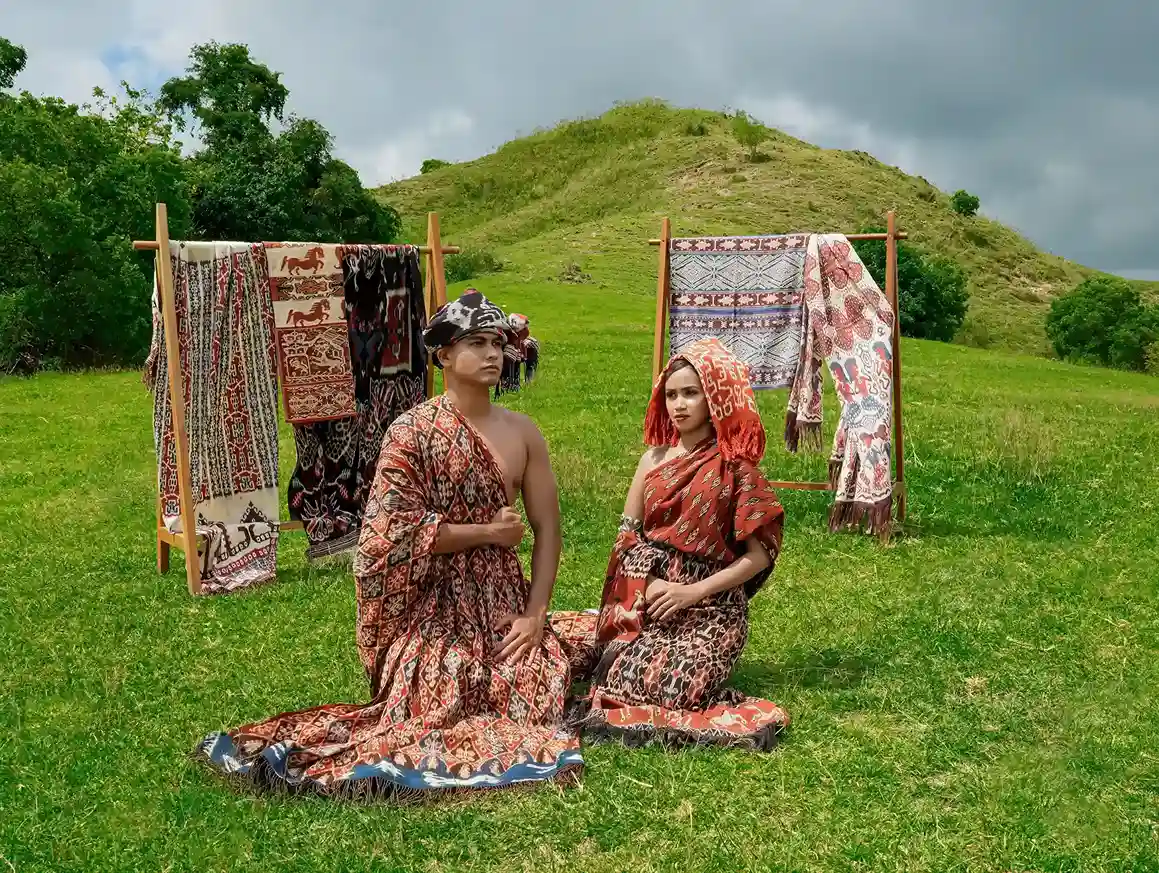
Direct trade in artisanal Sumba cloth means one specific, checkable thing: the price is agreed with the weaving household before the work begins, materials are funded upfront rather than carried as debt by the weaver, and payment does not wait for the piece to sell at the other end of the chain. Everything else in the ethics conversation — provenance, credit, environmental impact — follows from whether those three conditions hold.
Why does payment timing matter more than the price itself?
A naturally dyed hinggi can occupy a weaving household intermittently for the better part of a year, because morinda and indigo colours are built through repeated immersions with long drying intervals in between. If the household must buy yarn and dye materials with its own money and wait until the cloth is finished and sold to be paid, the entire financing risk of a year-long production sits on the least capitalised party in the chain. That structure is what pushes weavers toward faster synthetic-dye work regardless of what they would prefer to make. Upfront material funding and staged payment against production milestones change the economics of the craft far more than a slightly higher final price does.
Which intermediaries add value and which only add margin?
Not every middleman is extractive, and pretending otherwise misleads buyers. Collecting cloth from scattered inland villages, holding quality standards, financing materials, handling export documentation, and carrying inventory risk are all real functions that cost real money. The distinction worth drawing is between a link that performs a function and a link that simply resells. A useful test for a prospective supplier is whether they can describe, without hesitation, which village the cloth came from, who wove it, what was paid, and what their own role added. A supplier who cannot answer the first two questions is not in a direct-trade relationship, whatever the marketing says. Our artisanal sumba cloth line and our direct textile supplier programme are both structured so that those questions have answers on file.
What should buyers ask before placing an order?
- Which village or district produced this cloth, and can the weaving household be named with consent?
- Was the piece woven for the trade, or does it come from a family’s ritual holdings?
- Is the dye fully natural, mixed, or synthetic — and is the answer written on the invoice rather than implied in conversation?
- Were yarn and dye materials funded before production began?
- When is the weaver paid: at delivery, or after the piece sells downstream?
- Is this a reorderable design, and what would the realistic lead time be for a second batch?
- If the piece is described as old, what documentation supports that, and what is its legal export status?
- What happens to a piece that fails inspection — is the weaver still paid for the work?
What are the warning signs?
The most common misrepresentation in this market is a printed fabric sold as woven ikat, and it is also the easiest to catch: genuine warp ikat is dyed into the threads before weaving, so the motif reads with comparable clarity on both faces with softly feathered edges, while a print is crisp on the face and pale on the reverse. Beyond that, treat these as signals to slow down: an “antique” claim with no provenance record; identical stock photographs used across many listings; a refusal to name a region; large quantities of supposedly natural-dye cloth available immediately from stock; and a seller who encourages hard haggling on work described as taking months. That last one is telling, because a price that can be halved on the spot was never anchored to the labour that produced it.
Whose design is it?
Sumbanese motifs are communal inheritance, historically tied to clan, rank, and ritual, not to an individual designer. Two obligations follow for commercial buyers. The first is credit: name the region, and name the maker where the maker consents, in labels, catalogues, and product pages. The second is restraint: do not register or claim exclusive rights over traditional motifs, and do not invent ceremonial meanings for marketing copy. Where a motif’s reading is contested between sources, say so — accuracy costs nothing and is the clearest signal that a seller has actually done the work.
Is natural dyeing environmentally better?
Generally yes in terms of effluent, since indigo and morinda processes rely on plant material and mordants rather than industrial dye chemistry, and dye plants are often grown within the same landscape as the weaving. The honest qualification is that natural dyeing is water- and time-intensive, and that scale changes the picture: a technique that is benign at household level is not automatically benign if industrialised. The defensible position for a buyer is to specify dye class truthfully, avoid volume promises that only synthetic processes can meet, and let the customer choose with accurate information rather than with a sustainability claim nobody can verify.
What does good practice look like in a purchase order?
Ethics that live only on an About page do not survive a busy season. Put them into the order document: state the dye class as a specification, not a description; set staged payments tied to production milestones rather than to downstream sales; agree a written tolerance for dimensional and colour variation so that handwoven work is not rejected against cut-goods standards; record the village of origin as a data field on every line; and agree in advance how a piece that fails inspection is handled, including whether the weaver is still paid. Those five clauses do more for a weaving community than any certification logo on a swing tag.
Frequently asked questions
What is the difference between direct trade and fair trade?
Fair trade generally refers to certification schemes with defined standards and audits run by third parties. Direct trade describes a commercial structure in which the buyer deals with producers without unnecessary intermediary layers and agrees terms with them directly. Neither guarantees the other: a direct relationship with bad payment terms helps nobody, and a certified chain can still be distant. Judge the actual terms.
How can I verify a cloth really came from Sumba?
Ask for the district and the household, and check the object against the format. Sumbanese hinggi are built as two mirrored panels joined at a centre seam with hand-twined warp-end bands, and the classic figurative registers of horses, deer, and patola-derived lattices are specific to the tradition. Photographs of the reverse, the seam, and the end bands are the practical evidence to request before payment.
Is buying antique Sumba textiles unethical?
Not inherently, but it requires more diligence than buying new work. Old cloth may carry ritual significance for the family that held it, and objects that qualify as cultural property are subject to export controls in Indonesia. Establish age, provenance, and legal status before purchase, and commission new work where the intended use is decorative or interpretive rather than historical.
Does paying more automatically help the weaver?
Only if the extra reaches them. Price alone tells you nothing about distribution along the chain, which is why the useful questions are about payment timing, material funding, and whether the household can be named. A moderately priced piece bought on upfront terms from a named household supports the craft more reliably than an expensive piece with an untraceable origin.
Work with us on a direct-trade order
Tell us the formats and volumes you need and how you intend to describe the pieces to your customers, and we will structure the order so the claims on your label match the file behind it. Reach us on WhatsApp at https://wa.me/6281139414563 or email [email protected].
Related
Keep reading
Craft and Culture
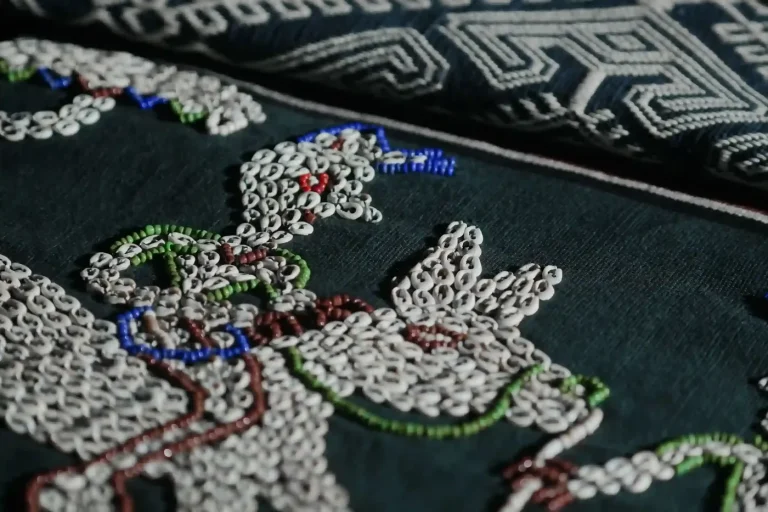
Sumbanese Traditional Cloth Symbols Explained
The motifs on Sumbanese traditional cloth are a language of rank, lineage, and the passage between the living and the…
Craft and Culture
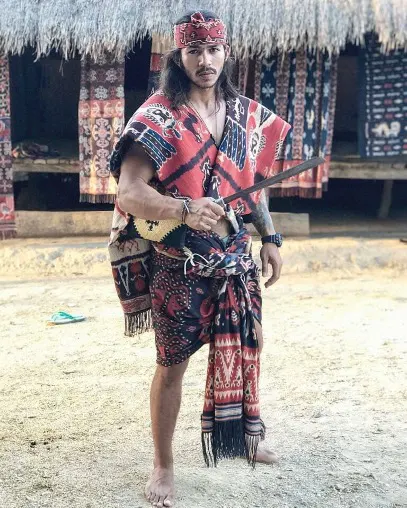
Planning a Weaving Village Visit on Sumba Island
A weaving village visit on Sumba works when you treat it as an appointment inside a living community rather than…
Craft and Culture
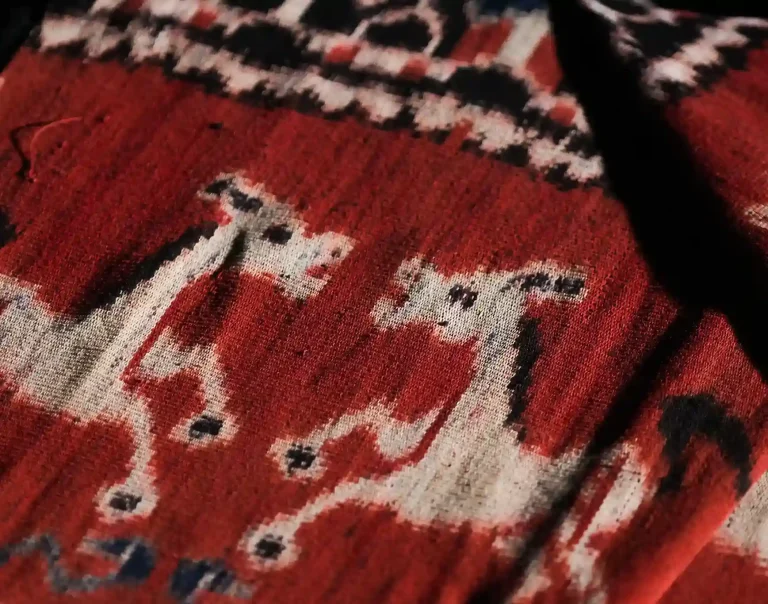
Indonesian Ikat from Sumba vs Other Regions
Sumba ikat is warp ikat, worked in cotton, and composed as large figurative panels — and almost every difference between…