
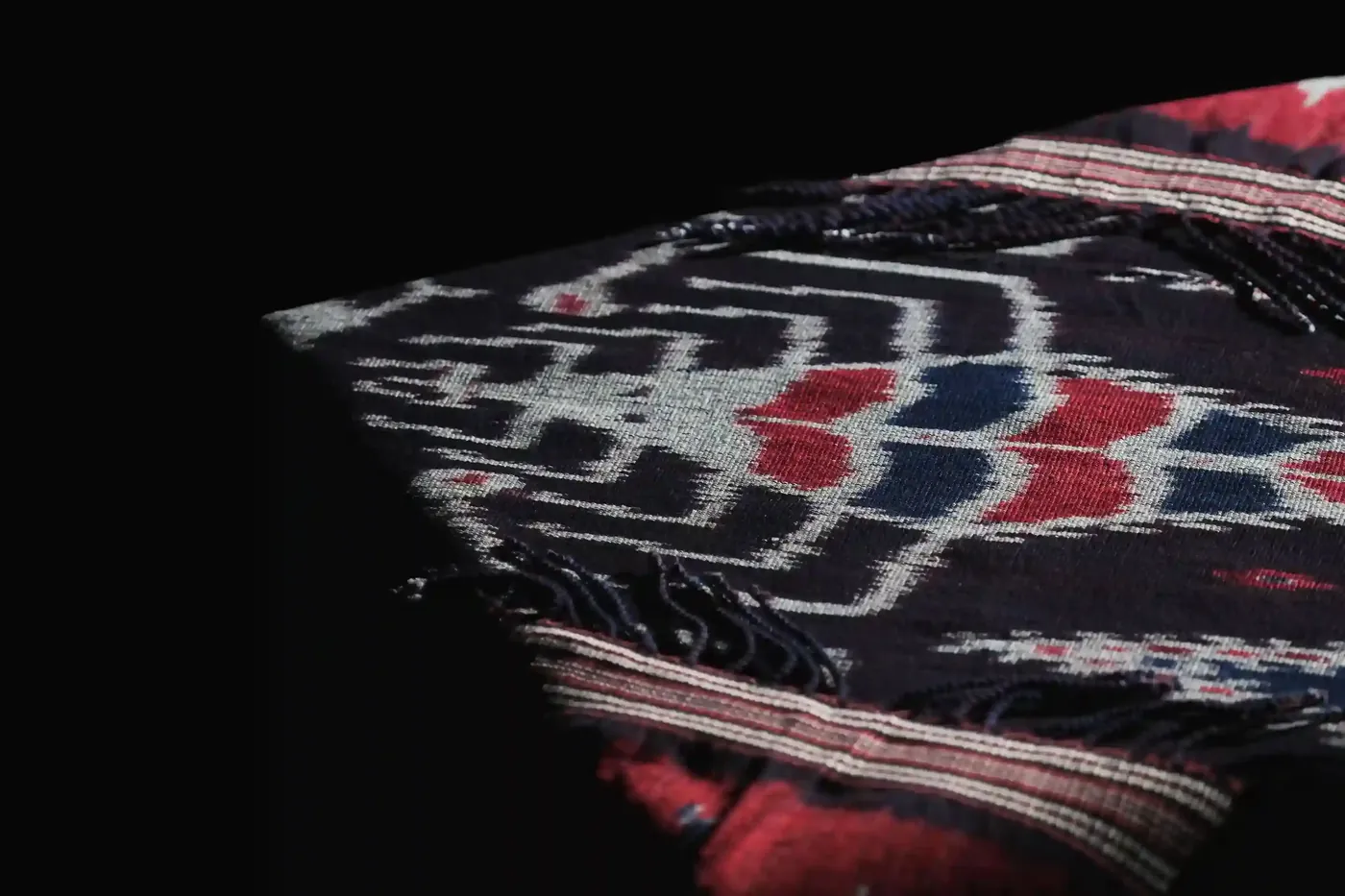
The defining shift in handwoven textile wholesale going into 2027 is that buyers now ask where a piece was made and by which community before they ask the price, which pushes the trade away from anonymous bulk stock and towards traceable, story-carrying inventory. Wholesalers who can answer origin questions in writing are winning shelf space that used to be allocated on cost alone.
This overview is written for distributors, importers, and multi-store retailers planning their 2027 handwoven programme, with particular reference to Sumba ikat and other Indonesian woven cloth.
What is actually driving demand for handwoven textiles in 2027?
Handwoven cloth occupies a category that machine production cannot enter: every piece is structurally unique because the yarn is tied and dyed by hand before weaving begins. As printed and digitally generated pattern becomes effectively free to produce, that structural uniqueness is the scarce input, and it is where retail margin has moved.
Three demand pressures reinforce each other. Hospitality projects want interiors that photograph as specific to a place rather than interchangeable. Retail buyers want product that resists direct online price comparison, which handwoven goods do because no two pieces are identical. And end customers increasingly expect provenance information as a default part of the purchase. None of these are fashion cycles that reverse next season; they are structural, and they favour suppliers with documented origin.
Which product formats are wholesale buyers asking for?
The clearest format shift is away from single large collector pieces and towards mixed assortments that let a retailer open a price ladder — an entry item, a mid-tier piece, and one statement textile that anchors the display.
| Format | Primary buyer | Why it is moving in 2027 |
|---|---|---|
| Table runners and placemats | Home retail, restaurants | Accessible entry price, repeat purchase, easy to display |
| Cushion covers and small home textiles | Concept stores, online retail | Low freight weight, strong margin, quick sell-through |
| Wall hangings and framed panels | Interior designers, hospitality | Project-driven demand with higher unit value |
| Fabric by the metre | Fashion labels, accessory makers | Designers building capsule pieces around handwoven cloth |
| Mixed assortment cartons | Multi-store retail groups | Builds a full price ladder from one purchase order |
| Heritage and collector pieces | Galleries, private collectors | Scarcity value as older cloth leaves the market |
Distributors building a ladder like this usually start with a mixed opening order; our handwoven textile wholesale catalogue is organised to make that assortment straightforward to assemble.
How is traceability changing the wholesale conversation?
Origin claims are now checkable in a way they were not a decade ago. A retailer can photograph the reverse face of a cloth and see immediately whether the pattern is dyed through or printed on, and end customers compare notes publicly. That has raised the cost of a vague claim considerably.
In practice, wholesale buyers are asking for three things at quotation stage: the region or village associated with the design, the dye type used for each principal colour, and a lot identifier that stays attached to the goods through delivery. None of these are expensive to provide if a supplier is genuinely connected to production, which is why the request has become such an effective filter. Buyers sourcing through sumba woven fabric wholesale channels should build these three fields into their purchase order template so the information arrives automatically rather than on request.
What is happening with colour and design direction?
Natural-dye palettes are being specified more deliberately rather than accepted as whatever arrives. In Sumba cloth the two anchor colours come from indigo and from morinda root, giving the deep blues and rust reds that characterise the tradition, and buyers are increasingly ordering by palette dominance rather than by individual design name.
Indigo-led pieces are being pulled towards contemporary and minimal interiors, where a single blue-dominant panel sits comfortably against plaster and pale timber. Red-dominant and multi-colour compositions are moving into hospitality and statement retail, where the brief calls for warmth and presence. A useful buying habit for 2027 is to specify the palette split across an order — a proportion of indigo-led, a proportion of red-led — rather than leaving the mix to chance, since palette dominance now drives sell-through more than motif choice does.
How should wholesalers adjust their buying model?
The old model — one large annual order, lowest available price, generic description — performs poorly against these conditions. The adjustments that matter are structural rather than cosmetic.
- Buy in waves, so top-up orders can follow proven sell-through instead of guesswork.
- Record and keep lot identifiers, so matched sets can still be assembled months after arrival.
- Specify palette proportion alongside design family in every purchase order.
- Hold a small attic stock of statement pieces for project clients who need a late replacement.
- Capture the origin information once and reuse it across your own catalogue, labels, and sales training.
- Price the entry item to open the ladder, not to lead the category — the margin lives in the mid and statement tiers.
The wholesalers doing well with handwoven cloth in 2027 are not the ones buying cheapest. They are the ones who can tell a retailer exactly what they are holding and prove it.
Frequently asked questions
Is handwoven textile wholesale still viable against low-cost printed imitations?
Yes, because the two products compete for different buyers. Printed imitation competes on price in a market where identical goods are compared side by side online. Handwoven cloth is structurally unique — the pattern is dyed into the yarn before weaving, so no two pieces match — which removes it from direct price comparison and supports retail margin that printed stock cannot hold.
What information should a 2027 purchase order capture?
Build three fields into the template: the region or village associated with the design, the dye type behind each principal colour, and a lot identifier that travels with the goods to your warehouse. Suppliers genuinely connected to production can supply all three without difficulty, so the request also works as a verification filter during quotation.
Which format is best for a first wholesale order?
A mixed assortment usually outperforms a single-format order. Combining an accessible item such as table runners, a mid-tier home textile, and one statement wall piece lets a retailer open a full price ladder from one purchase order and generates sell-through data across three tiers at once, which then guides the top-up wave.
How should palette be specified in a wholesale order?
Specify the proportion rather than leaving the mix open. Indigo-led pieces suit contemporary and minimal retail settings, while red-dominant compositions move faster into hospitality and statement displays. Stating the split — for example a majority indigo-led with a smaller warm-toned group — gives a more sellable delivery than ordering by design name alone.
Build your 2027 wholesale assortment
Tell us your store format, target price ladder, and destination market, and we will propose an assortment with origin and dye information attached to every line. Message us on WhatsApp at https://wa.me/6281139414563 or write to [email protected].
Related
Keep reading
Trade and Export
Textile Bulk Purchase Strategies for 2027 Buyers
A textile bulk purchase of handwoven Sumba cloth works best as a rolling order calendar spread across the year, not…

Trade and Export
Sumba Woven Fabric Market Overview for Traders
Sumba woven fabric sells into four distinct buyer segments — home retail, hospitality projects, fashion production, and collectors — and…
Trade and Export
Sumba Ikat Export Checklist 2027: Shipping & Docs
Exporting Sumba ikat from Indonesia requires three separate document sets, and a shipment stalls whenever one of them is treated…