
Handwoven Sumba Fabric Care and Maintenance Tips
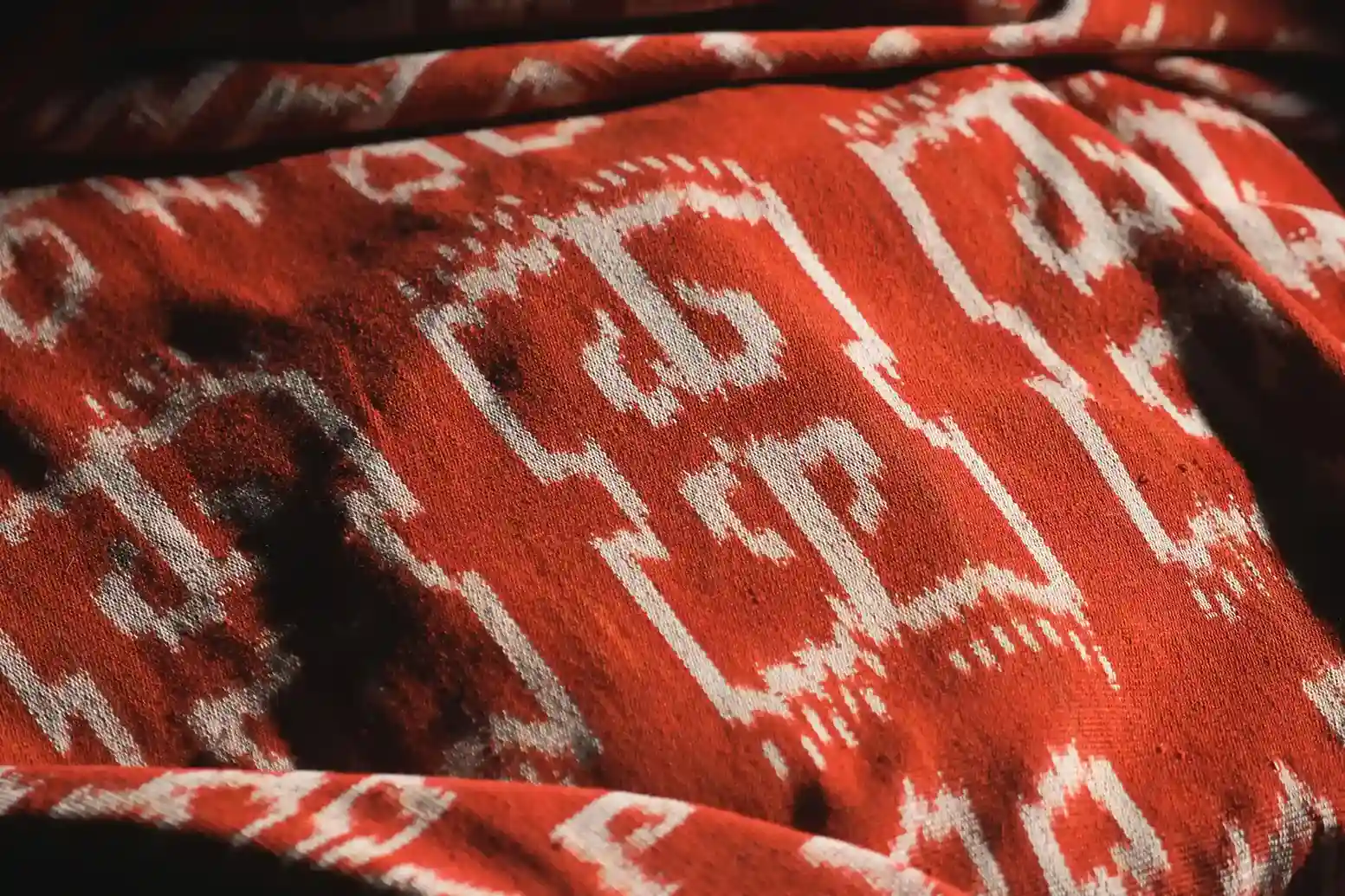
Handwoven Sumba fabric should be washed by hand in cold water with a pH-neutral detergent, never bleached, never wrung, dried flat in shade rather than sunlight, and stored rolled around a tube instead of folded, because fold lines eventually break the fibres along the crease.
Those instructions exist for a specific reason. Sumba cloth is cotton dyed with natural indigo and with red from the root of Morinda citrifolia, colours built through repeated dipping and drying cycles rather than fixed in a single industrial bath. That construction gives the textile its depth and also defines what damages it: heat, ultraviolet light, alkaline detergents, and mechanical stress.
How should a piece be washed for the first time?
Deep natural indigo commonly releases a small amount of colour in early washes, so the first launder should always be done separately and by hand. This is normal behaviour in a naturally dyed textile and is not evidence of a defective piece, though heavy continuous bleeding does indicate poor fixing and is worth raising with the seller.
Fill a basin with cold water, add a small amount of pH-neutral or wool detergent, and let the cloth soak briefly rather than agitating it. Press the water through the fabric with flat hands. Rinse in fresh cold water until it runs clear. Lift the piece out supported from underneath so its own wet weight does not stretch the weave, then press between towels to remove excess water. At no point should the cloth be twisted or wrung.
What must never be used on this fabric?
Chlorine bleach destroys natural dyes and weakens cotton fibres in a single exposure, and there is no method for reversing the damage once it has happened. Several other common laundry products are almost as harmful and are worth listing explicitly.
- Chlorine bleach and any whitening product containing it.
- Oxygen bleach and detergents containing optical brighteners.
- Strongly alkaline detergents, including most standard laundry powders.
- Hot water, which accelerates dye loss and shrinkage in handspun cotton.
- Tumble drying, which abrades the surface and stresses hand-beaten weave.
- Direct sunlight drying, which fades natural dyes faster than any other everyday exposure.
- Enzyme stain removers left in prolonged contact with the cloth.
How do you handle stains without making things worse?
Blotting removes a spill; rubbing drives it into the uneven surface of a handweave and can abrade the dyed yarn at the same time, which is why the first thirty seconds matter more than anything done afterwards. Work from the outside of a stain inward to avoid spreading the edge.
| Spill | Immediate action | Avoid |
|---|---|---|
| Water or tea | Blot with a clean white cloth, air dry in shade | Heat drying, which sets a tide line |
| Red wine | Blot, then flush with cold water from the reverse | Salt, hot water, and bleach-based removers |
| Cooking oil | Blot, dust with cornflour, brush off when dry | Hot water, which sets grease into cotton |
| Candle wax | Let it harden, lift gently, then treat residue carefully | Scraping hard, which breaks surface threads |
| Ink or dye transfer | Stop and consult a textile conservator | Solvents applied without testing |
Does the fabric need drying and pressing differently?
Drying flat in shade is the single most protective habit an owner can adopt, because it addresses fading and distortion at the same time. Hanging a heavy wet handwoven piece over a line concentrates its weight along one narrow band and stretches the weave permanently.
Lay the cloth on a clean towel on a flat surface, smooth it into shape with your hands, and let it dry away from direct sun and away from radiators or air conditioning outlets. Press on the reverse side while slightly damp, with a warm rather than hot iron and a pressing cloth between iron and fabric. Steam is generally fine; sustained high heat is not. Owners cutting and sewing their own pieces should apply the same rules when working with handwoven Sumba ikat fabric by the meter.
What is the right way to store handwoven cloth?
Textile collections are stored rolled rather than folded because a fold concentrates stress on a single line of threads, and over years those threads break while the surrounding cloth stays sound. A rolled piece distributes that stress across a wide curve instead.
Roll the textile around a wide tube, face outward, interleaving with unbuffered acid-free tissue if the piece is valuable. Wrap the roll in washed undyed cotton rather than plastic, so trapped moisture can escape. Store somewhere with stable temperature and low light, avoiding lofts, garages, and unventilated basements where humidity swings encourage mould. If a piece must be folded for transport, pad the folds with rolled tissue and unfold it as soon as it arrives.
How do you protect a textile that is on permanent display?
Conservators generally keep displayed textiles below about 50 lux of illumination and at a relative humidity in the mid-forties to mid-fifties, and although a home cannot be run to museum tolerances, moving in that direction measurably extends the life of a piece. Light exposure is cumulative and irreversible.
Keep displayed cloth off walls that receive direct sun, use ultraviolet-filtering glazing where a piece is framed, and set picture lights back rather than close. Mount from a hook-and-loop strip or a rod in a sleeve so the weight is carried evenly along the top edge instead of hanging from a few points. Rotate two pieces through a bright position rather than leaving one there indefinitely, and check periodically for insect activity, particularly along folds and seams. Boutique buyers holding stock for months should apply the same storage discipline to their Sumba handwoven textile for boutique collections.
Frequently Asked Questions
Can handwoven Sumba fabric be dry-cleaned?
It can be, but only by a cleaner experienced with naturally dyed ethnographic textiles, and you should say explicitly what the piece is before handing it over. Standard commercial dry-cleaning solvents and the mechanical action of the machine can dull natural dyes and stress handspun yarn. For most pieces, careful cold hand washing is gentler and gives a more predictable result than an unfamiliar dry-clean process.
Why does my new piece smell earthy?
A faint earthy or vegetal smell is normal in cloth dyed with indigo or Morinda root, since both are plant-derived and the dyeing process involves fermentation and repeated drying. The smell usually fades with airing in a shaded, ventilated space over a few days. A sharp chemical odour is different and suggests synthetic processing residue, which is worth asking the seller about.
How often should a display piece be cleaned?
Rarely. Washing is the most stressful thing that happens to a textile, so a piece that is displayed rather than used needs only gentle dust removal, using a soft brush or a low-suction vacuum with a screen held over the surface. Do this a few times a year. Reserve wet cleaning for pieces that have been actually soiled, not for routine maintenance.
Will the colours keep changing over time?
Yes, gradually, and to some owners this is part of the appeal. Natural dyes soften and shift with age and light exposure, with reds mellowing and very dark indigo grounds lightening slowly. The rate depends almost entirely on how much light the piece receives. A textile kept out of direct sun and rotated occasionally can hold its character for decades; one hung opposite a sunny window will visibly change within a few years.
Ask us about a specific piece
If you are unsure how to treat a textile you already own, send photographs and tell us how it is being used or displayed, and we will give you a straightforward answer, including when the right advice is to consult a conservator instead. WhatsApp https://wa.me/6281139414563 or email [email protected].
Related
Keep reading
Interiors
Using Ethnic Home Textiles in Modern Interior Design
An ethnic home textile works in a modern interior when it is treated as the single loudest object in the…
Trade and Export
Textile Bulk Purchase Strategies for 2027 Buyers
A textile bulk purchase of handwoven Sumba cloth works best as a rolling order calendar spread across the year, not…

Trade and Export
Sumba Woven Fabric Market Overview for Traders
Sumba woven fabric sells into four distinct buyer segments — home retail, hospitality projects, fashion production, and collectors — and…