
Book against the date, not the reorder point.
The trade channel through which retailers, distributors and project buyers purchase handwoven Sumba cloth in quantity at tiered pricing — run as its own track, with its own quotations, lead times and reservation terms.
- Order tiers
- 4
- Quality checks before packing
- 5
- Dye batch per matched set
- 1
Who qualifies as a wholesale buyer?
Wholesale pricing is offered to buyers purchasing for resale or for a project rather than for personal use. The qualifying factor is the nature of the purchase, not a membership scheme.
- Retail stores and concept boutiques stocking textiles as a category.
- Interior design studios purchasing for client projects and fit-outs.
- Hospitality groups furnishing multiple rooms, restaurants or properties.
- Distributors and importers reselling into their own domestic market.
- Online retailers holding inventory rather than drop-shipping single items.
Tell us which group describes you in your first message, along with your market and typical order pattern. That one detail lets us send relevant availability instead of a generic catalogue.
How wholesale pricing is structured
Four tiers
Price moves with quantity, but it also moves with the type of cloth, because a naturally dyed ceremonial-grade panel and a colourfast decorative runner sit at completely different production costs. Every quotation is issued in writing against a specific mix and quantity rather than as a public rate card.
Sample order
Assessing quality before committing
Individual pieces or sample cuts, quoted per item
Opening order
First stocking of a retail range
Mixed assortment, written quotation, reservation window
Repeat volume
Ongoing resale programme
Batch planning, priority on new stock, agreed schedule
Project order
Single large fit-out or collection
Matched dye batch, spare allowance, milestone timeline
Quantity discounts exist, but they are calculated per enquiry against the actual mix. So the honest answer to “what is your wholesale rate” is that we quote it once we know what you want and how much.
What happens before a bulk order ships
Handwoven cloth varies piece to piece, so wholesale quality control is about setting an agreed standard rather than pretending variation does not exist.
-
01
Grade agreement
We confirm in writing what counts as acceptable variation for your order.
-
02
Dye batch control
Matched sets are drawn from one dye batch to avoid visible colour drift.
-
03
Measurement check
Each piece is measured, since handwoven dimensions vary from nominal sizes.
-
04
Defect screening
Pieces with weaving faults outside the agreed grade are removed before packing.
-
05
Batch record
We keep a reference of what shipped, so reorders can be matched as closely as possible.
Why lead times matter more than price here
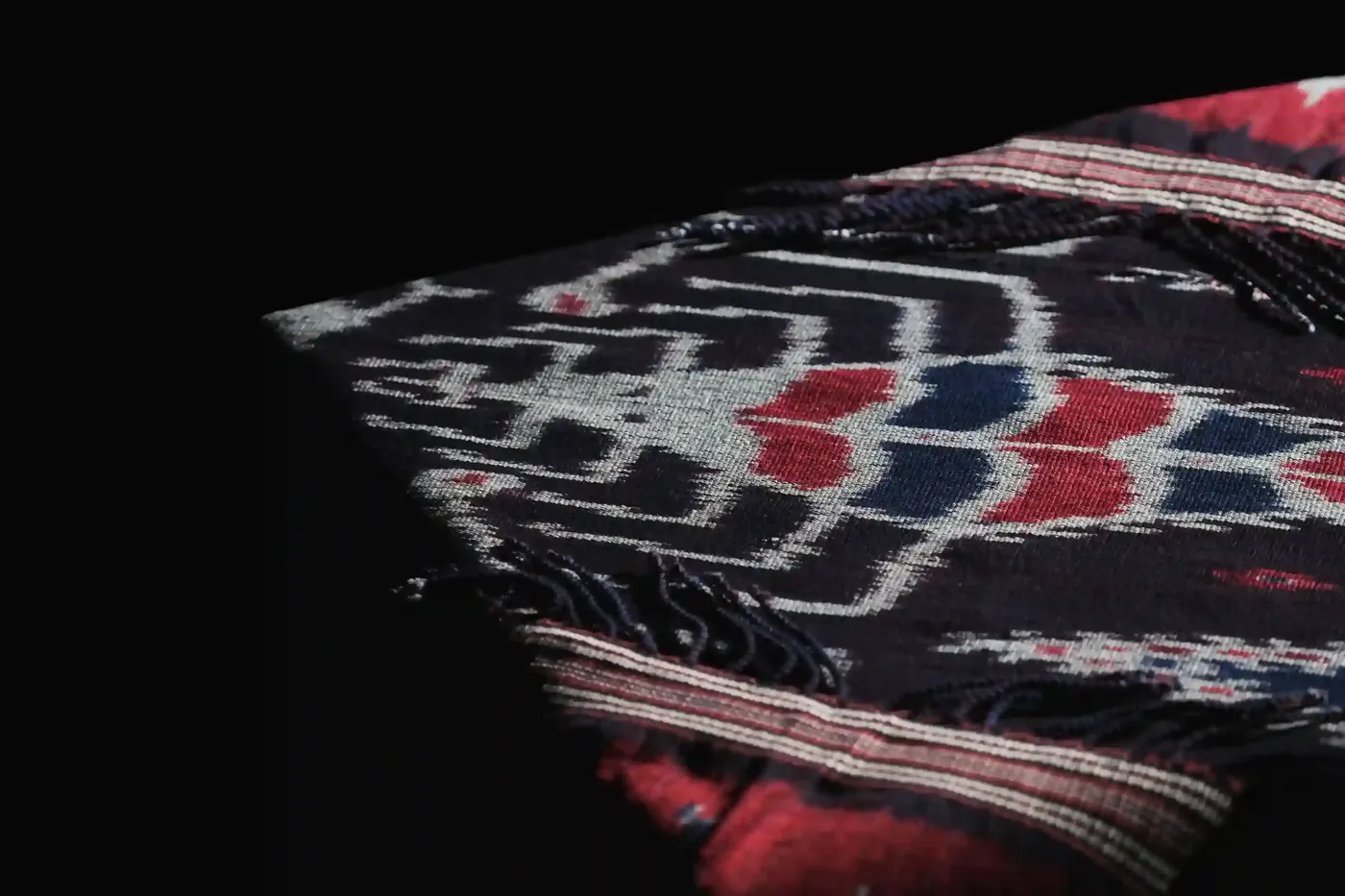
The pattern in ikat is bound and dyed into the warp threads before any weaving happens, which means an order that exceeds current stock enters a production sequence rather than a packing queue. Tying, dyeing, drying and weaving each take real time, and none of them can be compressed without damaging the cloth.
The practical consequence is scheduling discipline. If you need stock for a season, a store opening or a hotel handover, place the order against that date rather than against the moment your shelves run low. We say at quotation stage what is available immediately and what requires weaving, so your plan is built on real dates.
Placing and managing a wholesale order
Deliberately simple, and nothing ships without confirmation on both sides.
-
01
Enquiry
Your mix, volume, market and required delivery date.
-
02
Written quotation
Against the actual mix, with the tier visible.
-
03
Sample confirmation
Where needed, drawn from the batch that would supply the order.
-
04
Terms agreed
Payment arrangement settled in writing before production begins.
-
05
Production or reservation
Stock reserved, or weaving scheduled.
-
06
Check, pack, dispatch
Quality check against the agreed grade, then packing and documentation.
Frequently asked questions
Four questions
Next step
Send the mix, the volume and the date you need it.
We return current availability with a written quotation and realistic dates — stock and production separated, so you can plan around both.