
The piece you see is the piece that ships.
The home-ready end of our range: cushion covers, throws, runners and small framed panels cut and finished from handwoven Sumba cloth, sold to people furnishing a real room rather than filling a container.
- Item types
- 5
- Of each piece
- 1
- Faces the motif reads on
- 2
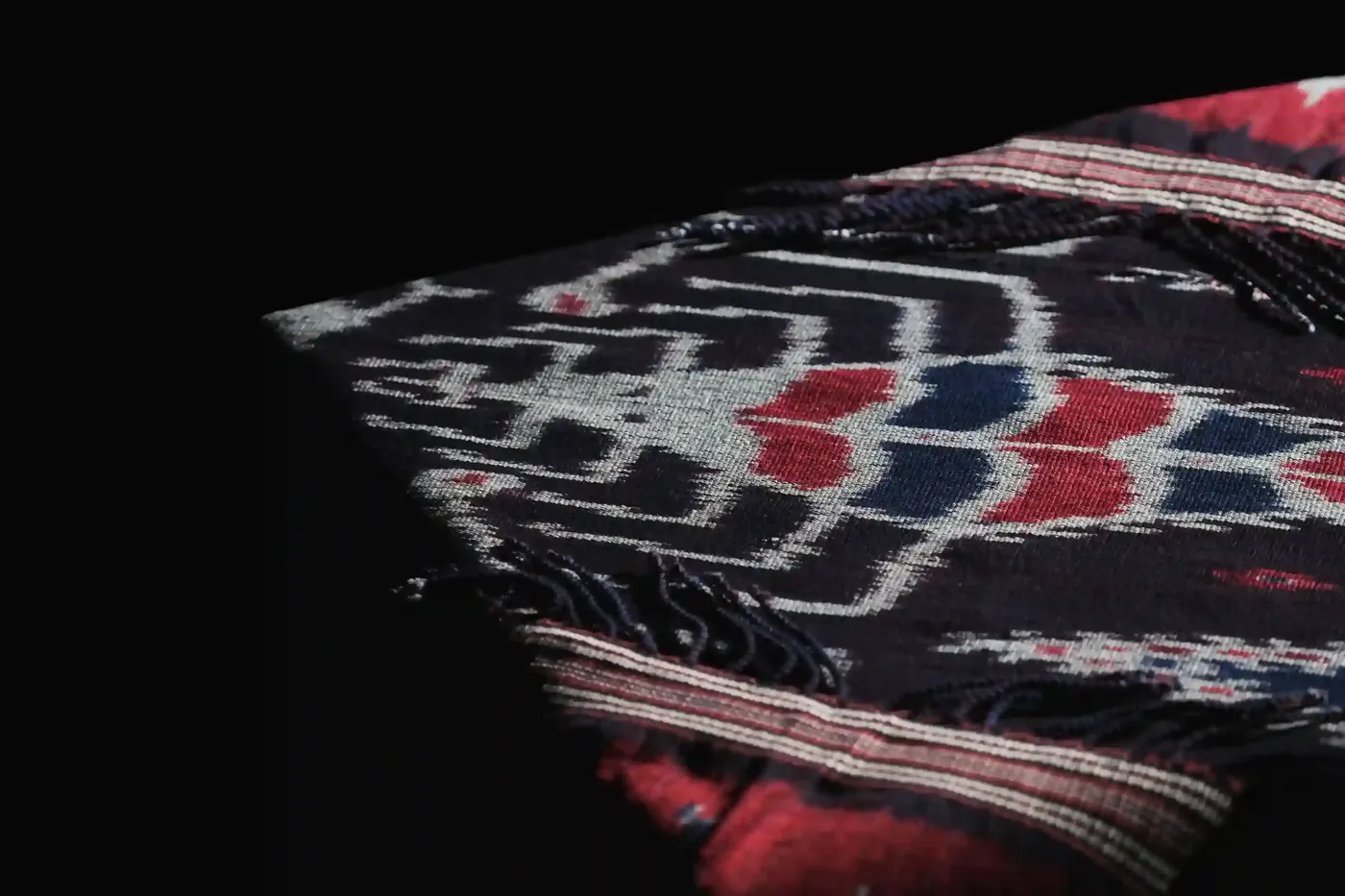
What makes a Sumba home textile different from a printed lookalike?
The pattern is not printed onto the surface — it is dyed into the threads before the cloth exists. Warp yarn is bound with fibre where the colour should not reach, dyed, untied, sometimes rebound and dyed again, and only then woven.
- Turn the piece over in the photographs. A printed fabric has a pale, ghosted reverse; a woven ikat reads clearly from both sides.
- Look at the pattern edges. Machine-perfect boundaries almost always mean print; feathered, breathing edges mean the design was tied by hand.
What is in the collection?
Five formats
Cushion covers
Sofas, reading chairs, bed ends
Insert size, backing, closure type
Remove cover, cold hand wash, dry in shade
Throws and small blankets
Sofa backs, bed foot, chair drapes
Finished length and weight of the ground cloth
Air regularly, spot clean, avoid machine agitation
Table runners
Dining tables, consoles, sideboards
Table length and desired overhang
Cold wash after checking dye family, iron on reverse
Small wall panels
Framing, hanging rods, gallery walls
Panel dimensions, whether edges are finished or raw
Keep out of direct sun, dust rather than wash
Cut sections and remnants
Upholstery details, bags, craft projects
Usable area without seams, motif placement
Pre-wash a test corner before cutting
Sizing a piece for the room you actually have
Handwoven cloth is made to loom width, not to furniture standards, so sizing runs the other way round from mass-market homeware: you choose the piece, then decide where it fits.
-
01
Runners
Measure the table and decide how much overhang you want at each end before comparing lengths.
-
02
Cushions
Order the cover to the insert you own. A cover sized slightly under the insert reads plumper and better filled.
-
03
Wall panels
Hold a sheet of paper at the intended size on the wall for a day first. Textiles read larger than their measurements because the pattern draws the eye outward.
Every listing states the actual finished measurements of that individual piece. Where a design exists in several near-identical pieces, we say so, and we say which one is photographed.
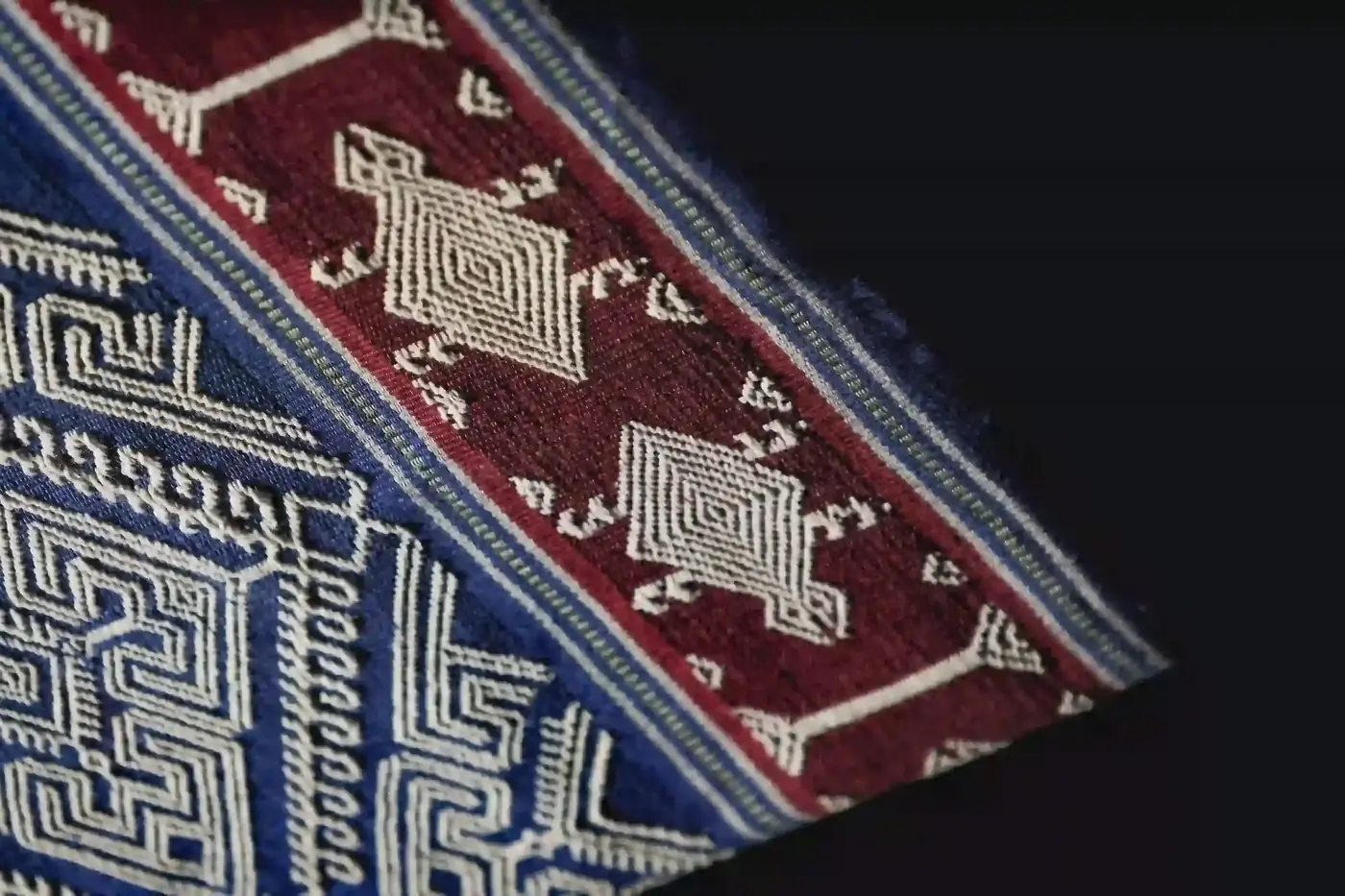
Which colours and motifs work in a modern interior
Sumba’s traditional palette is built on natural dyes: indigo for the blues and blue-blacks, morinda root for the rust and brick reds, with undyed cotton providing the cream. That combination sits comfortably against plaster, timber and linen, which is why the cloth travelled so easily into contemporary interiors.
Motifs carry meaning in their original context — horses, deer, roosters, marine creatures and ancestral figures all appear with specific cultural associations. You do not need to decode them to live with the cloth, but knowing the imagery is a language rather than decoration usually changes where a piece gets placed.
How you order and receive a piece
Ordering runs through direct enquiry rather than an automated basket, for a practical reason: each item is unique, and reserving a specific piece for a specific buyer avoids two customers ordering the same cloth.
-
01
Tell us the item
And the room it is going into.
-
02
We confirm
Availability, exact measurements, dye family and delivery cost to your address — before anything is charged.
-
03
We pack
Folded on the weave, wrapped against moisture, shipped with the description that matches your order.
-
04
It ships
Small home textiles travel by courier. Larger wall pieces are quoted individually, because dimensional weight rather than actual weight sets the freight cost.
Frequently asked questions
Four questions
Next step
Tell us which piece and where it will live.
We confirm the exact measurements, dye family, availability and delivery cost to your address before anything is charged.