
Supplied the way a fit-out consumes it.
Handwoven warp-ikat cloth for resort rooms, boutique hotels, villas and restaurants — in defined lots, with agreed panel dimensions, a named motif direction and a delivery window that fits the installation programme.
- Spaces covered
- 6
- Stages in a project order
- 7
- Single panel width
- 45–70cm
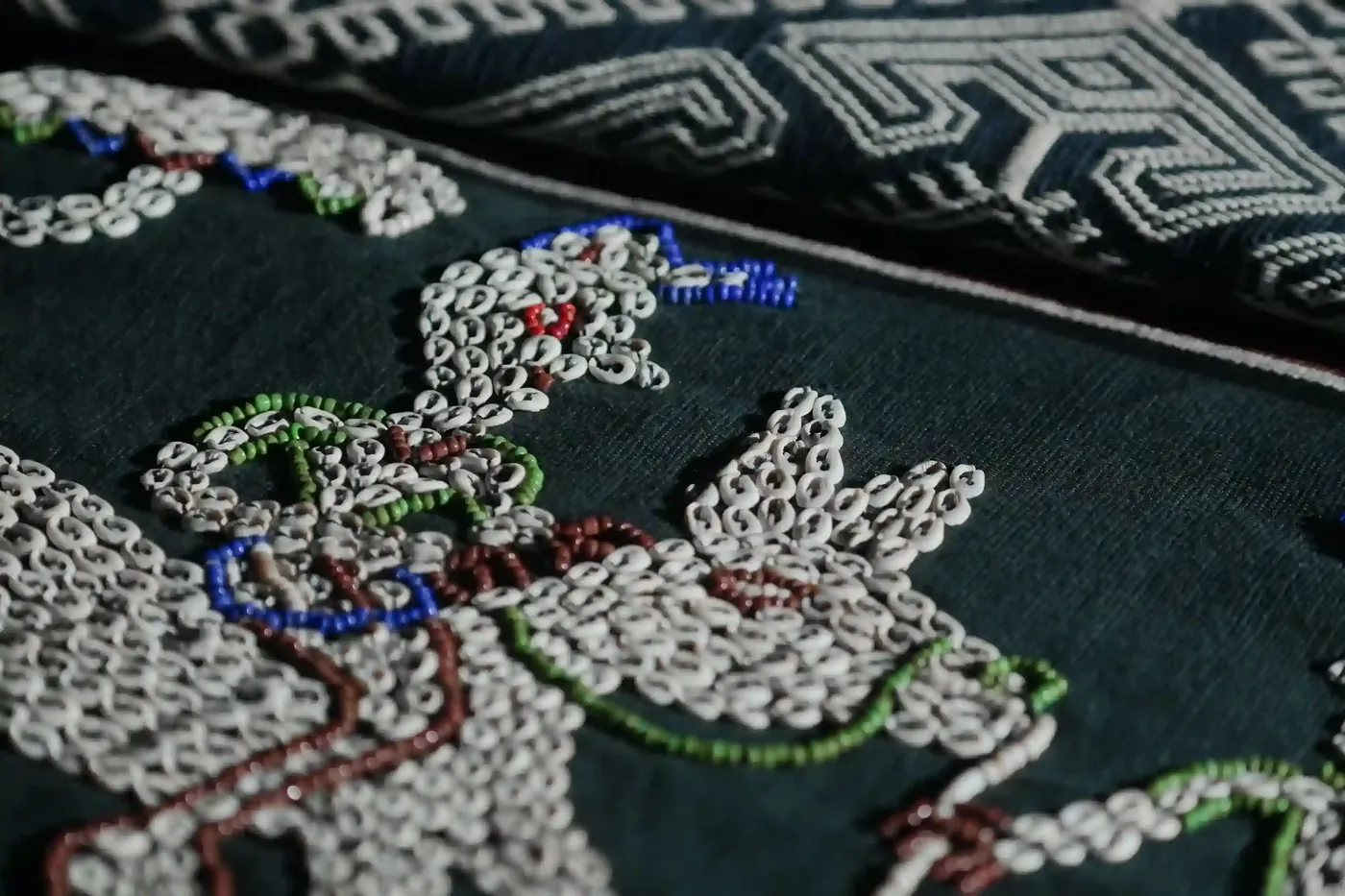
Why designers choose Sumba ikat over printed alternatives
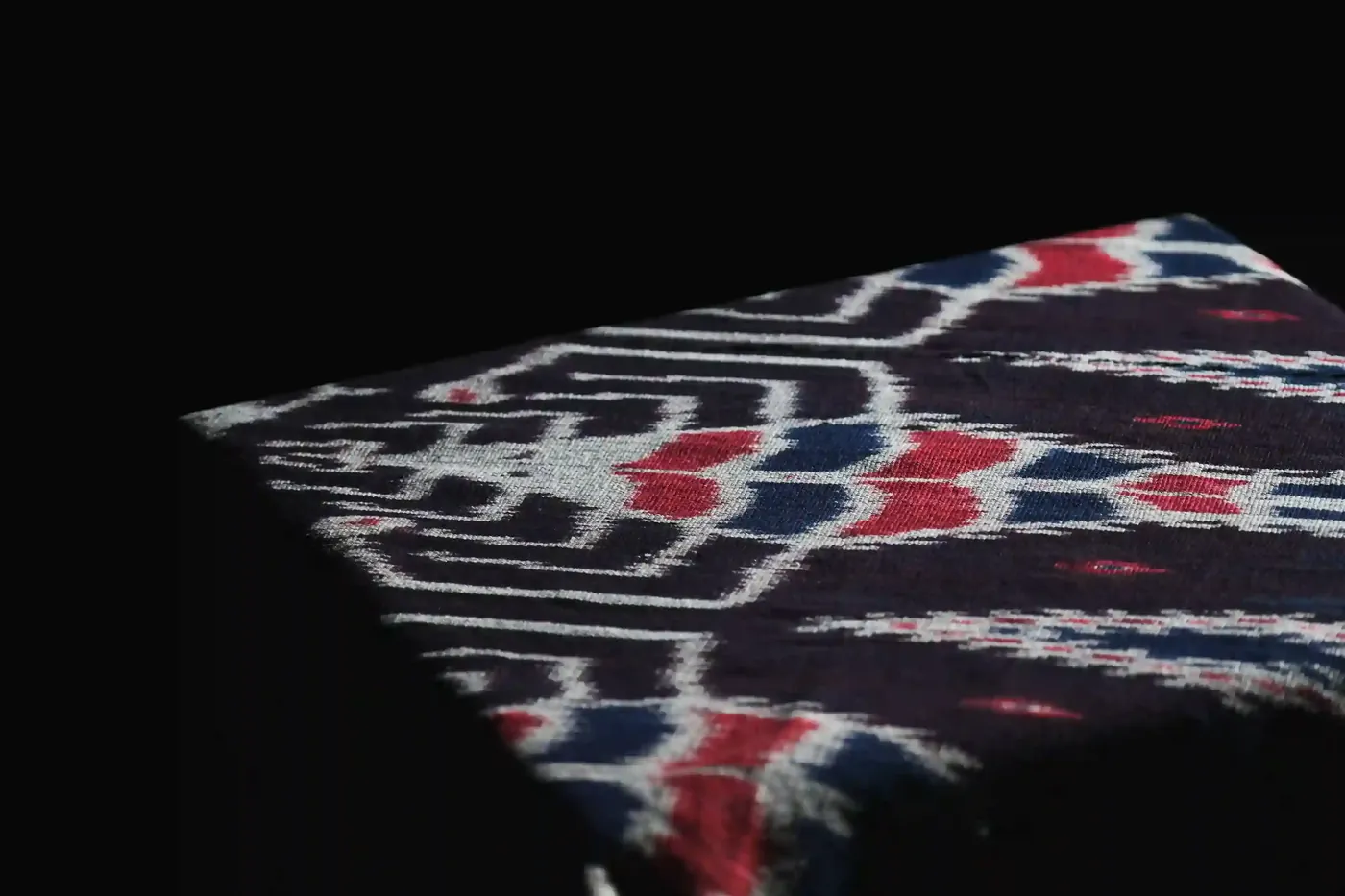
The pattern is bound onto the warp and dyed before a single weft pass, so the design lives inside the yarn rather than on its surface. A printed imitation loses definition the moment the face abrades or fades; a genuine ikat keeps its pattern for as long as the cloth holds together — which is why it survives the rubbing, cleaning cycles and light exposure of a working guest room.
- Hand-spun cotton on a backstrap loom gives a slightly irregular surface that catches light unevenly, so photographs of the finished room read warmer.
- For properties selling a sense of place, that irregularity is the point rather than a tolerance to be minimised.
- A hinggi is woven as a mirror-symmetrical pair, which makes it unusually easy to hang as matching panels either side of a bed or corridor.
Which Sumba pieces suit which part of a property?
Six spaces
Smaller formats such as cushion faces and runners are cut and finished from the same cloth families as the large panels, so a room can carry one motif language across several scales.
Guest room feature wall
Full hinggi panel
Stretched on a batten frame or hung from a concealed rod
Lobby or stair core
Paired panels, floor-to-ceiling drop
Perspex box frame or open-hung with weighted hem
Bed dressing
Bed runner
Lined, edges turned, colour-matched thread
Restaurant tables
Runner and placemat sets
Washable lining, reinforced corners
Lounge and villa seating
Cushion faces
Backed with plain handwoven cotton, zip closure
Suite entry and corridors
Framed textile fragments
Acid-free mount, UV-filtering glazing
A single woven panel is roughly 45 to 70 cm wide, so wider cloth is two panels joined at a centre seam. A two-metre feature panel is achievable; a two-metre seamless panel is not. Warp length is set before weaving, so unusually long drops are possible if specified early — late changes to length are expensive because they mean starting again.
What to expect on colour consistency
Natural dye lots vary, and a supplier who promises identical colour across fifty pieces made over several months is describing a printed product rather than a handwoven one. The workable approach is to define an acceptable range at the start.
-
01
A reference piece
Held on both sides, with an agreed tolerance above and below it.
-
02
Rooms as a family
They then read as a family rather than as clones — usually what the design intent wanted anyway.
-
03
One dye run
Where a scheme genuinely cannot tolerate variation, order the full quantity from a single run and accept the longer lead time.
-
04
Phased openings
Say so early, so later phases can be woven against retained reference pieces.
Keeping it right in a working property
Textile conservators generally keep displayed cloth below about 50 lux and at a relative humidity in the mid-forties to mid-fifties, and the same logic protects a hotel installation. Panels out of direct sun, away from close-range spotlights and clear of unfiltered glazing will hold colour for years longer than pieces mounted opposite a west-facing window.
Housekeeping needs one instruction sheet, not a manual: dust with a soft brush, never bleach, never wet-clean on site, launder washable items cold and dry in shade, and rotate cushion faces so wear spreads evenly.
How a hotel or villa order actually runs
A project order is a sequence, not a single transaction, and the longest step is almost always dyeing rather than weaving. Natural red from morinda root is built up through repeated dipping and drying cycles over weeks, and indigo works the same way — depth of colour is a function of time.
-
01
Brief
Room count, piece list, target dimensions, motif direction and the colour range the scheme can accept.
-
02
Selection
Physical samples or existing stock pieces reviewed against the scheme.
-
03
Quotation
Pricing per piece and per lot, with the production window stated.
-
04
Confirmation
Specification frozen, deposit terms agreed, production slot booked.
-
05
Production
Weaving and dyeing, with progress photographs at agreed milestones.
-
06
Finishing
Cutting, lining, hemming, framing or mounting as specified.
-
07
Inspection and dispatch
Piece-by-piece check against the specification, then packing and export handling.
Commissioned pieces should be booked as early in the programme as the room specification allows — ideally at the same time as long-lead furniture.
Frequently asked questions
Four questions
Project enquiry
Send the room count and the installation dates.
Room count, piece list, dimensions and installation dates, and we return a specification sheet with a production window. Drawings and mood boards sent with the first enquiry shorten the selection stage considerably.