
Graded on execution, not on price tag.
The top grade of handwoven Sumba textile — selected for even weave, deep natural dye and uninterrupted motif composition — for designers and owners specifying textile as an architectural element rather than an accessory.
- Grading criteria
- 5
- Specification points
- 5
- Dye batch per scheme
- 1
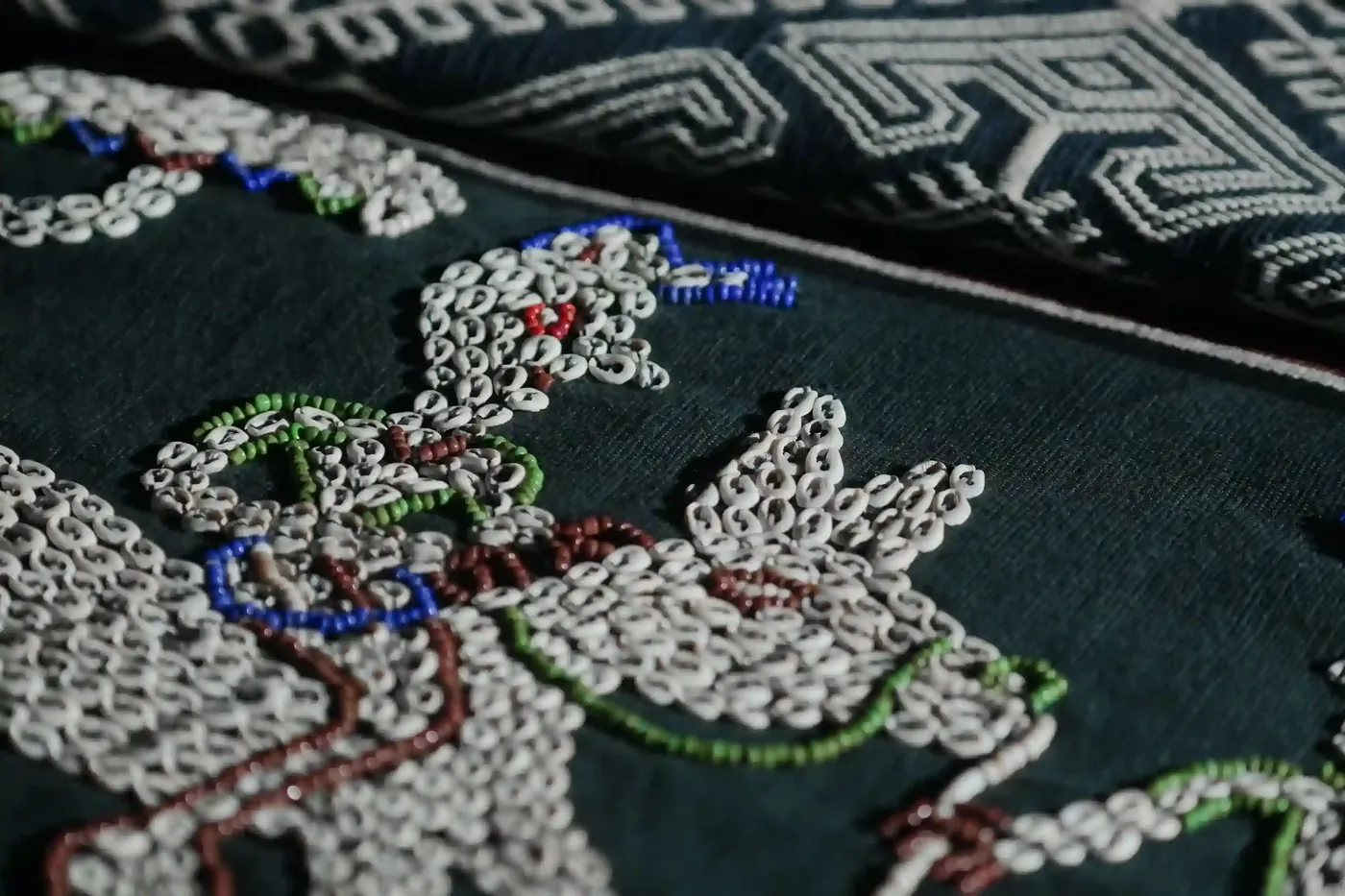
What separates premium grade from standard cloth?
Grade in handwoven cloth is judged on execution, and the clearest single indicator is dye depth: premium naturally dyed Sumba cloth goes through repeated immersion cycles over an extended period, producing a saturation a short dyeing run cannot imitate.
- Motif registration: pattern alignment held cleanly across the full width of the cloth.
- Weft consistency: even beat along the length, without visible density banding.
- Dye saturation: colour that reads richly under both daylight and warm artificial light.
- Finishing: hand-worked selvedges and fringes, correctly secured.
- Composition: a complete, balanced design rather than a cut section of one.
Pieces that miss on any one of these are offered in another range instead of being described upward.
How designers specify Sumba ikat into a scheme
Five points
The most common specification error is treating handwoven cloth like a catalogue product with a fixed reference number. Each piece is individual, so the specification has to record the actual piece — and that record has to be locked before the scheme is presented to a client.
Piece identity
Reference photograph front and back
Handwoven pieces are not interchangeable
Actual dimensions
Measured size, not nominal size
Handwoven cloth varies from nominal figures
Dye type
Natural or colourfast, stated
Determines light and cleaning tolerance
Mounting method
Sleeve and rod, stretcher, or frame
Affects lead time and site preparation
Light exposure
Wall orientation and lighting design
Governs long-term colour retention
Mounting, framing and installation
A premium panel supported at points will distort within months, because the entire weight of the cloth concentrates at the fixings. Support the full top edge instead.
-
01
Sewn sleeve and rigid rod
The default. Spreads weight evenly across the full width.
-
02
Padded stretcher
For pieces that need to sit flat against a plane.
-
03
Conservation frame
With a spacer, so the textile never presses against glazing.
-
04
Confirm the drop on site
For high-ceiling spaces, against the actual wall, including rod projection and shadow gap.
-
05
Allow airflow behind
In humid coastal properties. Trapped moisture is the most common cause of staining in tropical interiors.
Light, longevity and realistic expectations
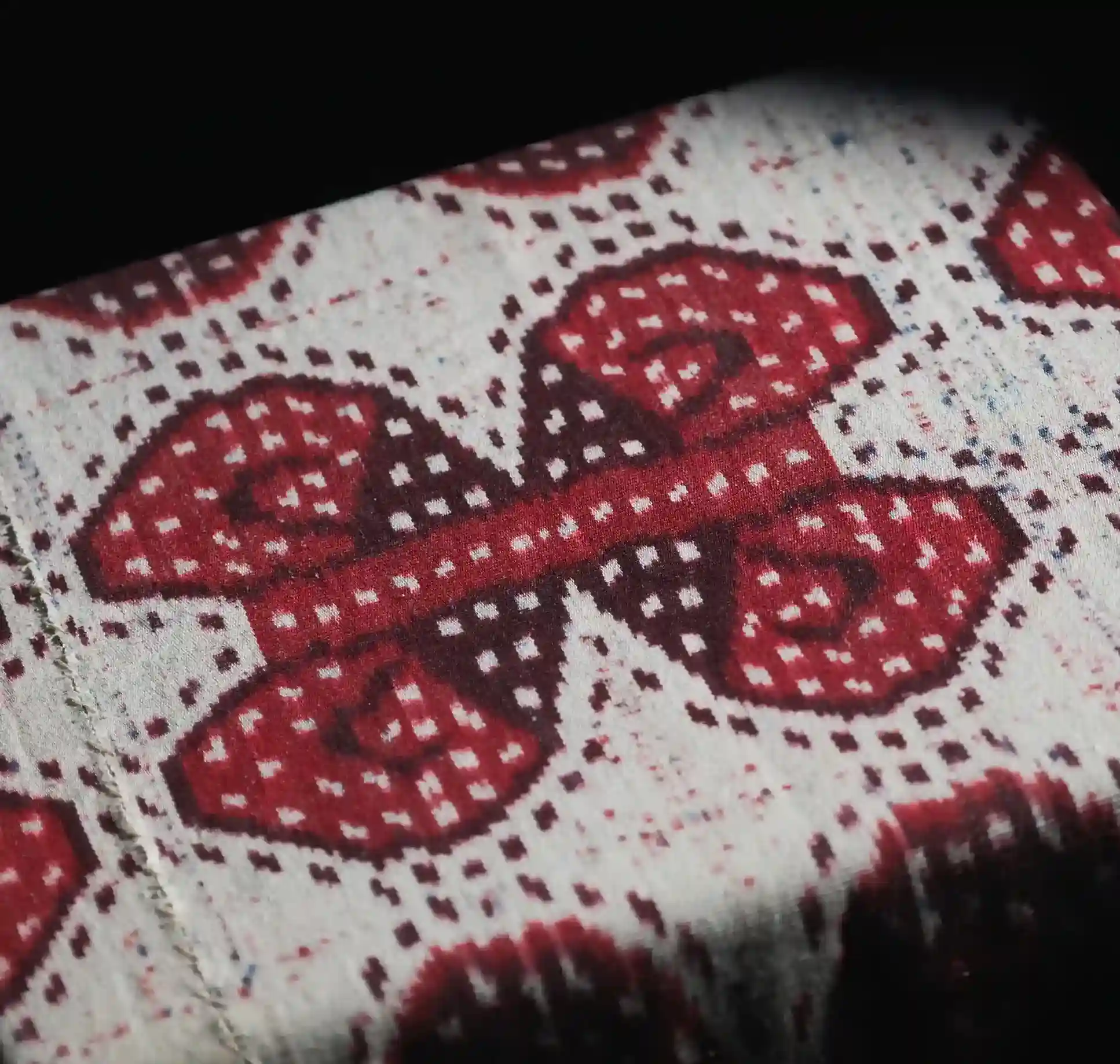
Natural dyes will shift over time under light, and no supplier can honestly promise otherwise. What can be controlled is the rate: indirect light, no direct spotlighting on the cloth, and periodic rotation of displayed pieces will keep a panel reading correctly for far longer than a sunlit wall will.
Where a scheme places textile in a genuinely bright position, we say so and suggest either a colourfast dye option or a different placement, rather than supplying a piece that will disappoint.
Lead times and reservation for projects
Premium pieces are individual, which means the piece a client approves in a presentation must be reserved at that moment or it may not be available at sign-off.
-
01
Present with the piece identified
Reference photographs front and back, measured size, dye type.
-
02
Reserve at approval
We hold approved pieces against a written reservation while the scheme is finalised.
-
03
Build it into your process
Treat the reservation step as part of client approval rather than treating stock as a given.
-
04
Commission if needed
Where a project needs more than current stock allows, weaving runs on the tying, dyeing and weaving cycle and must be scheduled against your handover date well in advance.
Frequently asked questions
Four questions
Project enquiry
Send the wall, the light and the handover date.
Wall dimensions, lighting conditions, quantity and handover date. We return graded pieces with measured sizes, dye information and a written quotation.