
Plan the cut around the loom, not the mill.
Loom-woven cotton sold as continuous yardage rather than a finished panel, for designers, upholsterers and makers who cut and sew the cloth themselves. Width, repeat, dye behaviour and shrinkage are design constraints here — getting them wrong after cutting is expensive.
- Single woven width
- 60–90cm
- Joined width
- 120–180cm
- Batch per collection
- 1
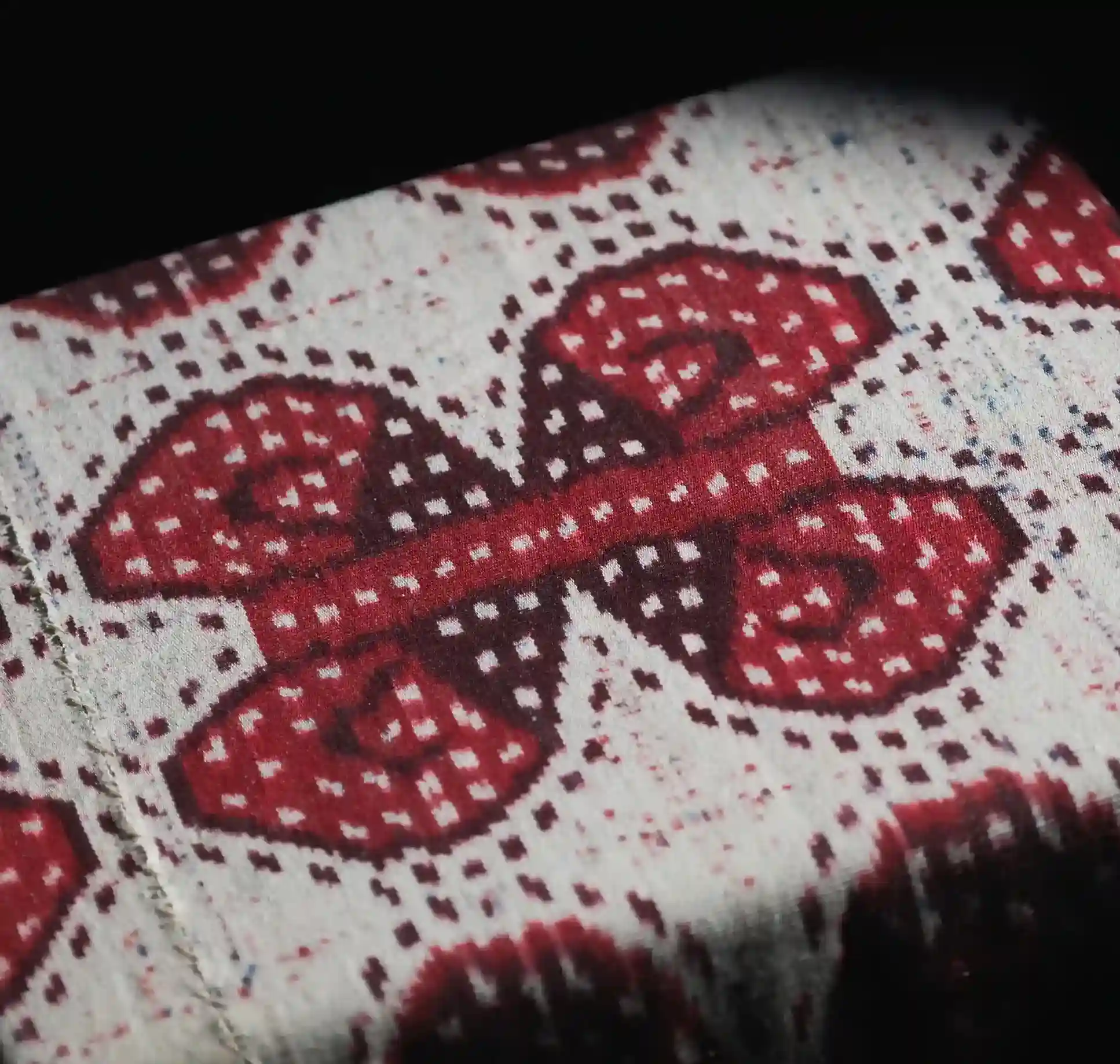
How wide is handwoven Sumba ikat cloth?
Traditional Sumba weaving is done on narrow looms, so a single woven width is far narrower than the 140–150 cm roll goods most designers are used to. Wider cloth is achieved by joining two woven widths along a centre seam — not a defect, but how the cloth has always been made.
- Single woven width: usually 60–90 cm, the standard unit of supply.
- Joined width: two panels seamed, giving roughly 120–180 cm with a visible centre join.
- Continuous length is limited by the warp that was set up, so long single runs need planning before weaving starts.
- Pattern repeat is determined at the tying stage, not by a printing cylinder, so repeats vary slightly along the length.
Plan your marker and cutting layout around the narrow width from the beginning. Designers who discover the constraint after finalising a pattern usually lose yardage to inefficient nesting.
What can you make from Sumba ikat yardage?
Five applications
A medium-weight cotton with visible hand: excellent for structured pieces, less suitable for anything needing high drape or stretch. It takes a crisp fold, holds a pleat moderately well, and photographs with depth because the dye sits inside the yarn rather than on the surface.
Jackets, kimonos, structured outerwear
Strong
Place motifs deliberately across fronts and back
Bags, pouches, accessories
Strong
Efficient use of narrow width and offcuts
Cushion covers, upholstery panels
Strong with backing
Back with a stable lining for seating use
Skirts, wide trousers, unstructured dresses
Moderate
Test drape on a sample before committing
Fitted, stretch, or bias-cut garments
Limited
Cotton ikat has no stretch and resists bias movement
Dye types, colourfastness and shrinkage
Naturally dyed cloth using morinda root and indigo releases some colour on first washing. That is normal plant-dye behaviour, not a fault — but cotton shrinkage after cutting is unrecoverable.
-
01
Wash-test the sample
Order a sample cut and wash-test it before committing to a production quantity.
-
02
Pre-wash the full order
If the finished item will be laundered, pre-wash and dry everything before cutting.
-
03
Expect the colour to settle
Natural dyes soften over the first few washes rather than holding first-cut intensity.
-
04
Ask for colourfast dyes
If the end use involves frequent laundering or heavy sunlight.
-
05
Keep a reference cut
Labelled, from each batch, so a future reorder can be matched as closely as the technique allows.
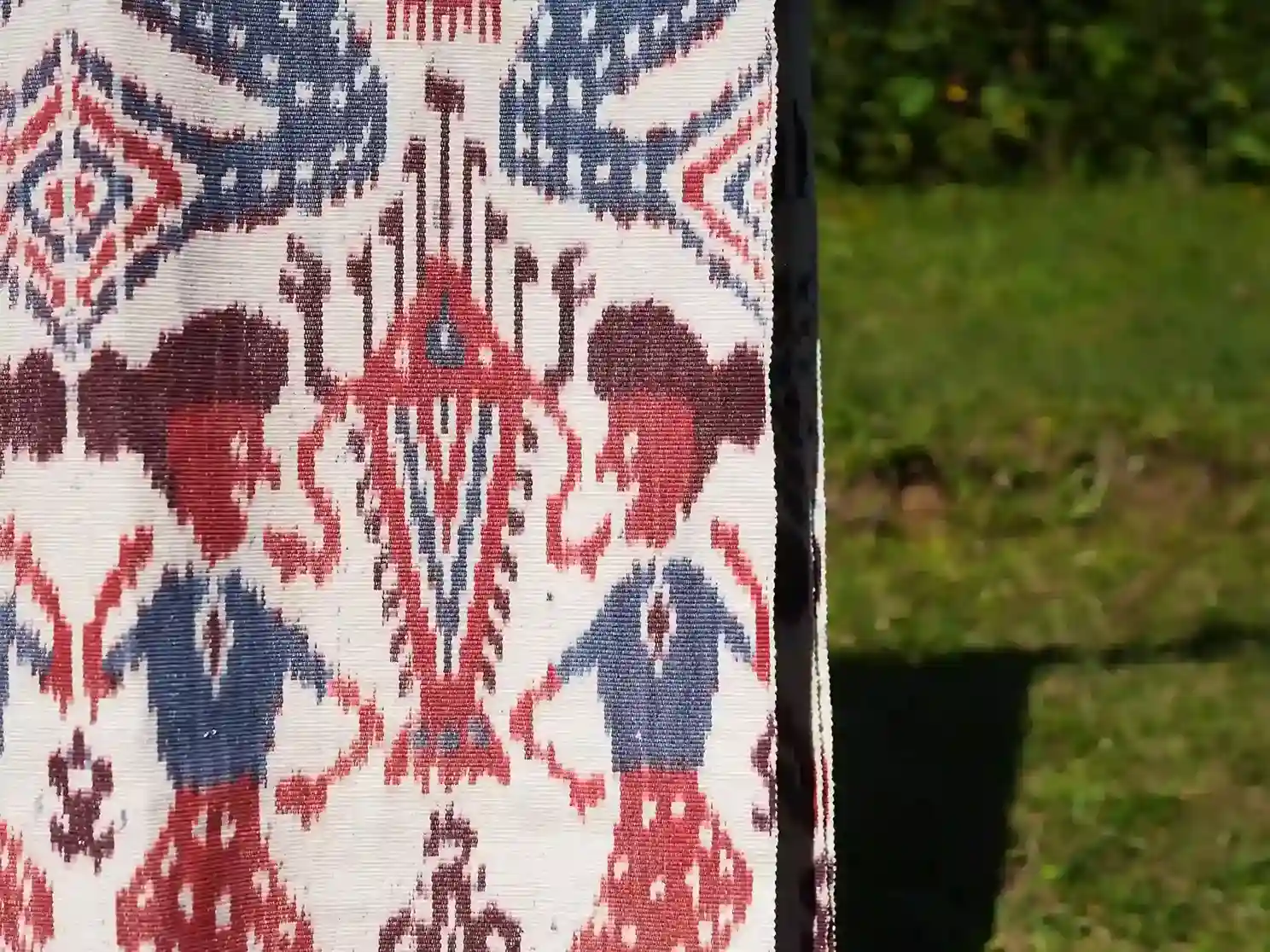
Why the pattern shifts slightly along the length
In ikat, the pattern is bound and dyed into the warp threads before weaving, so alignment is set by hand during tying and by tension during weaving. Small shifts of a few millimetres along the length are inherent to the technique — and the clearest evidence a cloth is genuinely handwoven rather than printed.
Treat it as a design input. Place motifs on garment panels intentionally, and avoid designs that require perfect motif mirroring across a seam unless you have discussed that requirement before weaving begins.
Samples, batches and lead time
Because ikat is dyed before weaving, a repeat order is a new dye batch rather than a cut from the same roll, and small colour variation between batches is unavoidable. Order the full quantity you need for a collection at once, plus a margin for cutting errors and future repairs.
-
01
Sample cut
Drawn from the same batch as the offered stock.
-
02
Wash test
Under your own washing and pressing conditions.
-
03
Confirm width and dye
In writing, before anything is scheduled.
-
04
Written quotation
Covering quantity, dye method and timeline.
-
05
Production
Stock yardage ships faster; commissioned runs are scheduled around the weaver’s warp setup.
Frequently asked questions
Four questions
Next step
Send your meterage and we will send a sample cut.
Required meterage, intended application and destination country. We reply with available widths, dye options and a written quotation.