
A structured assortment, not a pile of tribal fabric.
Handwoven Indonesian cloth bought as a planned assortment — wall pieces, table textiles, cushion-scale formats and yardage — with each format described by weave, dye and origin so you can price it, shelve it and describe it honestly to your own customers.
- Formats in the catalogue
- 5
- Island of origin
- 1
- Questions to settle first
- 4
Why source an ethnic textile range from one island rather than many?
Indonesia has dozens of distinct weaving traditions, and a mixed-origin container is easy to buy but hard to sell, because every piece needs a separate explanation at the point of sale.
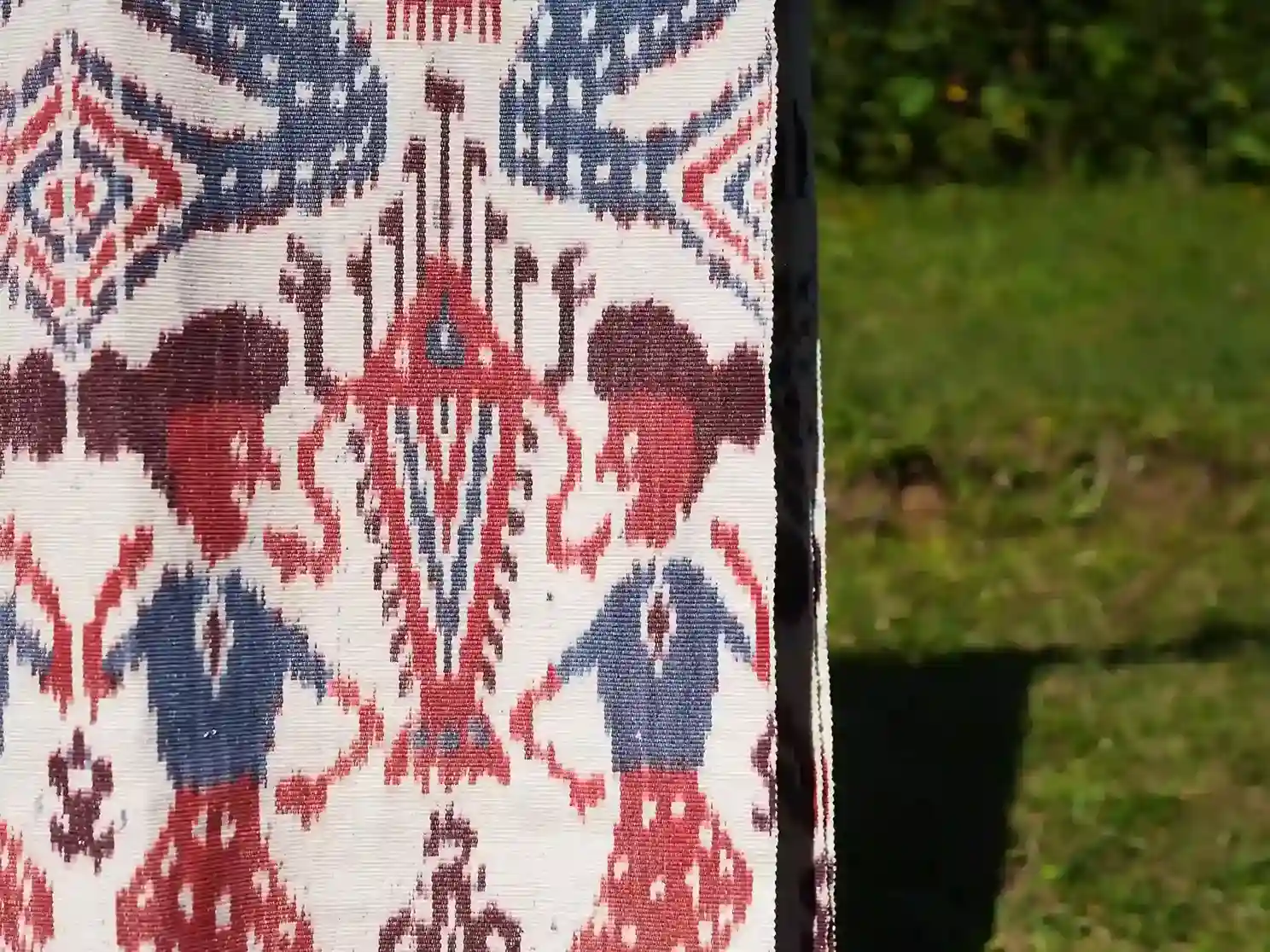
- Sumba concentrates the story: the island’s signature technique is warp ikat, where the design is bound into the lengthwise threads and dyed before weaving begins.
- Its best-known formats are the large rectangular hinggi, historically made and used in mirrored pairs, and the lau, a tubular woman’s skirt.
- A buyer who commits to one origin can train staff once, write one provenance card, and still stock enough visual variety to fill a wall, a table and a shelf.
What sits inside the wholesale catalogue?
Five formats
Organised by finished format first, because that is how retail floors and project specifications actually work. Weave and dye detail is attached underneath each format rather than used as the top-level split.
Large wall cloth
Full-size warp ikat panels, often two loom widths joined at a centre seam
Anchor piece; sets the price ceiling of the display
Batch-limited, commission for depth
Table textiles
Runners and narrow woven lengths finished at both ends
Volume line; easiest repeat purchase for walk-in customers
Good depth, moderate lead time
Cushion-scale panels
Smaller ikat and supplementary-warp sections sized for covers
Entry price point that converts browsers into buyers
Strong depth, quickest to restock
Yardage and ground cloth
Plain or lightly patterned handwoven lengths
Cut-and-sew input for makers and interior workrooms
Most predictable line in the catalogue
Collector and heritage pieces
Older or elaborately worked cloth with documented handling
Display and credibility rather than turnover
One-off; treat each piece separately
Four questions to settle before the first order
The mistake we see most often is a first order weighted entirely toward the most photogenic pieces. A wall of large ikat looks impressive and sells slowly, because the anchor piece is a considered purchase while your cash flow depends on the shelf below it.
-
01
Decoration, provenance, or both?
This decides how much natural-dye stock is worth the premium.
-
02
Sold flat, framed, or made up?
Whether pieces become finished goods on your side changes the formats worth carrying.
-
03
Whose care cards?
Do you need care and origin cards prepared here, or will you produce your own?
-
04
How often do you reorder?
Seasonally or continuously — this decides which formats to weight.
A workable opening assortment usually carries the majority of its unit count in cushion-scale and table formats, a small number of large wall pieces to set the tone, and one or two heritage items used to explain the tradition rather than to hit a sales target.
Is “ethnic textile” the right label to put on the shelf?
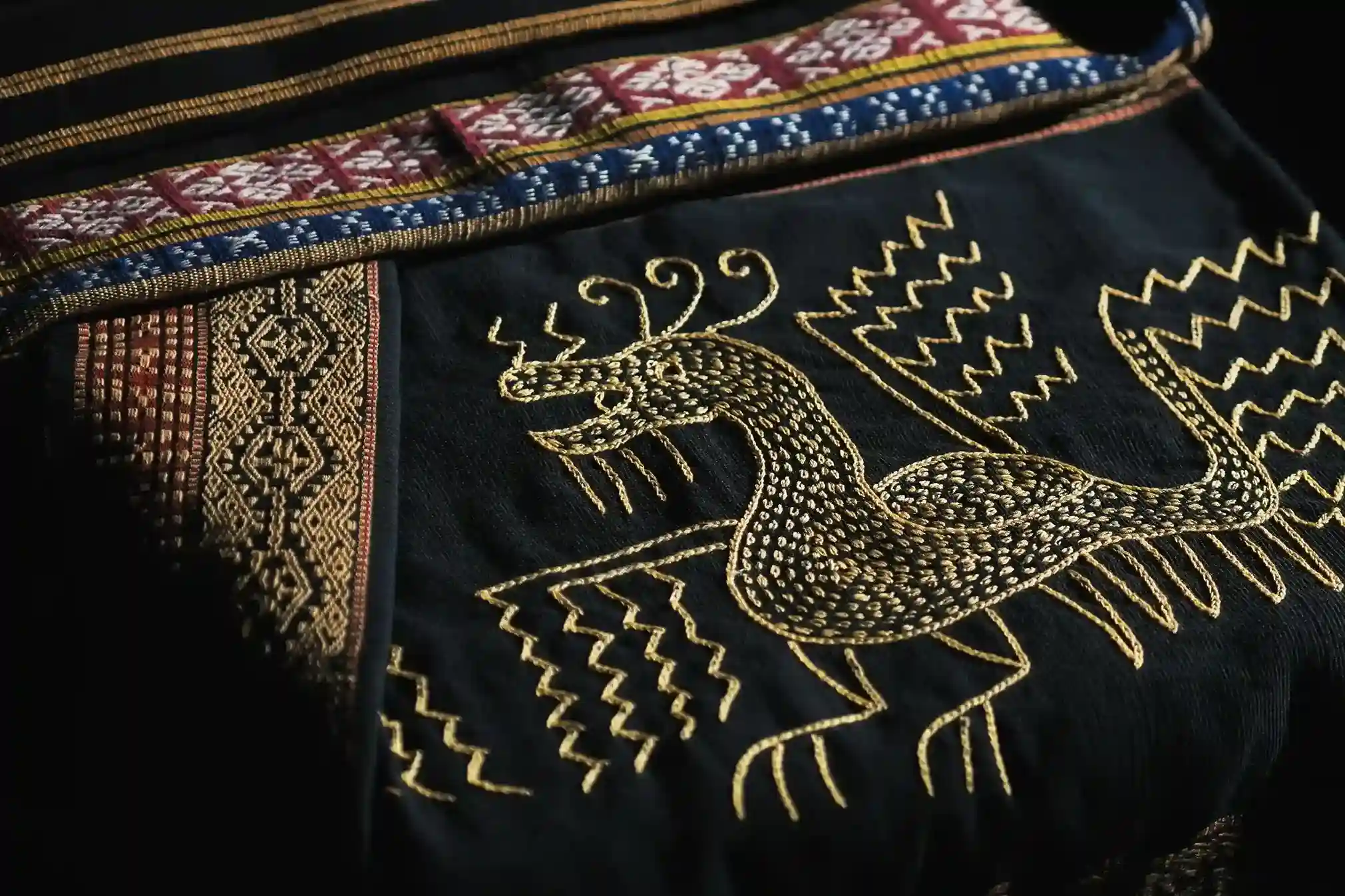
It is a useful trade category and a weak retail label. “Ethnic textile” tells a buyer almost nothing, while “handwoven warp ikat from East Sumba, natural indigo and morinda dye” tells them what they are paying for. We supply the underlying facts for every lot — technique, dye family, fibre, format and the weaving region within Sumba — precisely so resellers can write specific labels instead of generic ones.
Specific labels also protect the retailer. A customer told the cloth is handwoven and naturally dyed will accept dye variation; a customer sold on a vague romantic description tends to read that same variation as a fault.
What the trade relationship looks like in practice
Wholesale here is a working file rather than a one-click checkout, and the file is reused so the second purchase is faster than the first.
-
01
You open with interests
Category interests and destination.
-
02
We respond with reality
What is physically available, at what depth, with photographs of the actual pieces rather than catalogue stand-ins.
-
03
Pricing per lot
Tiered by volume, so the effect of more depth is visible before you decide.
-
04
Terms before production
Payment terms, packing preferences and freight mode agreed first.
Textile shipments are bulky and light, so freight mode is usually decided by urgency rather than weight. Air suits opening assortments and replenishment of fast-moving small formats; sea suits larger consolidated orders. Cartons are packed by format so receiving staff can check against the packing list without unfolding every piece.
Frequently asked questions
Four questions
Next step
Send the formats, the volumes and the market you sell into.
We return current availability, tiered pricing and a packing plan — with the underlying facts you need to write your own labels.