
Importers
Placing repeat orders against a planned calendar.
We buy from the weavers and dye workshops that make the cloth and sell to the international buyer with no intermediate trader layer. You know which community produced a piece; the weaver is paid against an agreed order rather than a market price set after the work is finished.
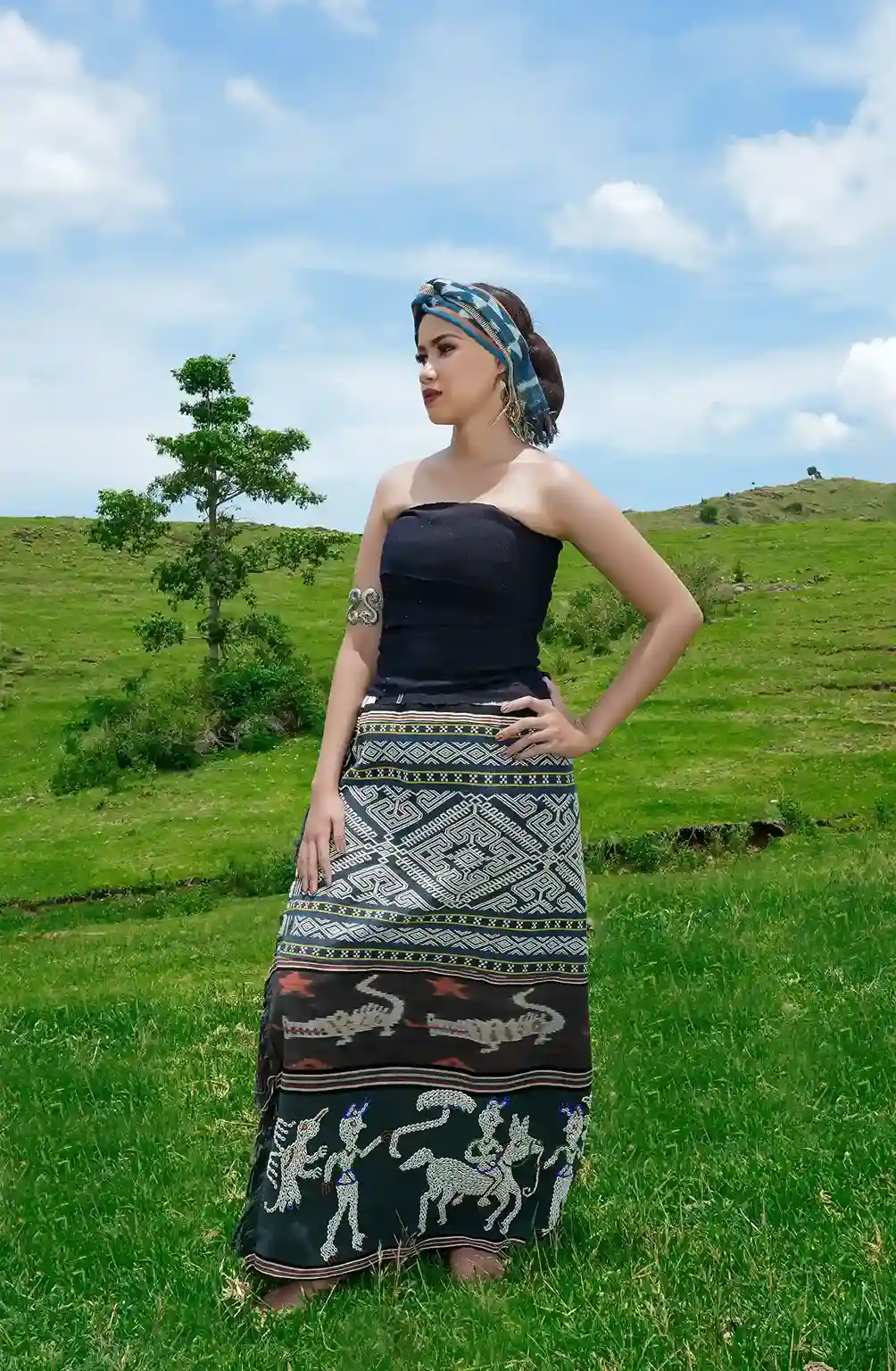
A buyer who can name the origin of a lot can answer provenance questions from customers, repeat an order from the same hands, and plan production capacity instead of hoping the right stock appears at market. It also removes the price opacity that makes handwoven textile sourcing difficult to budget.
Five questions
Usually unknown by the time it ships
Recorded at the point of order
Depends on what the market yields
Same workshop, same specification
Estimated after purchase
Booked as a production slot before work starts
Opaque
Agreed before weaving begins
Only by rejecting stock
Adjusted during production
Everything that would otherwise become a dispute is written down at the start, because a handwoven order cannot be corrected retroactively once the warp is dressed and dyed.
Format, quantity, panel width and finished length per piece.
Handspun or machine-spun cotton, stated explicitly.
Natural indigo and morinda root, synthetic, or a combination.
Which motif families are used and how they are laid out.
The acceptable colour and dimension range against a retained reference piece.
Production start, milestone photographs, inspection date, dispatch window.
Deposit, balance, delivery terms, and who arranges freight.
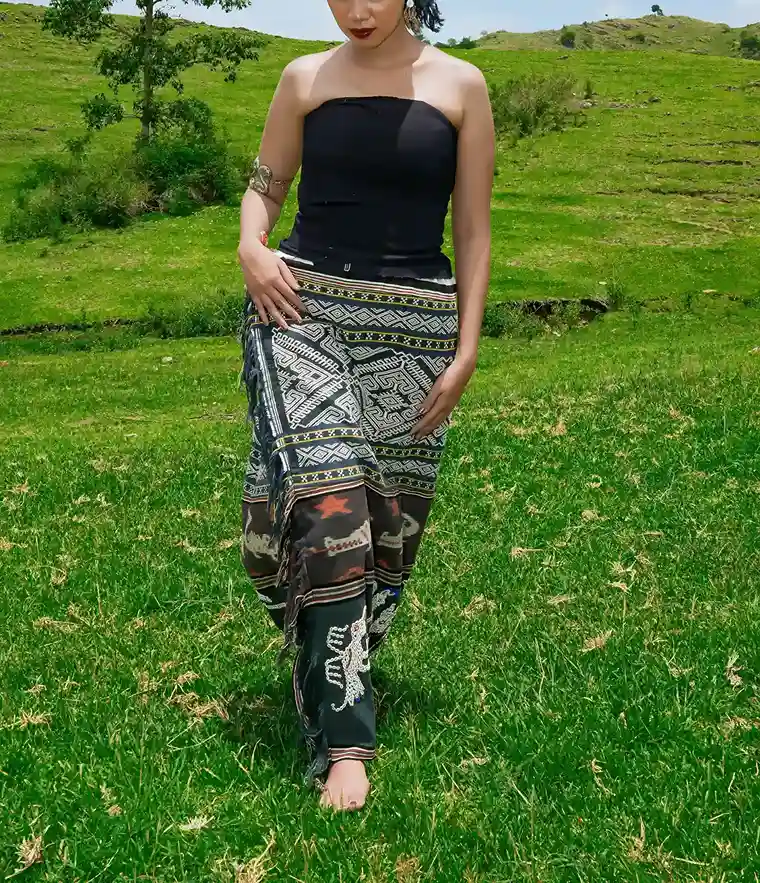
The verifiable commitment is structural: the price for a commissioned piece is agreed with the maker before work starts and is not renegotiated downward after the cloth exists. That protects the weaver from the classic risk of the craft, where months of labour meet a buyer’s market on delivery day.
We do not publish certification badges or third-party audit claims, because we would rather describe the mechanism than decorate it. Buyers who need documented social compliance for their own reporting should tell us what evidence their framework requires, and we will say plainly what we can and cannot supply for a given order.
A large hinggi can occupy a weaver for months, and the dyeing that precedes weaving is measured in weeks of repeated dipping and drying. Capacity in Sumba is measured in loom-months rather than units per day, and that single fact governs every serious sourcing conversation.
Not from a stock list. Tell us in advance what you will need for a season.
A buyer who plans ahead gets a production slot. A buyer who orders when they run out competes for whatever capacity happens to be free.
Effectively a standing reservation — the core benefit of the direct model.
At agreed milestones, so problems surface while the loom is still running rather than after dispatch.
The three recurring risks are colour drift between lots, dimensional variation across pieces woven by different hands, and schedule slippage when weather interrupts the outdoor drying that natural dyeing depends on. All three are manageable if named before the order — and all three cause disputes when discovered after it. Where a piece falls outside the agreed tolerance it is replaced or re-priced by agreement, not shipped and argued about later.
The model’s advantages compound with continuity: the same workshop, the same reference piece, and a shortening feedback loop on quality.
It suits one-off opportunistic buyers less well, simply because the setup effort is disproportionate to a single small purchase — those buyers are usually better served from existing stock. There is no obligation to start large: stock order, then a small commissioned run, then a booked seasonal allocation is a sensible progression.
Four questions
Next step
What you sell, the volume you expect over the next twelve months, and the provenance evidence your customers ask for — and we will explain exactly what we can commit to. We would rather turn down an order we cannot fulfil well than accept one and disappoint you at delivery.