
Homeowners
Furnishing one statement wall, usually a first single-panel order.
A handwoven cotton panel whose design is bound and dyed into the warp threads before weaving begins. Sold online to homeowners, interior designers, galleries and trade buyers worldwide — one panel or a matched set.
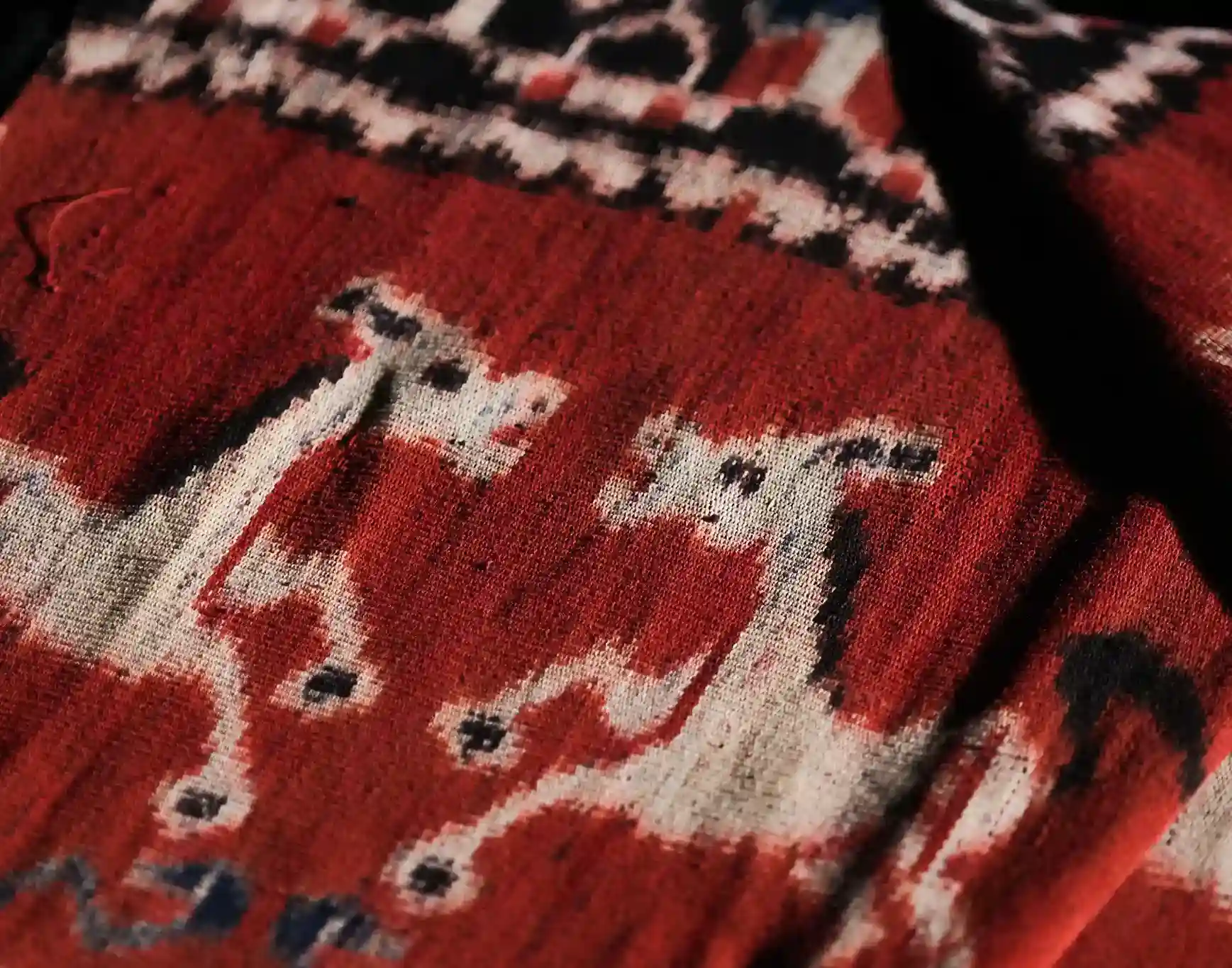
In true ikat the design lives inside the yarn. Bundles of warp thread are tied with fibre, dipped in dye, untied and re-tied for each colour before the weaver ever sits at the loom — which is why the motif reads on both faces of the cloth.
Four formats
Not every Sumba textile was made to hang flat. The hinggi — the large rectangular men’s cloth — was woven as a mirrored pair and reads as a complete composition hung vertically, which is why it dominates our selection. The lau, the women’s tube skirt, was sewn into a cylinder and usually needs opening or framing first.
Around 110–130 cm wide, 230–270 cm long
Full-height feature wall, stairwell, double-height lobby
Around 110–130 cm wide, 110–140 cm long
Above a bed, sofa, or console table
Around 60–90 cm wide when opened
Framed vertical piece, narrow wall, corridor
Around 40–70 cm across
Grouped gallery wall, guest room, office
If your project needs matched pairs or a repeated motif across several rooms, say so at enquiry stage. Handwoven stock is finite, and pairs are easier to reserve early than to reconstruct later.
Every incoming panel goes through a fixed checklist before it is photographed or offered. The fastest way to lose a trade buyer is to send a machine-made piece described as village work.
The motif must be clearly legible from the back of the cloth.
Hand-finished edges show slight variation, and warp ends are knotted or twisted by hand rather than cut and heat-sealed.
Minor rhythm changes across the cloth indicate a human beat rather than a mechanised one.
Naturally dyed panels using morinda root and indigo show depth variation between baths, and the tone shifts under daylight and lamplight.
We record the village or district the panel came from, and that note travels with the piece.
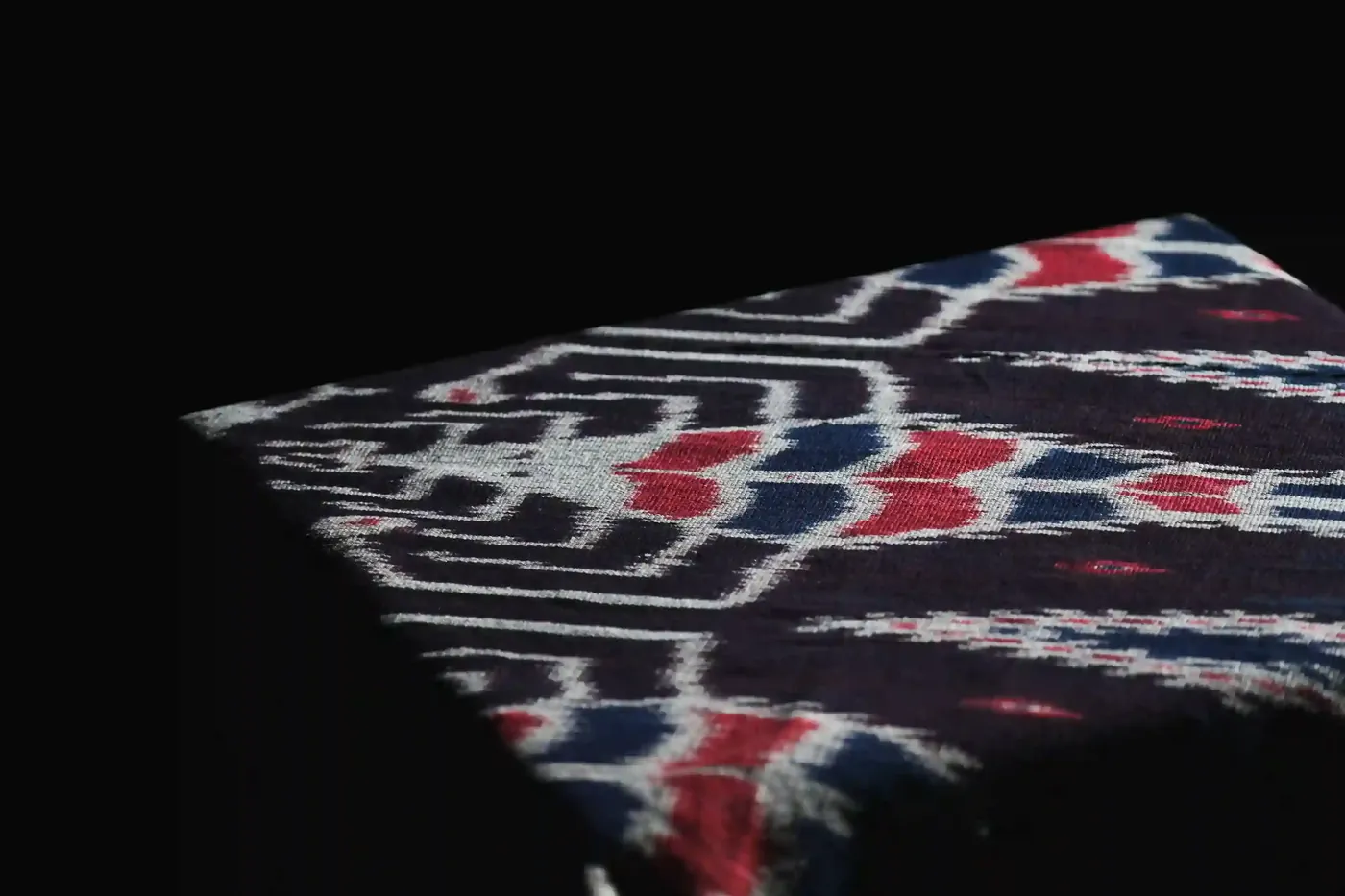
The most common sizing mistake is buying a panel that matches the furniture below it rather than the wall around it. Let the hanging occupy roughly two-thirds of the width of the furniture beneath, and leave 20 cm of clear wall each side so the ikat border is not crushed.
For mounting, use a hidden sleeve sewn along the top edge with a timber or metal rod. It spreads the weight evenly and prevents the puckering that clips and pegs cause over time. Panels for hospitality projects can ship with the sleeve already sewn. Direct all-day sunlight will fade any natural dye, so an indirectly lit wall holds colour far longer.
Ordering is a conversation, not a checkout gamble, because each panel is unique and stock changes as pieces are sold.
Wall dimensions, colour direction, quantity and destination country.
Available panels, full-piece photographs front and back, measurements and dye information.
We hold the panels you want while terms are agreed in writing.
Payment terms, packing method and delivery route are settled before anything ships.
We pack, document and dispatch, then send tracking details.
Textiles fail in transit for two reasons: moisture and hard creasing. Every panel is rolled around an acid-free core rather than folded, wrapped in breathable material and enclosed in a rigid tube or carton. Import duties and taxes in the destination country are the responsibility of the receiving party.
Tell us which group you belong to and the reply you receive will be shaped accordingly.
Four questions
Next step
Wall size, colour direction and delivery country, and we reply with the panels currently available that match your brief. Photographs of the space help.