
A textile that brings a place with it.
Handwoven cloth from East Sumba, used as wall art, upholstery, window treatment and accent. The patterns come from local myth, nature and ancestral story rather than from a print library — which is why a room carrying one reads as somewhere rather than anywhere.
- Room applications
- 7
- Single panel width
- 45–70cm
- Display guidance
- 50 lux

What handwoven cloth gives a room that print does not
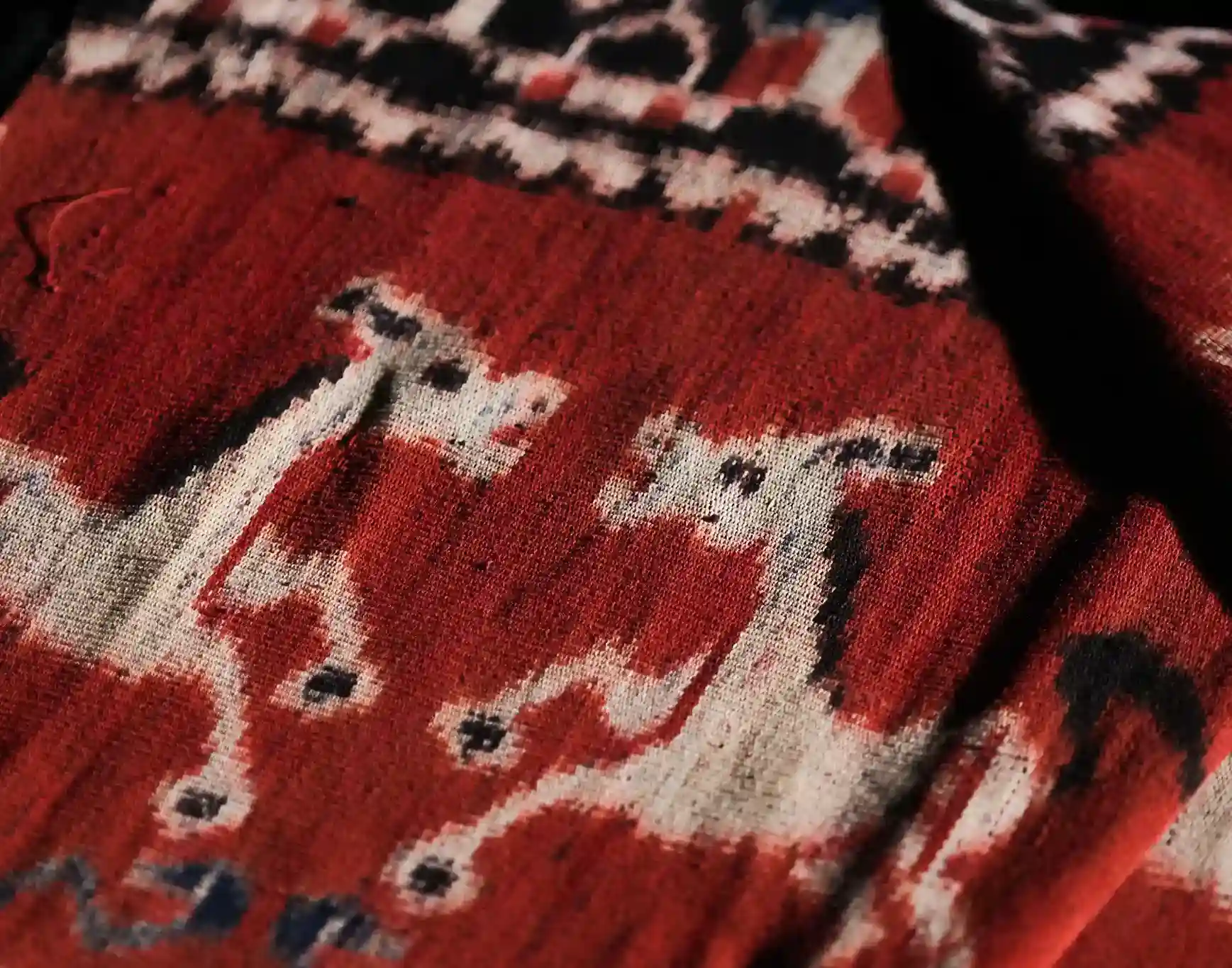
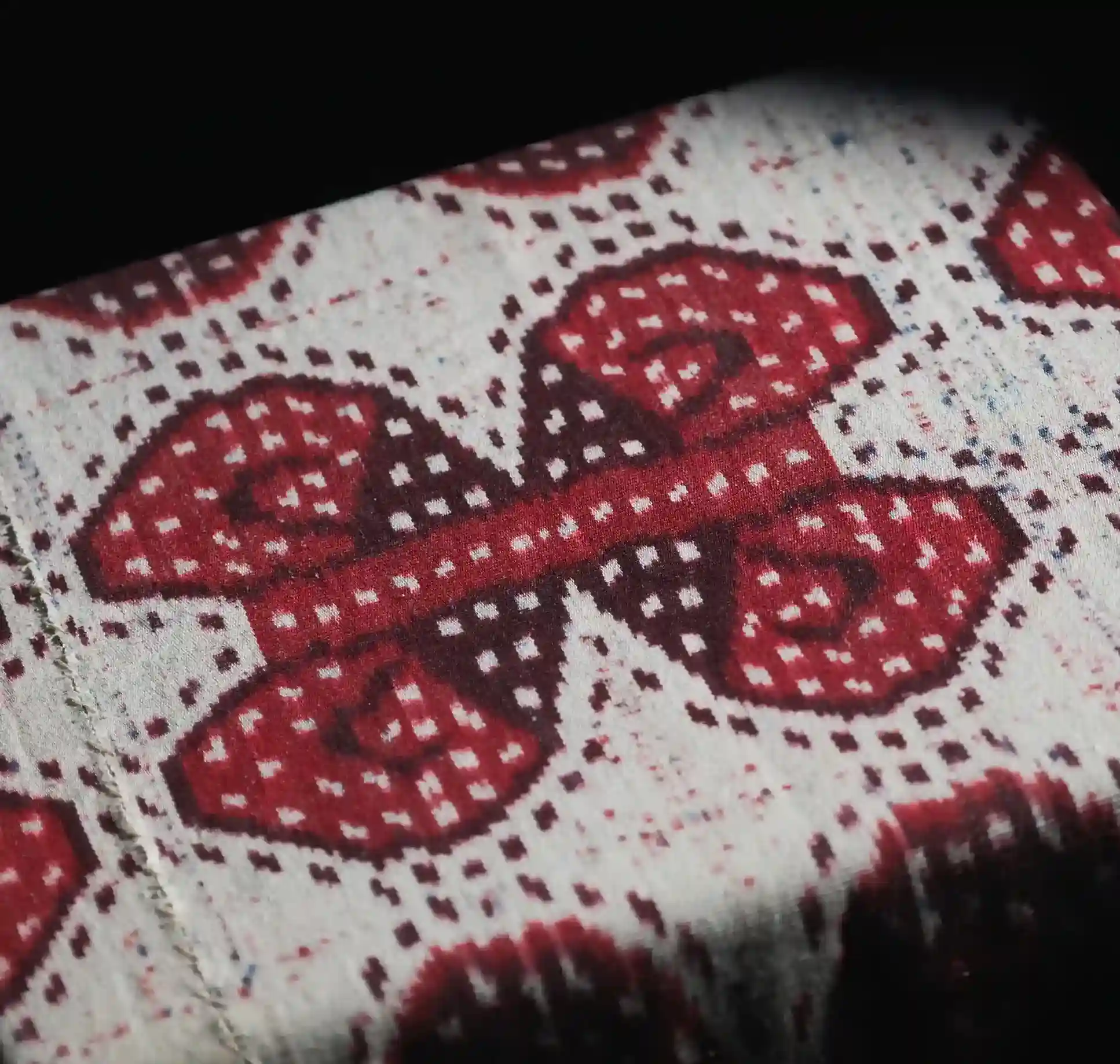
In Sumba weaving the pattern is tied into the warp and dyed before a single weft pass, so the design lives inside the yarn rather than on its surface. A print loses definition the moment the face abrades or fades; a genuine ikat holds its pattern for as long as the cloth holds together.
- Hand-spun cotton on a backstrap loom gives a slightly irregular surface that catches light unevenly, so photographs of the finished room read warmer.
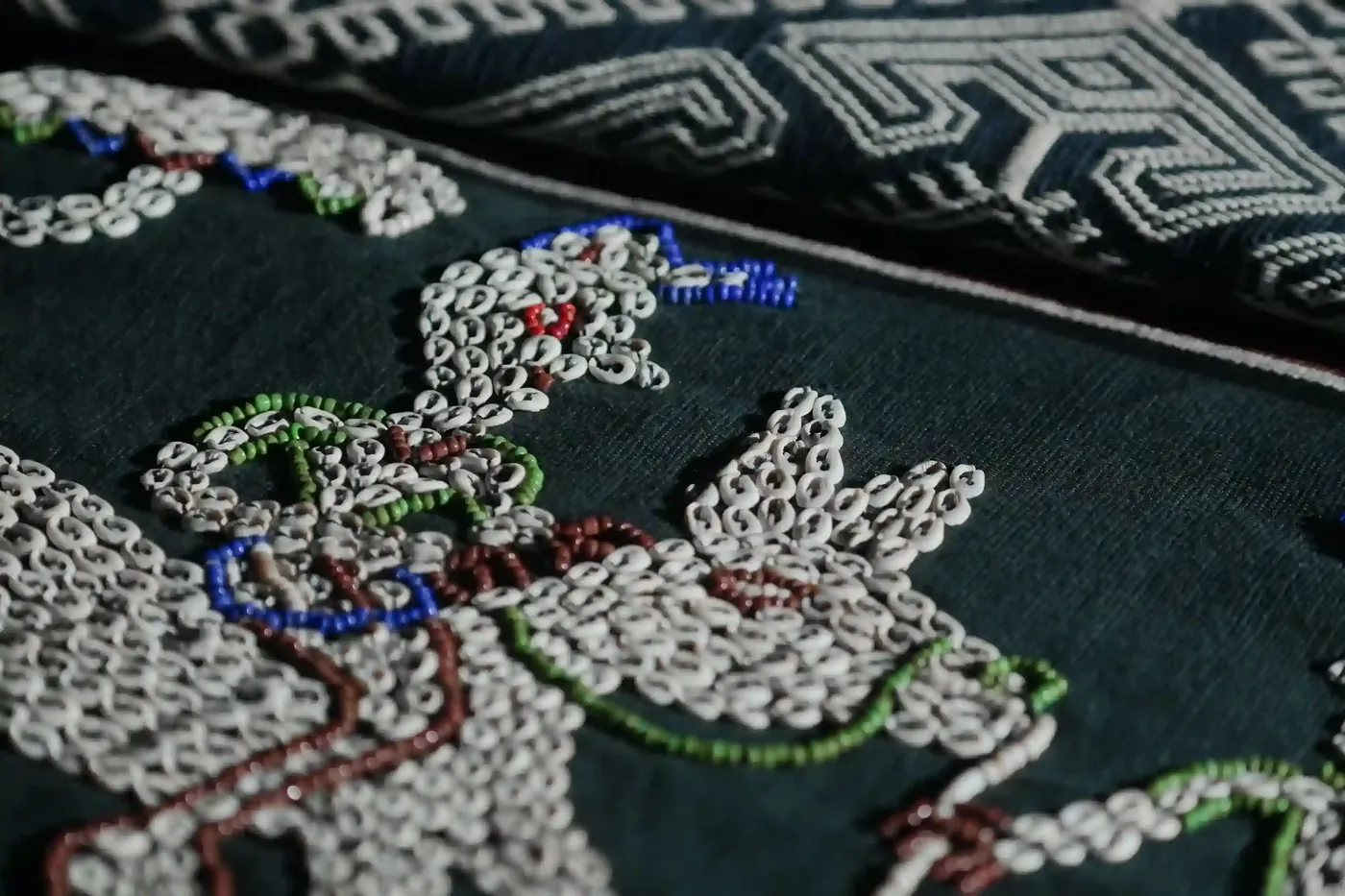
- Each design carries cultural narrative — geometric registers drawn from Sumbanese cosmology, animals, ancestral figures. Not decoration arranged to fill a space.
- The weave takes weeks to months per piece. That is what the cost reflects, and it is why a cheap “handwoven ikat” usually is not.
Where Sumba cloth works in a room
Seven applications
Sizing runs the opposite way from mass-market homeware: cloth is made to loom width, so you choose the piece and then decide where it fits. These are the applications that work with that constraint rather than against it.
Framed wall art
Full panel stretched on a batten frame
The strongest use. Reads as art, protects the cloth, survives a repaint
Hung wall panel
Hinggi on a concealed rod through a sewn sleeve
Support the full top edge — point fixings distort the weave within months
Accent cushions
Cushion faces backed with plain handwoven cotton
Entry point for a scheme. Rotate faces so wear spreads evenly
Bed throws and runners
Lined, edges turned, colour-matched thread
Works in residential and hospitality alike
Upholstery detail
Chair backs, ottomans, headboard panels
Back with a stable lining that carries the structural load
Window treatment
Panels that filter rather than block light
Beautiful, but the fastest way to fade a natural dye. Use on a shaded aspect only
Table dressing
Runners and placemats, washable lining
The most practical repeat purchase in the range
A single woven panel is roughly 45 to 70 cm wide, so anything wider is two panels joined by a centre seam. A two-metre feature panel is achievable; a two-metre seamless panel is not. Designers who plan around the seam — or expose it deliberately as a vertical line — get a better result than those who try to hide it.
What decides how long a piece keeps its colour
Light is the main threat, and the damage is cumulative and permanent. These four decisions at specification stage matter more than anything done afterwards.
-
01
Wall aspect
A panel out of direct sun holds colour years longer than one opposite a west-facing window.
-
02
Lighting design
No spotlight aimed at close range. Conservators generally keep displayed textile below about 50 lux.
-
03
Glazing and airflow
UV-filtering glazing where framed, and airflow behind a panel rather than sealing it flat against a cold wall.
-
04
Rotation
Rotating displayed pieces shares the exposure instead of concentrating it on one cloth.
Housekeeping needs one instruction sheet, not a manual: dust with a soft brush, never bleach, never wet-clean on site, launder washable items cold and dry in shade.
Two ways a project usually runs
Specifying into a property and commissioning something that does not exist yet are different conversations with different lead times.

Sourcing, and what it supports
Production is a communal effort — spinning, dyeing and weaving — often taking several weeks for a single piece, in small family workshops around East Sumba. Natural dyes come from plants and minerals found on the island, and the handweaving process uses no electricity.
That makes the sustainability case real rather than decorative, but it also sets the limits: village-based production has a ceiling on volume and on consistency, and both belong in a specification conversation rather than only the good half.
Frequently asked questions
Four questions
Next step
Send the spaces, the light and the installation date.
We come back with what suits each application, measured sizes, dye information and a realistic production window — and we will say plainly where a placement will disappoint rather than supply a piece that fades in a year.